Video Surveillance for Offices: Legal Features That Matter
Video surveillance in office environments raises distinct legal obligations and operational tradeoffs; this article examines the specific features that matter most when compliance, privacy, and risk mitigation are the primary drivers. Early decisions about recording retention, camera placement, audio capture, and access controls will define whether a system helps a business meet regulatory obligations or creates new liabilities. For a broader technical and policy context, consult the detailed legal primer Read the complete Video Surveillance guide .
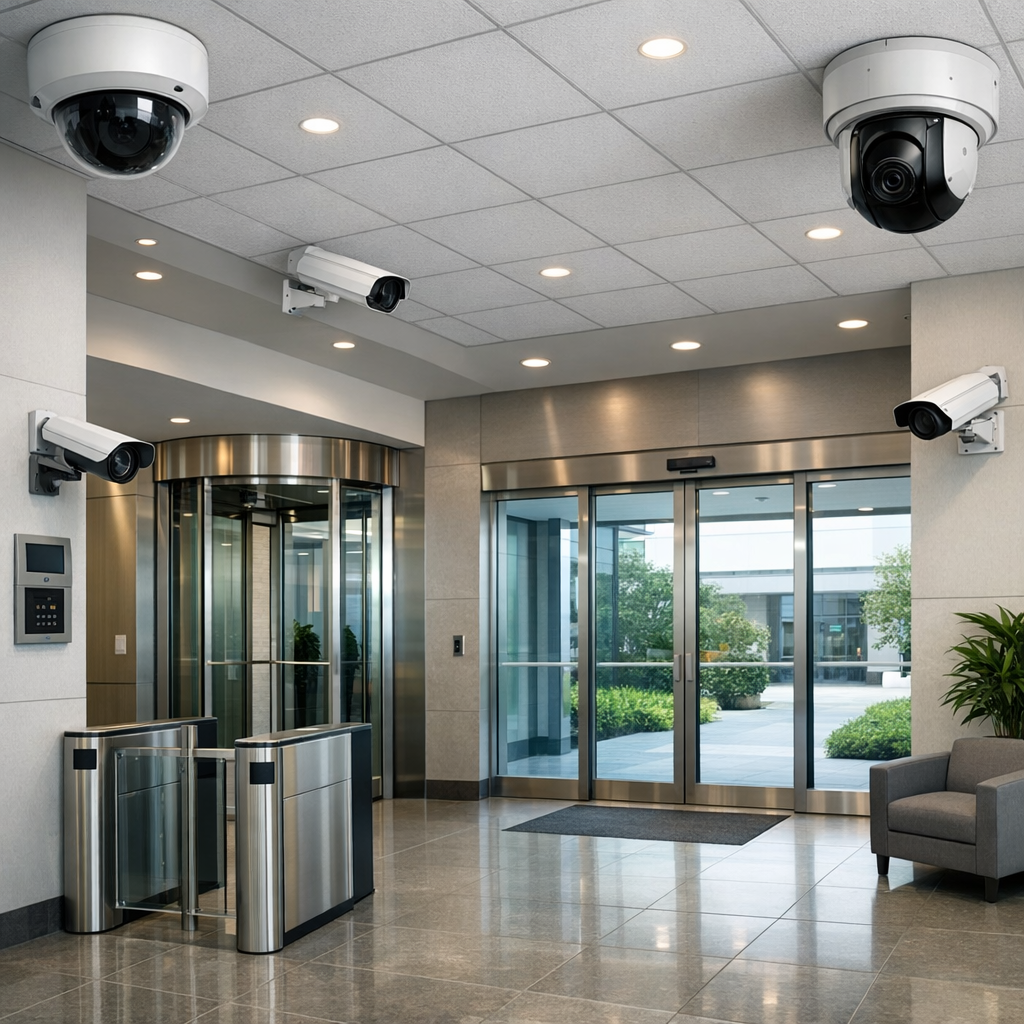
Legal requirements for video surveillance in offices
Understanding applicable law is foundational to selecting and configuring any video surveillance system. In many jurisdictions the legal analysis begins with whether monitoring is reasonable and proportionate to the risk—lost inventory, workplace violence, fraud, or securing sensitive areas. Labor and privacy laws intersect: employee monitoring often triggers specific notice and consultation obligations, and unions or works councils may have contractual rights. Cameras that record public-facing entrances or common areas are treated differently than those aimed at changing rooms, restrooms, or private offices, which almost always require strict prohibitions or consent. Documenting your legal rationale and policies is as important as technical controls when defending a deployment in audits or disputes.
Selecting video surveillance features: comparison and compliance
Not all features are equal from a legal perspective. When comparing systems, evaluate how each feature supports compliance and limits exposure. Key attributes include selective masking and privacy zones that block or blur sensitive spaces, on-device encryption to reduce data breach risk, granular user roles for forensic review, and automated retention controls to enforce data minimization. Some vendors promote continuous cloud backups; from a compliance angle, you must assess cross-border transfer risks, contractual safeguards, and whether the vendor supports auditable deletion. When you evaluate models and sellers, refer to product listings to confirm technical details and certification options Browse Video Surveillance.
Encryption and secure storage
Encryption at rest and in transit reduces the regulatory burden after a breach, and many laws treat encrypted data differently. Look for systems that offer end-to-end encryption with customer-controlled keys, or at minimum device-level encryption combined with secure key management. Confirm how retention archives are stored and whether vendors provide auditable logs for access and deletion events.
Access controls and audit logs
Internal misuse is a common compliance failure. Systems should allow least-privilege access, multi-factor authentication for administrators, and immutable audit logs that track view, export, and deletion actions. These logs serve two legal functions: internal governance and evidence in investigations. When comparing vendors, prioritize solutions that retain logs separately from video archives to prevent tampering.
Video surveillance: practical examples and common mistakes
Real-world scenarios illustrate how features and legal obligations interact. A small law firm installed high-resolution cameras in client reception to deter theft; however, they also captured sensitive client conversations because the cameras had wide-angle audio pickup activated. The firm faced complaints and had to demonstrate policies and retention limits. Alternatively, a retail office used conditional recording that activates only on after-hours motion; this reduced retention exposure and was easier to justify to staff and regulators.
- Common mistake — indiscriminate high-resolution recording: Capturing more detail than necessary increases privacy risks and incidentally gathers sensitive personal data.
- Common mistake — inadequate notice and policy: Failing to provide clear signage, written policies, or employee briefings creates legal vulnerability even if the technology is compliant.
- Common mistake — poor retention practices: Keeping months of continuous footage “just in case” violates data minimization principles and multiplies breach impact.
Scenario-based decision logic
When deciding which features to prioritize, apply a simple decision tree: (1) identify the risk the camera addresses; (2) select the minimal technical capability to mitigate that risk; (3) apply privacy-preserving features (masking, limited resolution, no audio) where possible; (4) document decisions and retention schedules. For example, a finance office installing business surveillance at the vault door may justify high-resolution recording and longer retention but still should restrict playback access and maintain encrypted archives.
Technical features tied to legal outcomes
Feature choices have downstream compliance consequences. Automated retention and tamper-evident storage support regulatory audits and subject-access requests; metadata tagging makes targeted reviews feasible and reduces unnecessary disclosure. Camera health reporting and chain-of-custody features matter when footage may be evidence in employment or criminal proceedings. Consider whether systems support forensic exports with cryptographic signatures to preserve admissibility. When evaluating product warranties and contract terms, verify vendor commitments on data residency and incident notification timelines.
Privacy-by-design and policy controls
Privacy-by-design is not a marketing phrase; it is a practical legal expectation in many regimes. Implement technical controls that enforce policy: geofencing to restrict off-hours remote access, automatic masking over adjacent desks, and configurable retention tied to event type. Complement controls with written procedures that explain who may review footage, under what circumstances, and how requests are handled. Train administrators to avoid ad hoc exports and to use role-based workflows. These administrative measures reduce the risk of internal misuse and strengthen legal defenses.
Legal & ethical considerations (EU and US high-level guidance)
EU and US frameworks differ but share common themes: purpose limitation, transparency, data minimization, and security. In the EU, the General Data Protection Regulation (GDPR) emphasizes legal bases for processing, DPIAs (Data Protection Impact Assessments) for high-risk monitoring, and rights of access and erasure that can apply to recorded footage. In the US, sectoral laws and state privacy statutes impose varied obligations; several states require specific notice and restrict audio recording without consent. Regardless of jurisdiction, consult counsel for binding advice, but as a practical measure perform DPIAs or equivalent internal risk assessments and document why particular features and retention periods are proportionate. Consider ethical limits beyond legal minimums: avoid persistent monitoring of personal spaces and evaluate the fairness of analytics such as face recognition before deployment. For regulatory context and policy examples, review a central technical and legal discussion Discreet solutions.
Buyer guide: evaluation criteria and procurement checklist
Procurement for office video surveillance should prioritize compliance-ready features and clear contract terms. A practical checklist includes: purpose statement and map of camera views; privacy-impact assessment; technical feature list (privacy zones, encryption, role-based access, tamper logging); retention policy enforcement; vendor incident response and data residency terms; and administrative rules for access, export, and employee notification. Require proof of functionality through demonstrations, and ask for sample audit logs. Negotiate contract terms for liability limits and breach notification timelines that align with your legal obligations.
Budgeting for compliance
Compliance features may increase initial or recurring costs, but underinvestment exposes the company to fines, litigation, and reputational harm. Budget for administrative tasks: policy drafting, training, periodic audits, and log reviews. Consider managed services only if vendor SLAs explicitly guarantee compliance support and data handling transparency.
Frequently Asked Questions
Q: Can I use audio recording with office cameras?
A: Audio recording triggers additional consent or legal constraints in many places; disable audio unless you have a documented lawful basis and clear notice procedures.
Q: How long may I retain footage?
A: Retention should be the minimal time necessary to meet legitimate purposes; specific limits depend on risk, incident frequency, and applicable law—automated retention policies help enforce limits.
Q: Are analytics like face recognition lawful for employee monitoring?
A: Automated biometric analytics raise high legal risk and often require enhanced justification, impact assessments, and explicit consent where permitted; many organizations avoid face recognition for routine employee monitoring.
Q: Must I notify employees before installing cameras?
A: Notice is generally required and advisable; some laws require written policies or collective bargaining consultation for workplace monitoring.
Q: What should I do after a data breach involving surveillance footage?
A: Follow your incident response plan: contain access, assess scope, preserve logs, notify regulators and affected individuals as required by law, and document remedial steps to prevent recurrence.
Educational closing
Designing office video surveillance with legal compliance as the primary lens means prioritizing features that limit data collection, secure storage, and ensure accountable access. Technical choices—privacy zones, encryption, retention automation, and auditable logs—interact directly with legal obligations and should be selected through documented risk assessments. Procurement must include clear contractual commitments and operational policies to translate features into defensible practices. A legally sound deployment balances security needs against privacy rights, minimizes liability, and preserves trust within the workplace.