Voice recorders: Comparing voice-activation failures for homeowners and small businesses
Voice recorders that rely on voice activation can be convenient, but when they miss recordings the consequences range from lost evidence to compliance breaches. This comparison-focused article examines why voice recorders fail to capture key moments, how different device classes behave, the legal boundaries for homeowners and small businesses, and the decision logic to choose the right recorder for each scenario.
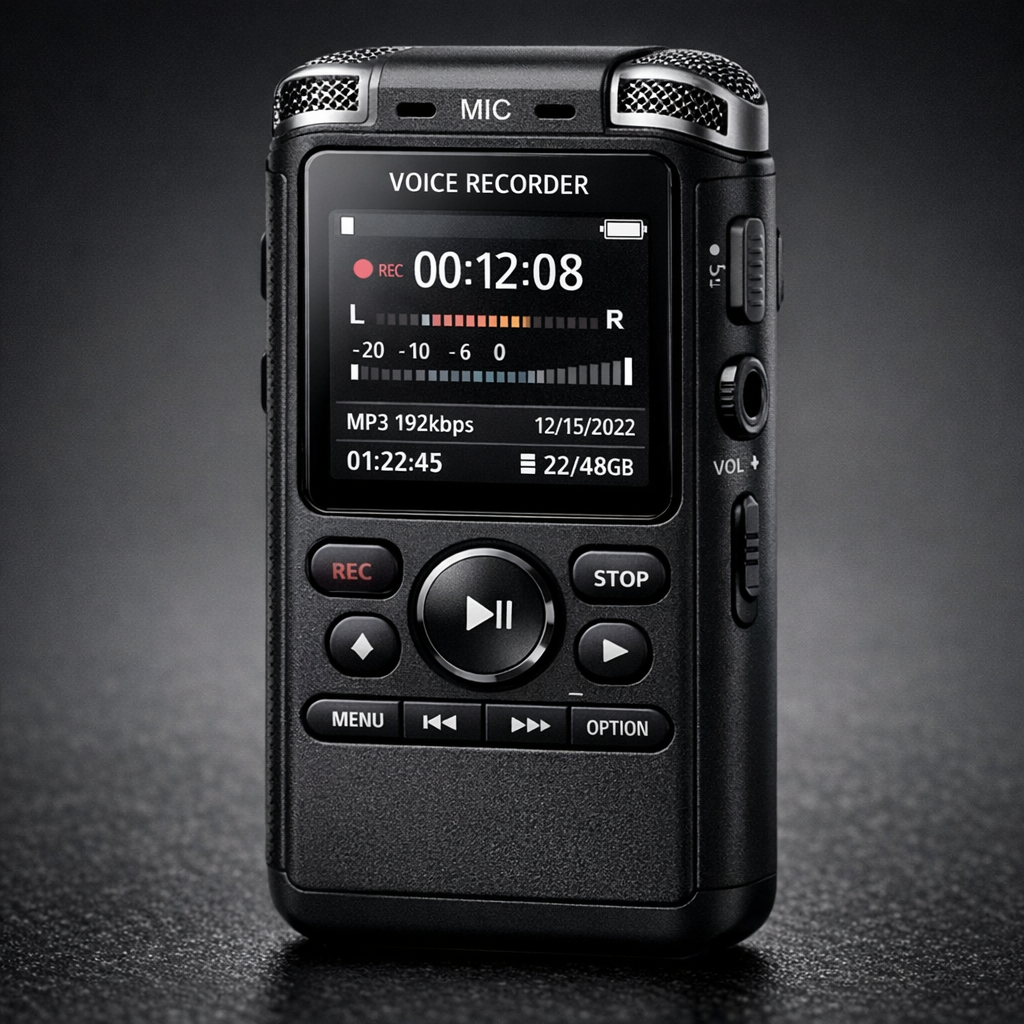
Why voice recorders with voice activation miss recordings
Voice-activated recorders work by monitoring audio energy and triggering recording when a threshold is exceeded. That mechanism is effective for obvious vocal events but struggles with low-volume speech, overlapping noise, and intermittent pauses. Environmental acoustics, microphone sensitivity, and firmware hysteresis all influence whether a device captures the start and end of speech. When evaluating failure modes, separate the technical causes from operational ones: hardware limitations (microphone type, preamp noise), algorithm design (threshold, attack/release timing), and placement or user configuration can each cause missed segments.
How to choose voice recorders to minimize missed recordings
Selecting a recorder requires balancing detection reliability, battery life, file management, and legal considerations. For a homeowner documenting intermittent incidents, prioritize devices with adjustable activation thresholds, low-noise microphones, and a short attack time so the unit begins recording faster. Small businesses conducting customer interactions or compliance recordings should favor digital voice recorders with configurable sensitivity profiles, time-stamped files, and reliable storage redundancy. Compare device datasheets for signal-to-noise ratio (SNR), microphone type (electret vs MEMS), and stated activation latency. Also verify whether models offer fixed continuous recording mode as a fallback option.
Comparing voice-activated recorder modes and digital voice recorder performance
Not all voice-activated recorders behave the same; comparison requires systematic criteria. Key comparison axes are detection reliability (how often they miss low-level speech), latency (time between sound and recorded audio), power efficiency, storage behavior (file splitting, overwrite policies), and recoverability. Digital voice recorder models typically provide higher resolution audio, better file management, and firmware options to tune activation parameters; dedicated voice-activated recorder modules may trade those features for longer standby battery life and smaller form factors. When you list requirements, rank them: is uninterrupted capture essential, or do you accept gaps to extend battery life?
Technical pros and cons
- Voice-activated recorders (low-power modules): Excellent standby duration, small size, but more likely to miss low-volume or interrupted speech and often limited in post-processing options.
- Digital voice recorders (consumer/professional): Better microphones, configurable sensitivity and continuous modes, clearer timestamps and metadata, but typically shorter standby time in activation mode and larger physical size.
- Hybrid systems: Offer both continuous and voice-activated modes, allowing automatic fallback; these are often the safest choice for critical monitoring.
Use-case comparison: homeowner, small business, and professional scenarios
Different use cases impose different tolerance for missed audio. For homeowners wanting a record of neighbor disputes, a compact voice-activated recorder with high sensitivity and adjustable threshold may be sufficient. Small businesses that must document meetings for compliance need devices that guarantee capture — ideally digital voice recorders set to continuous or dual-mode to prevent gaps. Security professionals and legal practitioners should use recorders that provide verified timestamps and minimal activation latency, and ensure file integrity for evidentiary use. In practice, choice depends on whether the recording is primarily for memory aid, dispute resolution, or legal evidence.
For readers seeking further technical context on activation algorithms and recommended specifications, consult our detailed primer on voice recorder fundamentals. Read the complete Voice Recorders guide
Practical examples and common mistakes
Real-world examples illustrate how activation failures occur and how to avoid them. Example 1: A homeowner places a small voice-activated recorder in a hallway to capture occasional arguments; the device sits behind a door and uses an aggressive power-saving profile. Result: the recorder misses the opening lines because the speech starts quietly and the microphone is obstructed. Correction: switch to a digital voice recorder with a shorter attack time or move the microphone to a clear line of sight.
Example 2: A retail shop uses a voice-activated recorder to log customer complaints but configures the threshold too high to prevent false triggers. Result: low-audibility complaints go unrecorded. Correction: use a recorder with adjustable sensitivity and periodically audit sample recordings to tune the threshold. Also consider continuous recording during business hours to prevent missed incidents.
Common mistakes include relying solely on advertised battery life without testing in activation mode, neglecting firmware updates that address detection issues, and misunderstanding the difference between bitrate and microphone quality. Another frequent error is assuming any "voice-activated" label ensures forensic-quality capture; many low-cost units prioritize battery conservation and will not serve evidentiary purposes.
For an up-to-date selection of devices organized by feature sets and activation modes, review our product collection. Browse Voice Recorders
Buyer guide: evaluation criteria and selection logic
When buying, evaluate using these criteria: detection latency (measured in milliseconds), adjustable sensitivity, microphone specification (SNR and frequency response), storage behavior (file rollover and corruption resilience), metadata inclusion (timestamps, device ID), and firmware support. Test scenarios before committing: simulate low-volume speech at varying distances, introduce typical background noise, and observe whether the recorder captures the full utterance. Prefer devices that let you switch to continuous recording when necessary, and consider models that support external microphones for improved placement flexibility.
Budget constraints matter, but prioritize features aligned with risk tolerance. If missed audio could lead to legal exposure or regulatory noncompliance, invest in higher-tier digital voice recorders with audit-friendly features and secure file storage.
For buyers who need advanced workflow integration—automatic file transfer, time synchronization, or enterprise provisioning—seek models that include those functions or integrate with companion software. Discreet solutions
Legal & ethical considerations
Understanding the legal landscape is essential before deploying any recorder. In the United States, federal law permits one-party consent but states vary; some require all-party consent for audio recording. In the European Union, GDPR adds data protection obligations: recordings that identify individuals are personal data and must be processed lawfully, with clear legal bases and retention limits. For homeowners, private residential recordings may be permissible in many jurisdictions when no reasonable expectation of privacy is violated, but recording in bathrooms or private spaces risks criminal penalties. Small businesses must consider workplace privacy laws, notice requirements, and collective bargaining agreements that may restrict monitoring. In all cases, maintain minimal data retention, secure storage, and clear policies defining purpose and access.
These guidelines are high-level and do not constitute legal advice. Consult a qualified lawyer for jurisdiction-specific compliance and when recordings may be used in legal proceedings.
Frequently Asked Questions
Q: How reliable are voice recorders with voice activation compared to continuous recording?
A: Voice-activated units conserve power but are less reliable for low-volume or intermittent speech. Continuous recording eliminates activation gaps but uses more power and storage.
Q: Can a missed recording be used as evidence if the device was voice-activated?
A: A missed recording is, by definition, absent and cannot serve as evidence. Courts will examine device reliability and chain of custody for produced recordings; choose devices with documented performance for evidentiary needs.
Q: Will background noise cause a voice-activated recorder to miss speech?
A: Yes. Background noise can either mask low-volume speech or cause frequent triggers if the threshold is set too low. Proper placement and sensitivity tuning help mitigate both issues.
Q: Are digital voice recorders configurable to prevent missed recordings?
A: Many digital voice recorders offer adjustable sensitivity, short attack times, and a continuous mode. Hybrid models provide configurable fallbacks to reduce the chance of missing key audio.
Q: What steps should businesses take to stay compliant when using recording devices?
A: Implement clear policies, obtain necessary consents, limit access to recordings, encrypt storage, and establish retention and deletion rules aligned with local law and privacy best practices.
Choosing the right recorder requires precise alignment of technical capability, operational procedures, and legal safeguards. By comparing device behaviors, testing in realistic conditions, and documenting policies, homeowners and small businesses can reduce the risk that a voice-activated recorder will miss critical recordings. Thoughtful selection—favoring adjustable thresholds, the option for continuous capture, and strong metadata—combined with legal awareness creates a defensible, practical approach to audio monitoring.