Voice recorders for homeowners and small businesses: legal risks and responsible selection
Voice recorders are valuable tools for preserving meetings, interviews and personal notes, but discreet audio devices are frequently misused in ways that create legal exposure, ethical dilemmas and privacy harms. This article explains why misuse happens, compares device types, outlines decision logic for real-world scenarios, and offers a buyer-focused evaluation framework for choosing a recorder responsibly.
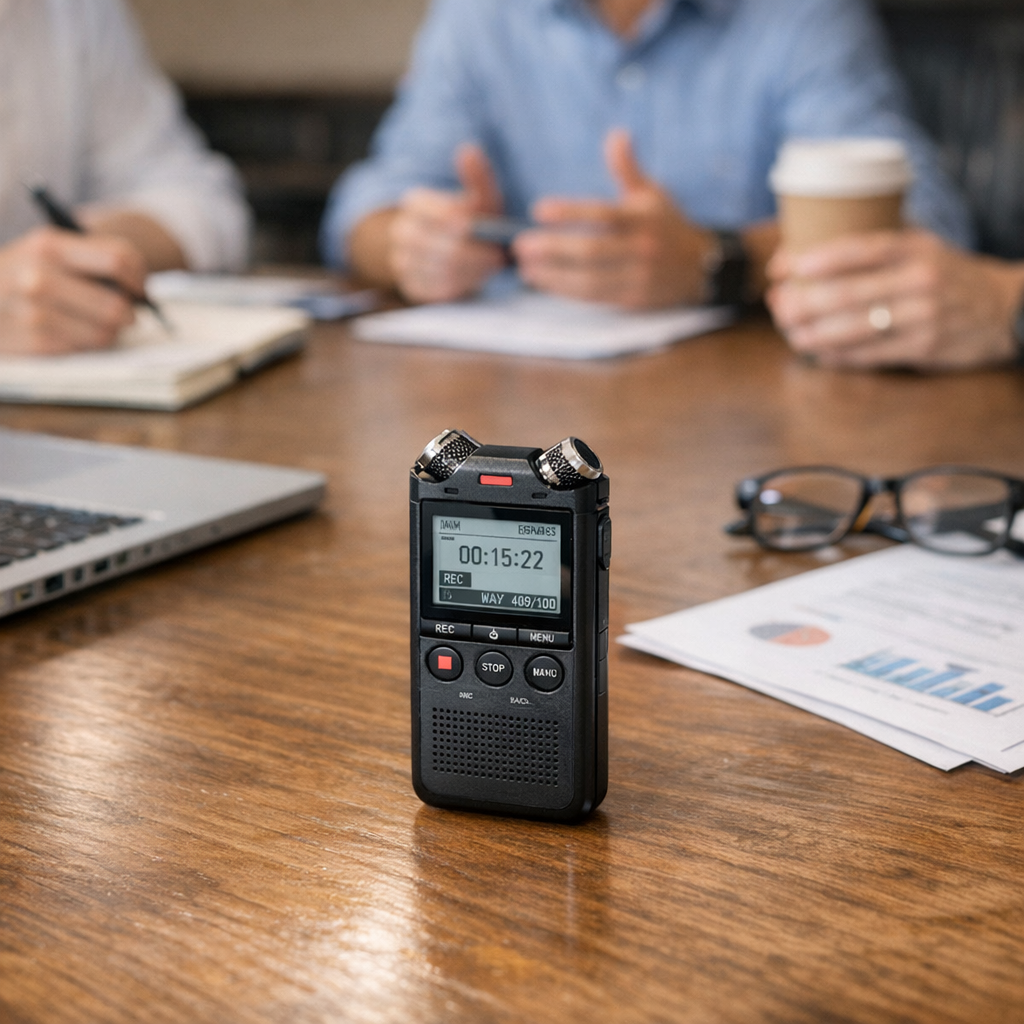
Why voice recorders are often misused
Misuse of voice recorders commonly stems from a mismatch between intent and legal or ethical boundaries. A homeowner who records a contractor to verify work quality, a manager who records a dispute with an employee, or a neighbor who captures late-night noise may all consider a discreet device convenient. However, convenience can shortcut consent norms: a small digital voice recorder or a voice activated recorder makes stealth recording simple, and ease of use lowers psychological barriers to obtaining and retaining audio that ought to be shared, deleted or never captured.
Legal boundaries for voice recorders — US and EU
Legal frameworks differ substantially between jurisdictions. In the United States, federal law allows audio recording with at least one party's consent, but a growing number of states require two-party consent for non-public conversations. In the EU and member states, data protection rules (such as GDPR) treat recorded audio as personal data when it identifies an individual; processing such data demands a lawful basis and clear transparency practices. These differences mean the same device and behavior can be lawful in one state or country and illegal in another. Organizations and individuals must check local statute and case law before deploying discreet recorders. For deeper procedural context, consult the longer reference on discreet and professional recording Read the complete Voice Recorders guide .
Comparison: covert devices versus overt recorders
Structuring a comparison clarifies trade-offs when evaluating purchase or use.
- Overt digital voice recorder: visible, straightforward controls, reduces dispute over whether recording was known. Pros: transparency, easier compliance. Cons: less suitable for candid research where consent would change behavior.
- Discreet or covert voice recorder: disguised as everyday objects or compact and small. Pros: captures natural speech, useful for investigative work where consent is impossible to obtain. Cons: high legal risk, ethical concerns, harder to defend in court and in reputational terms.
- Voice activated recorder: conserves storage and battery by only saving audio above thresholds. Pros: efficient for long durations. Cons: may omit soft but legally relevant statements and can complicate chain-of-evidence if gapless recording is required.
- Smartphone apps vs dedicated devices: apps are convenient but mix personal data and cloud processing, raising additional privacy compliance needs compared with a local digital voice recorder that stores files locally.
Real-world use cases and decision logic
Applying logic to scenarios reduces misuse. Consider these common contexts and the decision steps to evaluate necessity, legality and alternatives.
Home maintenance disputes
Scenario: a homeowner suspects a contractor of misrepresenting work. Decision logic: first seek written documentation, take photos, request written estimates, and inform the contractor that a record will be kept. If you believe safety or illegality is at stake, consult local authorities rather than secretly recording; covert audio can be inadmissible or itself a crime.
Workplace complaints
Scenario: an employee wants evidence of harassment. Decision logic: check company policy and state law; report to HR and request formal investigation. If considering recording to protect yourself, prioritize transparency and understand whether a voice activated recorder or overt recorder with clear notice is acceptable under law and policy.
Personal safety situations
Scenario: threats or stalking. Decision logic: immediate safety comes first — contact law enforcement. When safe and lawful, an overt or discreet recorder can document incidents for police, but chain-of-custody and consent issues affect evidentiary value. Consult law enforcement or legal counsel before collecting and distributing audio.
Buyer guide: choosing a voice recorder responsibly
Selecting hardware requires balancing capability with compliance. The following criteria help professionals and homeowners make responsible choices.
- Purpose alignment: Define why you need a recorder. For meetings and notes, an overt digital voice recorder provides reliability. For field interviews where subjects consent, a compact device with clear recording indicators works. Avoid covert purchases when lawful transparency is required.
- Record-keeping and security: Choose devices that allow export and secure storage. If recordings contain sensitive personal data, ensure encrypted storage and controlled access. Voice activated recorder features can reduce file volume but must not omit critical segments.
- Battery life and storage: Match device endurance to use case. Long surveillance with sporadic speech favors voice activated modes; continuous interviews require longer battery and higher bitrate storage.
- Evidence considerations: For potential legal use, prefer devices that timestamp and produce verifiable file metadata. Avoid smartphone apps that upload files to cloud services without clear custody controls.
- User interface and indicator lights: For ethical transparency, prefer devices with visible indicators when recording. If you must record in sensitive contexts, an overt device minimizes later disputes about consent.
Practical examples and common mistakes
Examples illustrate how misuse arises and how to avoid it.
- Example — homeowner vs neighbor: A homeowner installs a disguised recorder to capture neighbor noise and later publishes clips online. Mistake: failing to consider whether audio captured private conversations of third parties, and disseminating recordings without consent. Safer approach: collect corroborating evidence (logs, witnesses), request mediation, and involve local authorities if necessary.
- Example — manager recording staff: A manager uses a concealed digital voice recorder during a performance meeting to protect against later claims. Mistake: covert recording where workplace policy or state law requires notification. Safer approach: state intent to record, obtain consent, or use HR-approved procedures.
- Example — hobbyist journalist: Recording an informal interview without consent because the subject had previously promised anonymity. Mistake: relying on perceived consent rather than documenting it. Safer approach: use a visible overt recorder and get a signed release when practicable.
When researching products or device types, browse voice recorder options and specifications to match compliance needs Browse Voice Recorders. For operational best practices, refer to additional background material in our extended guide Discreet solutions.
Legal & ethical considerations (high level, US and EU)
High-level best practices reduce risk. In the US, determine whether your state is a one-party or two-party consent jurisdiction before recording. In the EU, treat recorded audio as personal data under GDPR when individuals are identifiable; determine the lawful basis (consent, legitimate interest with balancing test, or other basis) and document processing activities. Ethically, prefer transparency: inform participants where feasible, minimize capture of unrelated persons, and establish retention and deletion policies. When in doubt, consult qualified counsel rather than relying on assumptions about device capability or intent.
Frequently Asked Questions
Q: Is it legal to record a conversation if I am present?
A: It depends. In many US states one-party consent is sufficient, but some states require all-party consent. In the EU, consent and data protection rules apply. Check local law.
Q: Can I use a voice activated recorder to monitor long-term events?
A: Yes, a voice activated recorder conserves power and storage, but it may skip low-volume speech that could be important for legal or safety reasons.
Q: Are recordings admissible in court?
A: Admissibility depends on jurisdiction, how the recording was obtained, and evidentiary rules. Illegally obtained audio can be excluded or create separate legal exposure.
Q: How long should I keep recorded files?
A: Retention should match a documented lawful purpose. For personal notes, delete once no longer needed. For recordings containing personal data, follow data minimization and retention principles under applicable law.
Q: Is a smartphone app safer than a dedicated digital voice recorder?
A: Not necessarily. Apps may involve cloud storage and third-party processing, which can increase privacy and security obligations. Dedicated recorders that store locally may reduce exposure if handled properly.
Closing: responsible use and next steps
Discreet audio tools can be legitimate aids for memory, investigation and safety, but misuse arises when convenience replaces consent, documentation and legal awareness. Prioritize transparency, choose devices that fit the lawful purpose, implement secure handling and retention policies, and consult authoritative resources before recording in sensitive contexts. For product options and technical specifications that align with responsible use, review our voice recorder collection and compare features against the buyer criteria outlined above . For procedural and legal context on discreet recording practices, see the broader resource on professional recording methods .