gps trackers: legal pitfalls and data misinterpretation for homeowners and small businesses
Users of gps trackers often treat location data as objective truth, yet interpretation errors can create legal exposure for homeowners, small business operators, and fleet managers. This article examines common misreads of gps output, how evidence value differs from operational use, and decision logic to choose compliant solutions for vehicle gps tracking, asset tracking, and real time gps monitoring. It focuses on legal boundaries, comparison of risks and compliance choices, and practical selection criteria rather than product promotion. For further technical background on device behavior and telemetry patterns, see the pillar analysis referenced below Read the complete GPS Trackers guide .
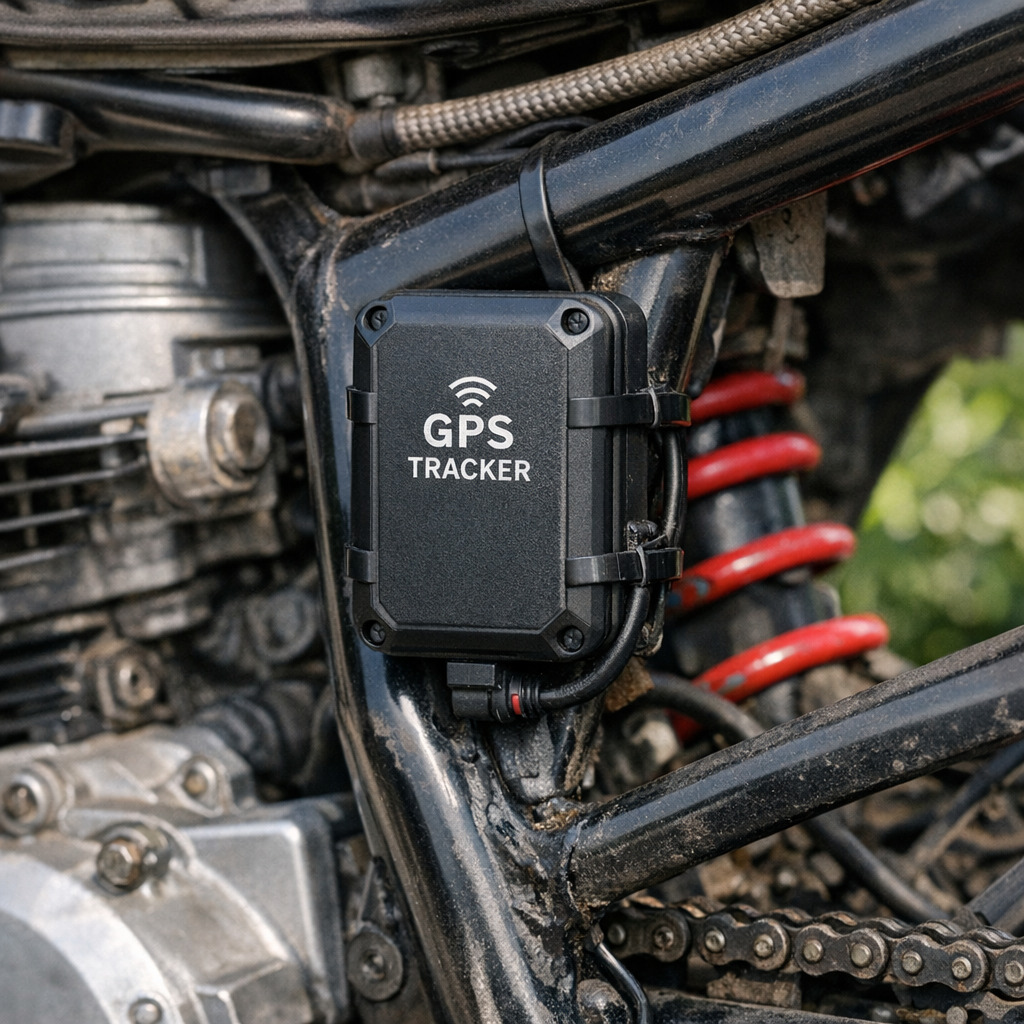
How gps trackers data is commonly misinterpreted
Many users assume a gps trace shows continuous and precise movement history. In reality, a recorded track is a sequence of timestamped coordinates produced by hardware, firmware, mobile networks and mapping software. That chain introduces noise: signal multipath in urban canyons, temporary GPS fix loss, cell-tower triangulation during low-signal intervals, and interpolation by the tracking platform to smooth paths. Interpolation or “snap-to-road” logic can create apparent routes that never occurred, or mask short stops.
Technical artifacts that create false conclusions
Typical artifacts include jumps (sudden coordinate changes when a device reacquires satellites), drift (slow, unexplained movement when stationary), and duplicated timestamps. Users may read these as unauthorized movement, theft, or tampering, when they are device-level inaccuracies. Understanding expected error rates and device reporting intervals is legally important when relying on data as factual evidence.
Legal comparison: US vs EU rules for gps trackers
Legal frameworks shape both permissibility and evidentiary value. In the United States, federal law intersects with state wiretapping and privacy statutes; employers frequently have more latitude to track company vehicles but must still respect expectation of privacy in non-work contexts. In the European Union, data protection under the GDPR treats location as personal data with strict processing principles: lawful basis, purpose limitation, data minimisation, and transparency. Differences affect retention, consent, and lawful disclosure.
Consent and legitimate interest
In the EU, explicit justification or consent is typically required for personal data processing that is not strictly necessary for contract performance. In the US, analysis hinges on whether the subject is an employee using a company vehicle, a tenant, or a private individual. Ignoring these distinctions can create liabilities such as fines, civil suits, or exclusion of tracking evidence in court.
Comparing use cases and compliance: vehicle gps tracking vs asset tracking
Comparative decision logic helps determine lawful deployment. For vehicle gps tracking where devices are permanently installed in owned or leased vehicles, policies should articulate monitoring scope, retention periods, and role-based access. For asset tracking of non-personal goods, legal risk is lower but still exists when tags can be associated with individuals (for example, packages linked to a customer account). Real time gps monitoring raises elevated scrutiny because continuous streams are more intrusive than periodic location checks.
Pros and cons by scenario
- Homeowner vehicle monitoring: Pro: theft recovery and family safety. Con: privacy issues if tracking other adult drivers without consent.
- Small business fleet: Pro: route optimization and liability reduction. Con: employee surveillance risks and potential state-level restrictions on off-duty monitoring.
- Asset tracking for contractors: Pro: inventory control. Con: inadvertent capture of workers’ location when assets move with personnel.
Buyer guide: selecting gps trackers with legal compliance in mind
Selecting a solution requires legal criteria as much as technical specs. Prioritize devices and platforms that support granular retention controls, exportable audit logs, per-user access rights, and configurable reporting intervals to minimise unnecessary continuous tracking. Devices that allow local data encryption and attestations of firmware integrity reduce tampering risks and strengthen evidentiary weight. When shopping for vehicle gps tracking hardware or asset tracking tags, verify supplier policies, data processing agreements, and data center jurisdiction. Review product listings on the GPS tracking collection to confirm available compliance features Browse GPS Trackers.
Key evaluation checklist
- Data minimization: configurable sampling rates and geofence-only alerts to limit stored location points.
- Retention & deletion: automatic purge settings and legal hold exceptions.
- Access controls: role-based permissions and MFA for account access.
- Transparency: user notices and consent capture for individuals whose movement may be recorded.
- Evidence readiness: tamper logs, chain-of-custody export, and timestamp integrity.
Practical examples and common mistakes
Scenario: A landlord installs a tracker on a leased truck for maintenance scheduling. The landlord later uses the history to allege tenant misuse. Common mistake: failing to notify the tenant and documenting a legitimate business purpose. Result: potential breach of contract claims and regulatory attention.
Scenario: A homeowner buys a low-cost tag to monitor tools in a shared shed. The tag intermittently reports positions that are then interpreted as theft when a neighbor borrows tools. Common mistake: treating sparse, interpolated traces as definitive proof. Best practice: corroborate gps data with timestamps, access logs, and witness statements before escalation.
Scenario: A small delivery company switches to higher-frequency real time gps to improve dispatching. Drivers complain and union reps raise privacy concerns. Common mistake: rolling out continuous tracking without revising policies or offering clear limits on off-duty monitoring. Remedy: consult counsel, update employment agreements, and apply geo-fencing to separate work and non-work periods.
Legal & ethical considerations
High-level, non-legal guidance distinguishes risk management in the EU and US. Under GDPR, document lawful basis: for example, processing for contract performance or legitimate interest requires a balancing test when tracking employees. Provide privacy notices, maintain records of processing activities, and ensure subject rights (access, rectification, erasure) can be addressed. In the US, understand state-specific privacy statutes and distinct rules on audio-plus-location data; some jurisdictions require employee notification or bar concealed trackers in private vehicles.
Ethically, consider proportionality: does the safety or business need justify the intrusiveness of real time gps? Implement retention limits and granular alerts to minimize surveillance. When evidence is needed for enforcement or insurance claims, combine gps data with corroborative sources—video, access logs, and witness statements—before taking legal steps.
For device procurement and policy templates, consult the operational guidance in the pillar analysis and ensure vendor contracts include processor obligations and data transfer protections Discreet solutions.
Frequently Asked Questions
Q: Can gps trackers be used as reliable evidence in court?
A: Location data can support a case but courts evaluate accuracy, chain of custody, and context; GPS traces alone rarely prove intent without corroboration.
Q: Do I need consent to track employees with gps trackers?
A: It depends on jurisdiction and workplace context; many regions allow tracking for legitimate business reasons but require notice and policy clarity.
Q: What retention period is appropriate for real time gps logs?
A: Retention should match the purpose: short-term monitoring (days to weeks) for operations, longer (months) only when justified for safety or compliance; document rationale.
Q: Are low-cost bluetooth tags the same legal risk as vehicle gps tracking?
A: They differ technically and legally; bluetooth asset tracking may be less intrusive but can still implicate privacy if tied to individuals.
Q: How should I respond to a data subject request for location records?
A: Verify identity, export relevant records with metadata, and follow lawful redaction where third-party data or trade secrets are implicated; involve legal counsel for complex requests.
Educational closing
Interpreting gps trackers requires both technical literacy and legal awareness. Treat location streams as probabilistic records, not absolute proofs, and align deployments with jurisdictional requirements, transparent policies, and proportional data practices. Whether your priority is vehicle gps tracking for fleet efficiency or asset tracking for inventory control, choose devices and platforms that make compliance operationally feasible. Continue building internal rules, document processing rationales, and consult legal advisors for high-risk scenarios to reduce enforcement and litigation exposure.