Video surveillance and employee behavior: buyer's guide for owners and managers
Video surveillance is a tool that reshapes workforce behavior in predictable phases: an immediate awareness effect, followed by adaptation, and then longer-term cultural shifts. For homeowners who employ domestic staff, small business owners, and managers evaluating CCTV systems, understanding these phases is essential to choose equipment, set policies, and remain compliant with legal boundaries. This buyer's guide explains how observation changes actions over days, months, and years and translates those dynamics into practical selection criteria and mistakes to avoid. Read the complete Video Surveillance guide
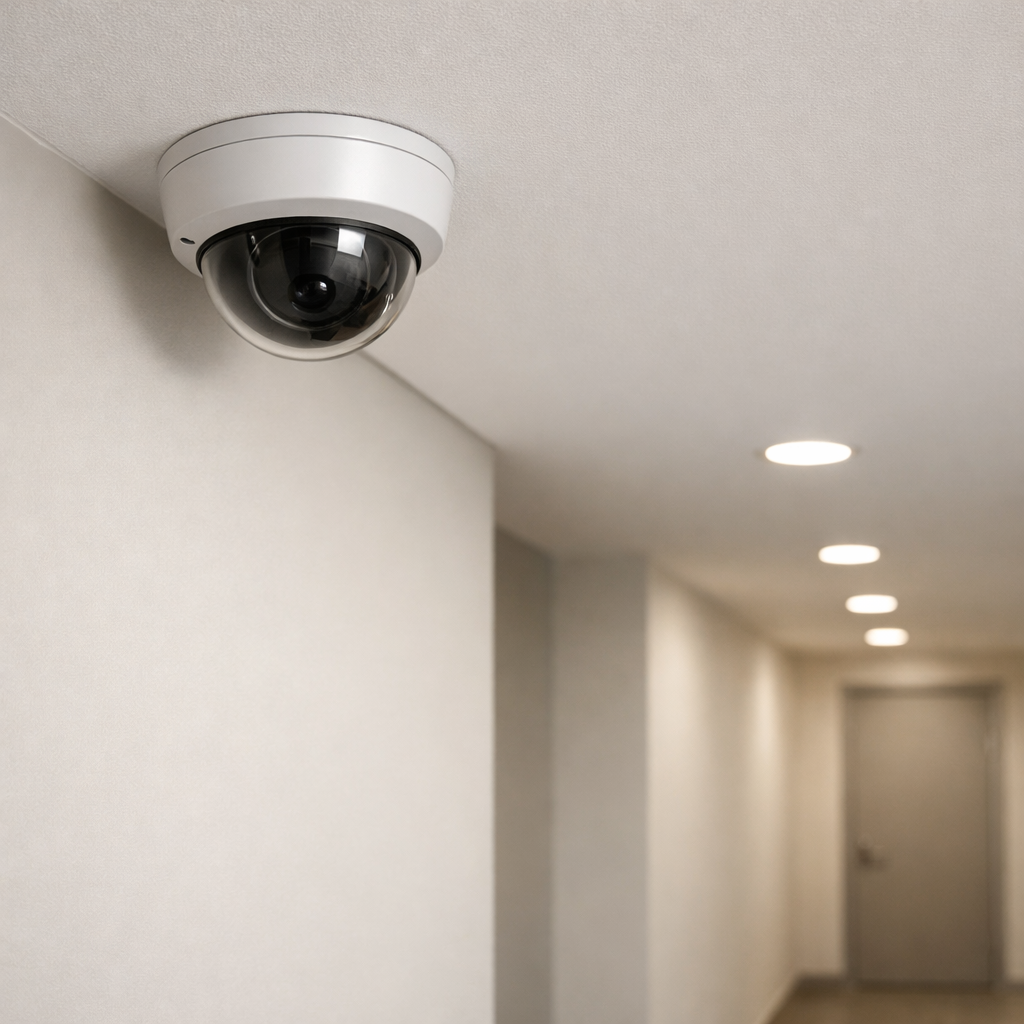
How video surveillance changes employee behavior over time
When cameras are introduced, the initial response is often a visible improvement in compliance and attentiveness—the classic Hawthorne effect. That short-term boost can create a misleading signal of lasting performance. Within weeks, employees begin to recalibrate: those monitored closely may shift to minimal-risk behaviors (avoiding easily observable mistakes) while problems that are harder to detect—like slow decline in motivation or subtle rule evasion—can persist or migrate to unmonitored times and places.
Phases of behavioral change
- Immediate (days–weeks): Increased vigilance, reduction in overt misconduct, and higher reported adherence to procedures.
- Adaptive (weeks–months): Habituation to being watched; employees normalize the presence of cameras and may refine strategies to comply visibly while ignoring unobserved obligations.
- Long-term (months–years): Cultural effects: trust can erode or stabilize into accepted oversight norms; productivity effects flatten; some workers leave if surveillance feels punitive.
Video surveillance: legal boundaries and compliance
Legal risks vary by jurisdiction but share common themes: notice, purpose limitation, data minimization, and secure retention. In the US, state laws and workplace privacy expectations determine what can be recorded and where; audio recording often has stricter rules. In the EU, GDPR principles demand lawful basis, transparency, and data subject rights when surveillance records identify individuals. Operationally, employers should document legitimate interests, retain footage only as long as necessary, and implement access controls to limit misuse. Practical compliance steps include a written policy, visible signage, defined retention periods, and regular privacy impact assessments. Browse Video Surveillance
Comparing surveillance strategies and devices
Not all CCTV systems produce the same behavioral outcomes. Choosing between visible deterrent cameras and discreet monitoring affects both efficacy and legal exposure. Visible dome or bullet cameras often produce stronger deterrent effects immediately; concealed cameras can capture unfiltered behavior but raise higher legal and ethical concerns. Cloud-based systems offer easier audit trails and controlled access but introduce third-party processing risks; local NVR/DVR systems reduce third-party exposure while increasing responsibility for physical security.
Pros and cons — structured comparison
- Visible fixed cameras: Pros: deterrence, clear notice; Cons: blind spots, may drive misconduct elsewhere.
- Pan-tilt-zoom (PTZ) cameras: Pros: targeted follow-up; Cons: require active monitoring and can be perceived as invasive.
- Discrete cameras: Pros: candid capture for investigations; Cons: higher legal risk and employee trust damage.
- Cloud-based CCTV: Pros: scalable updates and remote access; Cons: subscription costs, data residency concerns.
- Local storage systems: Pros: greater control of data residency; Cons: vulnerability to tampering or physical damage.
Use cases: scenarios and decision logic
Practical deployment should match your objectives and tolerance for behavioral side effects. For a small retail store focused on shrinkage reduction, visible cameras covering entrances and points of sale deliver immediate deterrence and clearer evidence for prosecution. For a manufacturing floor where safety compliance is critical, a mix of visible cameras and targeted PTZ units paired with defined audit procedures encourages safer behaviors without constant active surveillance. For homeowners employing caregivers, narrowly scoped cameras in common areas (not private spaces) balance oversight with dignity.
Decision checklist by scenario
- Retail: prioritize deterrence, retention of 30–90 days of footage, and access logging to support investigations.
- Office environment: combine signage, limited camera angles, and HR policies to prevent perceived micromanagement.
- Remote or hybrid teams: use video surveillance only for shared physical spaces (e.g., distribution centers), not home offices.
- Home security with staff: avoid cameras in bedrooms/bathrooms; limit remote viewing and notify household members.
Buyer guide: evaluation criteria and selection logic
Selecting the right system requires matching technology to behavioral objectives, legal constraints, and budget. Prioritize criteria in this order: purpose clarity, legal compliance, camera placement, image quality for identification, storage and retention policy, access control and audit logs, vendor transparency, and support for evidence export. Assess how each feature will influence employee responses—higher resolution may improve detection but can increase perceptions of surveillance; wider coverage reduces blind spots but can feel more intrusive.
Key technical specifications to evaluate
- Resolution and low-light capability: necessary for identification; avoid over-specifying just to collect more personal data.
- Field of view: choose lenses to limit coverage to relevant spaces and reduce incidental capture.
- Storage architecture: cloud vs local, encryption at rest and in transit, and automated overwrite policies.
- Access controls: role-based access with multi-factor authentication and tamper alerts.
Practical examples and common mistakes
Example 1: A café installed visible cameras focused on the register and reported an immediate drop in cash discrepancies, but over six months staff began shifting theft to less visible times. The owners had no retention schedule and no access logs; footage requests overwhelmed management and led to privacy complaints.
Example 2: A small manufacturer used PTZ cameras for safety audits. Initially, injury rates dropped. However, the company relied on a single supervisor to review footage, creating bias in enforcement. After instituting random audits and anonymized performance reviews, behavioral improvements stabilized without punitive culture.
Common mistakes
- Deploying cameras without a documented purpose or policy.
- Failing to post clear notice or inform employees where required by law.
- Overlooking retention and access controls, which increases legal exposure.
- Choosing hidden cameras for convenience without considering ethical impact and compliance risk.
- Assuming surveillance alone solves cultural or management problems.
Legal & ethical considerations (EU and US high-level)
In both jurisdictions, transparency is central: employees should be informed about surveillance that affects them. In the EU, GDPR requires a lawful basis, and individuals have rights to access footage where they are identified. In the US, federal law is limited; state laws and sector-specific rules (healthcare, financial services) add requirements. Ethical practice includes minimizing incidental capture, offering clear grievance channels, and using footage primarily for legitimate safety, loss prevention, or compliance purposes. Retention periods should be justified and communicated, and CCTV administrators must maintain logs of who accessed footage and why. Discreet solutions
Frequently Asked Questions
Q: How long should I keep surveillance footage?
A: Retention depends on purpose: 30–90 days is common for loss prevention; retain longer only for active investigations with documented justification.
Q: Can I put cameras in break rooms or bathrooms?
A: No. Private spaces like bathrooms are typically off-limits; break rooms require careful legal review and clear notice—avoid audio recording unless explicitly lawful.
Q: Will cameras improve productivity long-term?
A: Cameras can improve short-term compliance but are unlikely to sustain productivity gains without parallel management practices and positive incentives.
Q: What policies should I have when installing cameras?
A: A written surveillance policy covering purpose, placement, retention, access controls, and complaint procedures is essential, along with visible signage where required.
Q: Are cloud CCTV systems less compliant than local systems?
A: Not inherently. Cloud systems can be compliant if providers meet data processing obligations and offer adequate controls; evaluate contracts and data residency.
Closing: Understanding how video surveillance changes employee behavior over time allows owners and managers to design systems that achieve security and safety goals while minimizing legal and cultural harm. Make decisions based on clear objectives, documented policies, and ongoing review rather than assuming technology alone will fix underlying management challenges. For decisions about equipment and placement, map behavioral phases to your operations and choose solutions that preserve trust while meeting legitimate security needs.