Video surveillance evidence that holds up in landlord, homeowner and small business disputes
Video surveillance often provides the decisive record when neighbors, tenants, customers or contractors dispute what happened onsite. To be usable in disputes, video surveillance must meet technical, procedural and legal thresholds: clear image and time data, reliable storage and chain of custody, compliant placement and documented policies that withstand scrutiny by insurers, mediators or courts. This article explains those thresholds through practical scenarios for homeowners, landlords and small businesses and offers selection logic and common mistakes to avoid. Read the complete Video Surveillance guide
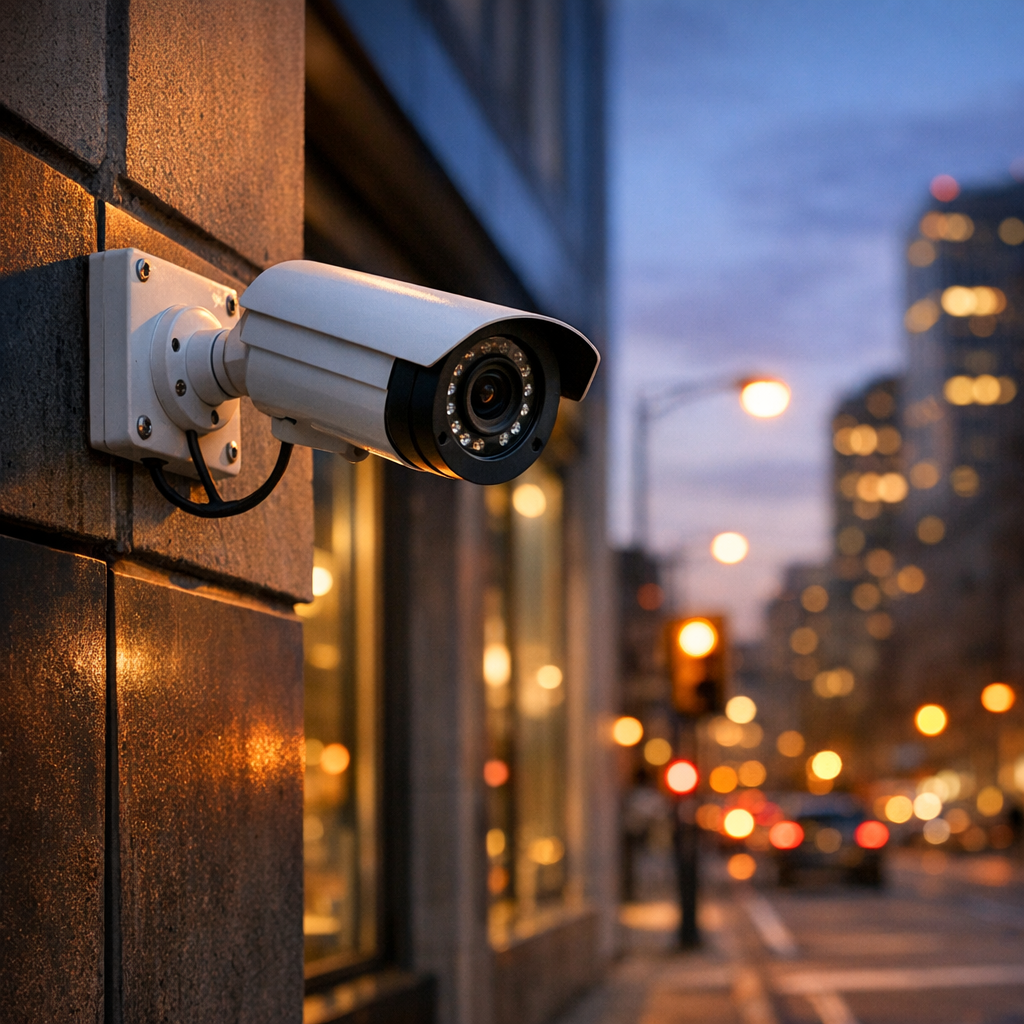
Key elements that make video surveillance evidence admissible
Not every recording is probative. Admissible evidence must show authenticity, relevance and integrity. Authenticity means the footage is what it purports to be: recorded at the stated time and place and not altered. Relevance requires the recording directly address a fact at dispute. Integrity covers the handling of files from capture through storage to presentation so stakeholders can trust they were not tampered with. For home and small business situations, focus on four technical elements: resolution and frame rate to identify subjects or actions; reliable timestamps synced to a recognized time source; logs that record who accessed or exported footage; and an unbroken storage trail that preserves original files.
How video surveillance setup and configuration affect evidence quality
Configuration decisions determine whether footage will be persuasive. Camera positioning and lens selection affect perspective and distortion; low-mounted wide-angle cameras can misrepresent distances, while high-mounted, narrow-field lenses can miss facial detail. Configure exposure and IR settings so night images remain interpretable without excessive bloom. Use network time protocol (NTP) synchronization so timestamps on recordings align with other logs such as entry systems. For businesses, store retention and overwrite policies in writing; for homes, adopt retention rules appropriate to the risk profile—longer retention for shared entrances or recurring issues. Camera choice also matters between local DVR/NVR solutions and cloud-backed systems: local systems require tamper-resistant storage and documented export procedures, while cloud systems require robust account security and export logs.
Chain of custody, export procedures and why they matter for disputes
Chain of custody is the narrative and technical evidence showing who collected, handled and stored the recording. A credible chain reduces challenges about tampering. Best practices: export original-format files whenever possible rather than screen-recorded copies; record MD5/SHA checksums at export; stamp exported files with the exporting account and timestamp; and keep an access log for the surveillance system. For small businesses, assign a single person as the custodian and document any transfers. For landlords, require incident reports with date, time and witness statements attached to exported footage. These practices strengthen the probative value and simplify admissibility questions.
Practical use cases and decision logic
Scenario 1: A tenant alleges repeated unauthorized entry to their unit. The decision logic: verify camera coverage of all entry points (but respect privacy laws), export original clips with checksums, gather corroborating evidence (door logs, maintenance records), and preserve unexported footage by suspending overwrite. Document each step to build a chain-of-custody record that an insurance adjuster or tribunal can evaluate.
Scenario 2: A retail customer claims a slip-and-fall occurred in an aisle. You must identify the exact location and time in store footage and compare with point-of-sale and staff schedules. Prefer continuous, timestamped footage over motion-only clips, which can miss pre-incident behavior. If you rely on cloud storage, capture provider logs showing download timestamps and user accounts to demonstrate integrity.
Scenario 3: A neighbor accuses a homeowner of property damage. For outdoor cameras, ensure field of view is documented with a site diagram and measured distance to the disputed area. Retain original exports and avoid editing or enhancing files beyond basic brightness/contrast adjustments; if enhancement is necessary, document the steps and retain originals to show that alterations did not change the substantive content.
Buyer guide: selecting systems that produce usable evidence
When evaluating CCTV systems, prioritize features that support reliability and defensibility. Key selection criteria: native video format accessibility (avoid closed, proprietary export-only workflows); support for timestamp authentication and NTP; tamper-evident storage or write-once options; audit logs for user activity; and straightforward export in forensic-friendly formats. Consider vendors with documented procedures for evidence exports and willingness to provide logs for legal review. For homeowners, compact home security cameras may suffice if they offer original file export and secure accounts. For business surveillance, choose enterprise-grade NVRs or cloud solutions with clear chain-of-custody and retention controls. Browse Video Surveillance
Common mistakes that undermine evidence
Several predictable mistakes weaken otherwise good footage: overwriting footage before an incident is identified; exporting low-resolution MP4s without originals; using motion-only capture that misses context; failing to preserve original metadata when exporting; and allowing too many accounts to access the system without individual audit trails. Another common error is improper camera placement—pointing cameras at private areas like bathrooms or into neighbors' private spaces—creating legal exposure and resulting in exclusion of the footage. Documented policies and simple technical controls prevent these problems.
Legal and ethical considerations (high-level: EU and US)
Legal standards differ by jurisdiction, but some themes are consistent. In the United States, admissibility hinges on relevance and authenticity, and courts may admit surveillance if the proponent can show a reliable chain of custody and absence of tampering. Specific state privacy laws may restrict audio recording or camera placement in areas with a reasonable expectation of privacy. In the European Union, data protection (notably the GDPR) imposes obligations when footage contains identifiable individuals: you must have a lawful basis for processing, provide appropriate notices where required, and honor data subject requests within legal limits. Retention periods should reflect purpose limitation—store footage only as long as necessary for the stated purpose. Whether in the EU or US, obtain legal advice for contentious cases and adopt policies that balance evidentiary needs with privacy obligations. Discreet solutions
How to prepare footage for dispute resolution, mediation or court
Preparing footage begins with preservation. Immediately suspend scheduled overwrites for the relevant time window, document the reason for preservation, and export original files using the system’s native tools. Create a written log: who accessed the system, times of access, export filenames and checksums, and a description of any processing. If you plan to present clips, prepare an unedited original and a separate edited excerpt for convenience, clearly marking edits and maintaining originals. Work with a neutral technical expert when necessary to produce affidavits or declarations explaining the recording process and any technical limitations. This neutral explanation often reassures decision-makers about reliability.
Frequently Asked Questions
Q: Can home security cameras be used as evidence in neighbor disputes?
A: Yes — footage from home security cameras can be persuasive if it shows the disputed events clearly, includes accurate timestamps, and you can document how the file was exported and preserved.
Q: Are cloud-stored videos less credible than local recordings?
A: Not inherently. Cloud storage can provide strong audit trails and redundancy, but you must preserve provider logs and export originals with metadata to demonstrate authenticity.
Q: How long should I retain business surveillance footage for potential disputes?
A: Retention depends on risk: routine footage may be held for 30–90 days, while high-risk areas or incidents should be preserved longer. Document retention policies that match business purpose and legal requirements.
Q: Will enhanced or edited clips be excluded from evidence?
A: Edited clips are not automatically excluded, but you should always keep and offer originals. Any enhancement must be documented and reversible or explained by an expert to avoid questions of manipulation.
Q: Do I need consent signs for CCTV in my rental property or shop?
A: Many jurisdictions require clear notice when video surveillance captures public-facing or communal areas. Signs and tenant or customer notices help satisfy transparency and data protection obligations; consult applicable local rules.
Educational closing
Video surveillance can be decisive in disputes when systems and processes are designed with evidentiary use in mind. Prioritize clear capture, robust timekeeping, preserved originals and documented handling. Combine technical controls with simple administrative policies—who is custodian, how exports are handled, and how long footage is kept—to create defensible records. Thoughtful selection of cameras and storage, paired with compliance awareness, reduces risk and increases the chance that footage will be accepted by insurers, mediators or courts.