Voice Recorders: Why Homeowners and Small Businesses Misuse Them and How to Avoid Risks
Voice recorders are common tools for capturing meetings, caregiver visits, and investigative notes, but their discreet form factor leads to frequent misuse that carries legal, ethical, and practical consequences for homeowners, small businesses, and independent professionals.
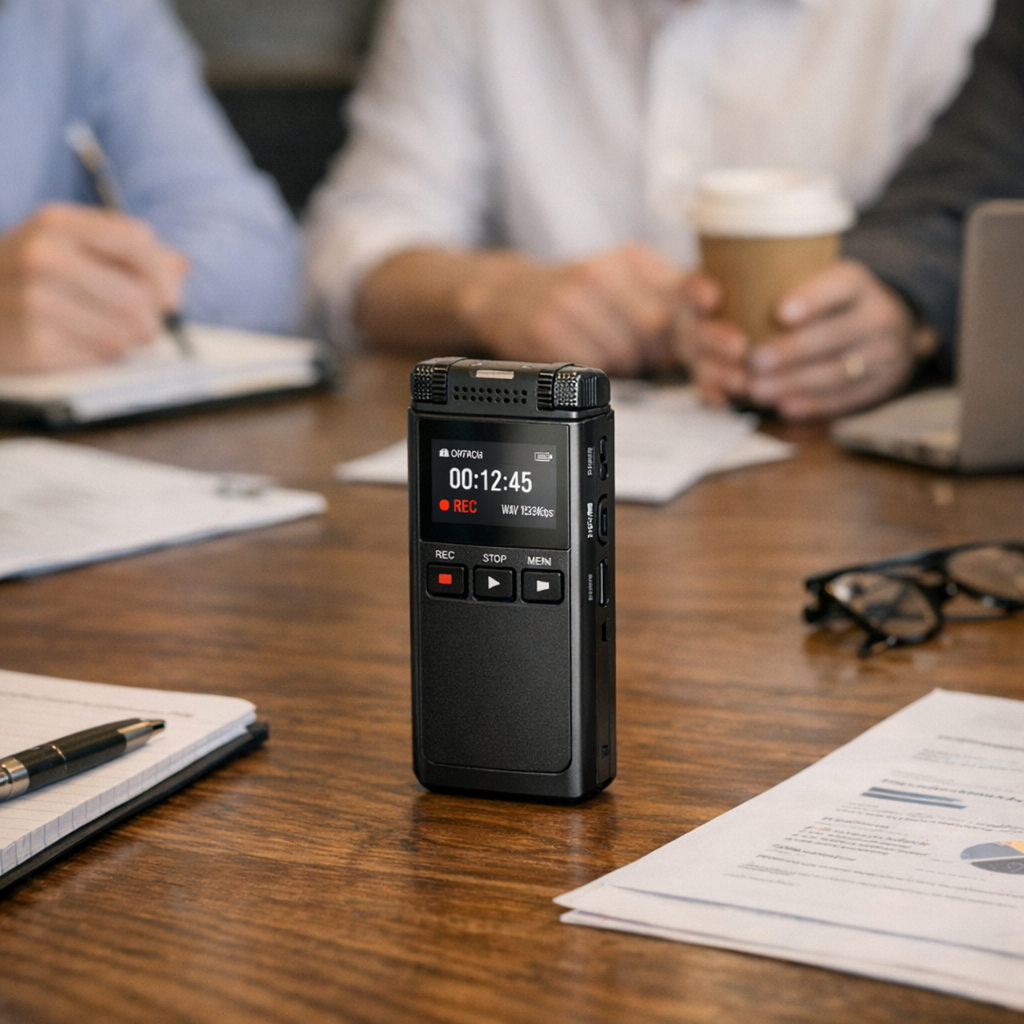
How voice recorders are misused: common scenarios
Misuse of voice recorders often arises from a mismatch between intent and legal boundaries. A homeowner who records a contractor without consent to document shoddy work, a small business manager who captures staff conversations to monitor productivity, or a healthcare aide who records patient interactions for ‘proof’—each scenario may feel justified but can cross statutory privacy lines. Understanding where routine behavior becomes misuse helps reduce risk and preserves legitimate uses. Read the complete Voice Recorders guide
Typical misuse patterns
- Recording private conversations in expectation of confidentiality where one-party consent is insufficient.
- Using concealed devices in locations with a reasonable expectation of privacy (bathrooms, locker rooms, private offices).
- Deploying continuous background recording to monitor people without a stated policy or notice.
- Editing or selectively sharing recordings to misrepresent events.
Comparison: discreet voice recorders versus overt recording — pros and cons
Comparing discreet and overt devices clarifies why discreet voice recorders invite misuse. Discreet devices are designed to be unobtrusive: pen recorders, button-sized units, or gadgets built into everyday objects. The perceived advantage—capturing candid audio—also makes them attractive for covert recordings.
- Discreet devices: pros — high capture fidelity in informal settings, portability, hands-free operation; cons — legal risk if used without consent, evidence admissibility challenges, potential for abuse.
- Overt devices: pros — transparency reduces legal and ethical issues, easier compliance with workplace policies; cons — may alter subject behavior, less suited to spontaneous note-taking.
Choice depends on context: a journalist operating under clear legal protections differs from a homeowner documenting a neighbor dispute. Matching device type to lawful purpose and notice requirements is essential. Browse Voice Recorders
Practical use cases and decision logic
Evaluating when to record and what device to use requires stepwise decision logic. Start by asking: what is the purpose, who are the parties, and what expectations of privacy exist?
Decision checklist
- Define the legitimate purpose: evidence for a legal dispute, personal notes, quality control, or public-interest journalism.
- Identify parties and consent requirements: is one-party consent sufficient in this jurisdiction, or does local law require all-party consent?
- Assess location privacy: public spaces typically have lower expectations of privacy than private homes or offices.
- Choose device visibility: prefer overt devices when possible; reserve discreet recorders only when lawfully justified and ethically defensible.
For small businesses, documented policies and staff consent often make overt recording the safer route. For homeowners, recording a domestic dispute may have admissibility and privacy pitfalls that counsel against covert capture unless advised by a legal professional.
Choosing voice recorders legally and ethically: buyer guide and evaluation criteria
Selecting a suitable recorder requires balancing technical needs against compliance and ethical considerations. Evaluate devices by features, not novelty.
- Recording quality: frequency response and signal-to-noise ratio matter if audio will be used as evidence or transcription.
- Activation method: voice activated recorder modes reduce storage and make review faster, but can miss low-volume speech; manual start gives clearer control.
- Battery life and storage: longer runtimes reduce the temptation to leave devices unattended and forgotten.
- Visibility and form factor: choose overt designs for transparency; pick discreet options only after verifying legal permissibility.
- Security features: encryption and secure file export protect sensitive recordings from unauthorized access.
- Chain-of-custody support: time stamps and checksum features improve reliability for formal evidence.
Common mistakes include prioritizing novelty (smallest body or disguised form) over compliance features, ignoring consent-based rules, and failing to secure recorded files. Buyers should weigh whether a voice activated recorder mode or continuous capture better fits their lawful use case.
Practical examples and common mistakes
Real-world examples help illustrate misuse patterns and corrective choices.
- Home dispute: A resident hides a pen recorder to document a neighbor’s threats. Mistake: recording without clear evidence of imminent harm and without knowing local consent laws; alternative: document incidents in writing and consult legal counsel before audio capture.
- Employee monitoring: A shop owner uses a tiny recorder to capture staff conversations. Mistake: covert surveillance without workplace policy or notice; alternative: implement written monitoring policies and visible signage, or use overt meeting recordings with consent.
- Caregiving concerns: A family member records a caregiver to check for neglect. Mistake: hiding a device in private areas; alternative: install overt cameras in communal spaces where legal and appropriate, and keep recordings secure and limited to necessary review.
- Freelance professional notes: An auditor uses a pocket recorder during interviews. Best practice: announce recording at the start, obtain verbal consent, and keep files encrypted.
Legal and ethical considerations (high-level US and EU overview)
Legal frameworks differ across jurisdictions; this section provides high-level, non-legal advice for risk awareness rather than counsel.
In the United States, state laws govern consent. Some states require only one-party consent (you may lawfully record if you participate), while others require all-party consent. Federal law generally defers to state rules for in-person recordings. Ethical considerations include informed consent and respect for privacy expectations.
In the European Union, the GDPR intersects with audio recordings because recorded voice can be personal data. Controllers must have a lawful basis for processing (consent, contract, legitimate interest) and apply minimal retention and security safeguards. Recording without a lawful basis or without adequate notice can create regulatory risk in addition to privacy harm.
Operationally, adopt these defensible practices: document legitimate purpose, minimize collection scope, secure storage with access controls, and retain recordings only as long as necessary. When in doubt, seek legal advice rather than assuming permissibility. Discreet solutions
Frequently Asked Questions
Can I use a voice recorder to capture a contractor’s performance in my home?
Possibly, but legality hinges on jurisdictional consent rules and whether the recorded conversation occurs in a private area. Prefer overt notification or written documentation and consult counsel if the recording is intended for legal use.
Are voice activated recorder settings reliable for evidence collection?
Voice activation saves storage and reduces review time but can miss low-volume or overlapping speech. For evidentiary purposes, continuous recording or manual control paired with a high-quality microphone is more reliable.
Is it legal to record employees discussing work in the office?
Not always. Workplace monitoring is governed by local employment and privacy laws; transparency through policies and notice typically reduces legal risk and supports ethical practice.
How should I store and share recorded audio to avoid privacy breaches?
Use encrypted storage, restrict access to necessary individuals, avoid public sharing, and delete recordings once they no longer serve the documented purpose.
Do disguised voice recorders make recorded evidence inadmissible?
Admissibility depends on chain-of-custody, authenticity, and whether the recording was lawfully obtained. Covert recordings may be excluded or create legal liability even if technically clear.
Educational closing
Discreet devices are powerful tools, but their very discretion is what leads to frequent misuse. A deliberate approach—assessing legal consent rules, choosing overt or discreet equipment according to context, documenting purpose, and securing files—prevents harm and preserves lawful utility. For practical comparisons of models and technical features that align with lawful use, consult product overviews and policy templates to match a device to a defensible, transparent workflow.