Voice Recorders for Homeowners and Small Businesses: Legal Risks When Devices Fail
When voice recorders stop working or produce unusable files in sensitive situations, homeowners, tenants, and small businesses face more than a technical loss — they face legal exposure. This article analyzes the compliance implications of failed recordings, how evidence rules treat corrupted audio, and decision logic for selecting or retiring devices to reduce admissibility and privacy risk. Read the complete Voice Recorders guide
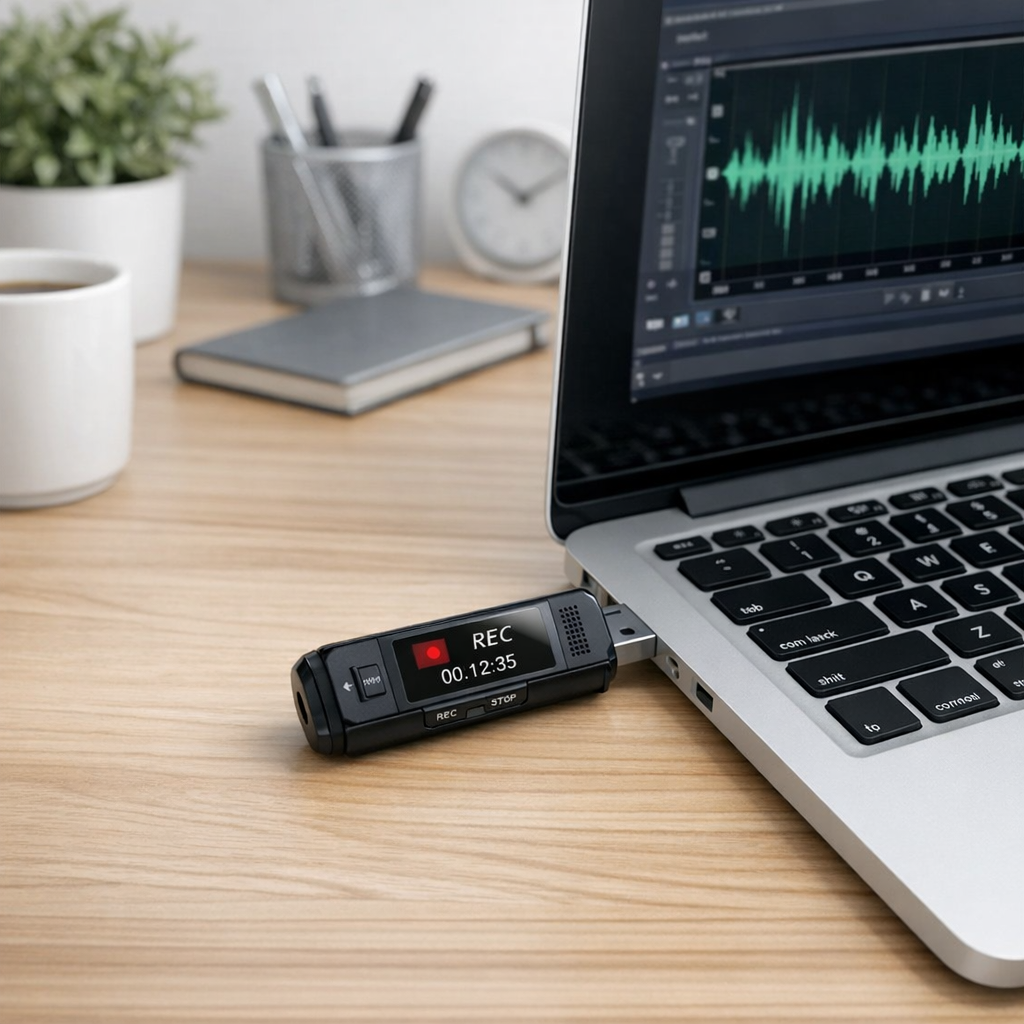
Legal boundaries for voice recorders in real-world scenarios
The law around recording conversations varies by jurisdiction and by setting. In the United States, most states are one-party consent for audio capture, but a significant minority require all-party consent; in the EU, data protection rules and national interception laws create layered constraints. For property owners recording on private premises, consent rules, tenant protections, and expectations of privacy are critical. For small employers, additional workplace statutes and labor rules can apply. The status of a recording that fails — incomplete, corrupted, or missing metadata — changes how courts and regulators treat it, often raising chain-of-custody and authenticity questions that may render evidence inadmissible.
Comparing failure modes of voice recorders: evidence risk and compliance
Not all failures are equal. Logically grouping failure modes helps assess legal risk and remedial steps: hardware failure (dead batteries, damaged microphones), software failure (file system corruption, unsupported formats), environmental failure (background noise, interference), and human error (incorrect settings, accidental erasure). A failed device that produced partial audio with timestamps intact presents a different evidentiary profile than a device that overwrote prior files or used proprietary encryption without accessible keys. Organizations should evaluate how each failure mode impacts admissibility, privacy law compliance, and obligations to preserve evidence in disputes or investigations. Browse Voice Recorders
Use cases and decision logic: when a failed voice recorder becomes a legal problem
Consider three common real-world scenarios: a homeowner seeking proof of repeated vendor misconduct; an SME documenting a disciplinary meeting; and an independent contractor collecting client direction. In each case, decision logic follows a pattern: identify applicable consent rules, determine whether the incident occurred in a limited-expectation-of-privacy area, assess whether the recording was stored according to retention and access controls, and evaluate whether a failure undermined authenticity. For example, if an employee deleted files and the device kept automatic backups, retention policies and forensic access may preserve admissibility; if no backups exist, the failed recorder could create an evidentiary gap that weakens legal claims.
Scenario analysis: homeowner dispute
A homeowner uses a digital voice recorder to document threating behavior in a shared hallway. If the device fails mid-incident and yields an incomplete file, prosecutors or mediators will scrutinize chain-of-custody and whether the missing portion excused editing. Homeowners should document device status, settings, and any contemporaneous notes and preserve the device to support credibility.
Scenario analysis: small business compliance
During a personnel issue, an employer uses a voice activated recorder to capture a meeting. If the device's voice-activation threshold missed portions of the conversation, the incomplete record can create unfair impressions or violate local consent laws if participants believed all content was recorded. Employers must weigh the risks of relying on devices that drop quiet speech or buffer asynchronously.
Buyer’s checklist and evaluation criteria for reducing legal risk
Selecting a device requires evaluating technical features through a legal lens. Key criteria include reliable file integrity (journaling filesystems or transaction-safe writes), timestamp accuracy and exportability, supported formats with broad forensic tool compatibility (avoid obscure proprietary codecs unless export is guaranteed), secure storage options, and clear user controls for consent notification. Also weigh maintenance: replaceable batteries, regular firmware updates, and documented audit logs reduce the chance of unexpected failure or disputes about authenticity. When purchase decisions are documented, include retention policies and employee or household notifications to align practice with law. Discreet solutions
Practical examples and common mistakes
Common mistakes recur across homeowners and small businesses. First, relying solely on a single cheap voice recorder with no backup. Second, failing to check consent obligations or to inform participants where required. Third, neglecting to verify file formats and timestamps before incidents occur. Fourth, using voice activated recorders without testing activation thresholds in the target environment — this often results in gaps. A practical example: a contractor used a voice activated recorder in a noisy construction site; wind and machinery prevented activation for low-voice intervals, so important directives were never captured, producing a compliance gap and contractual dispute.
- Mitigation: implement dual-record workflows where critical conversations are recorded by two devices or by device-plus-logged notes.
- Mitigation: choose devices with redundant write confirmation and exportable checksums to support later authentication.
- Mitigation: test devices in representative environments and validate voice activated recorder thresholds to reduce false negatives.
Legal and ethical considerations (EU and US high-level)
In the EU, recordings implicate data protection (GDPR) when they identify individuals or are processed systematically. That means legal bases for processing, transparency obligations, and secure retention are required, and failures that expose personal data can trigger breach notification duties. In the US, federal laws rarely regulate one-to-one recordings, but state statutes vary widely on consent; some states criminalize nonconsensual recording. For employers, sector-specific rules (healthcare, finance) may impose stricter controls. Ethically, operators must avoid surreptitious recording in contexts where privacy is reasonably expected; a failed recorder that later produces partial audio risks surfacing sensitive content that subjects assumed was private. These are high-level considerations and not legal advice; consult counsel for jurisdiction-specific obligations.
Technical preservation steps after a failure
When a failure occurs, preserve the device and any auxiliary media. Do not attempt repeated recoveries that may overwrite remnants; document the device state, serial numbers, firmware versions, and chain of custody. If legal action is foreseeable, engage a digital forensics specialist for controlled extraction. Maintain logs of who handled the device and when. For small businesses, a written retention and incident response policy helps demonstrate reasonable steps to regulators or courts when failures happen.
Frequently Asked Questions
Can a corrupted file from a voice recorder be admitted in court? Corrupted files can be admissible, but courts will carefully examine authenticity, chain-of-custody, and whether the corruption undermines reliability; expert forensic testimony is often required.
Does a voice activated recorder protect privacy better than continuous recorders? Not necessarily; voice activation reduces stored data but can miss speech and create evidentiary gaps, and it does not change consent obligations or legal restrictions on recording.
What should I do immediately after a recorder fails during a critical conversation? Preserve the device and any backups, avoid powering it on repeatedly, document the incident in writing, and consult a forensic specialist if the recording has legal significance.
Are consumer digital voice recorders acceptable evidence in disputes? They can be, but courts prefer devices that provide verifiable timestamps, unaltered file integrity, and a documented chain of custody; lack of these features increases the risk of exclusion.
How do I choose a recorder to minimize legal risk? Prioritize devices with robust file systems, clear export formats, secure storage, documented timestamps, and vendor transparency about firmware and recovery tools; pair device selection with policies on consent and retention.
Educational closing
Failure of voice recording equipment transforms a technical incident into a legal and evidentiary problem. Owners and operators must combine technical safeguards, clear policies, and awareness of jurisdictional consent and data-protection rules to reduce risk. Routine testing, dual-record strategies for high-stakes conversations, and documented preservation procedures materially affect whether a failed recording will harm or help a legal position. For practical setup and device options aligned with these legal priorities, consult detailed product collections and pillar resources to align procurement with compliance planning.