

Concealed Indoor Cameras: Methods and Privacy Risks
Concealing an indoor camera changes transparency and practical operation, but its housing alone cannot determine whether use is lawful. Assess the purpose, people affected, location, audio and data handling before installation.
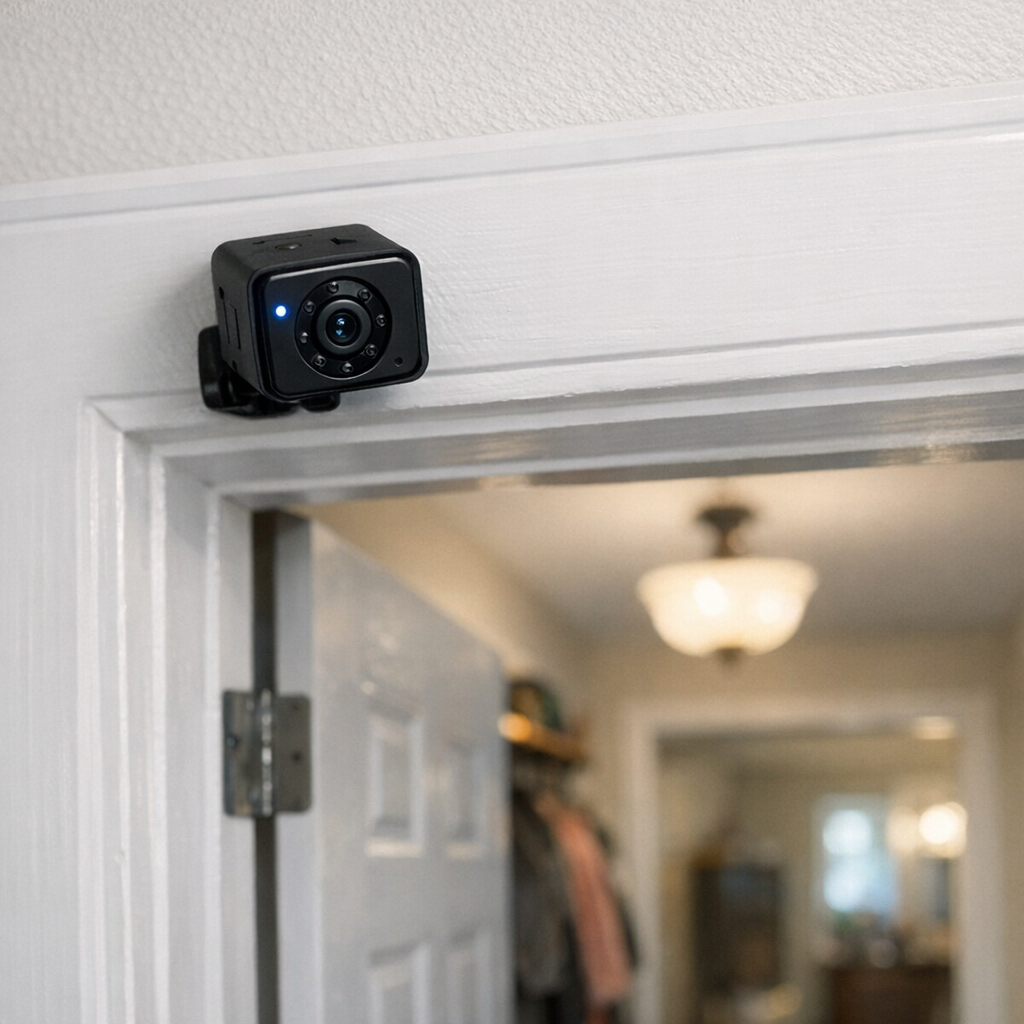
Avoid a false risk scale
“Visible,” “camouflaged” and “pinhole” are descriptions, not legally defined low-, medium- and high-risk categories. A visible camera can still be intrusive or unlawful. A pinhole camera does not necessarily record audio, and an indicator light does not establish permission. Device features cannot certify compliance.
Consider less intrusive alternatives
Define the concern and whether physical access controls, direct supervision or an openly positioned camera meet it. A desire to observe people behaving naturally is not sufficient authority for covert monitoring. Covert workplace investigations need a specific assessment of necessity, proportionality and applicable employment and privacy law.
Private homes, caregivers and rentals
Home ownership does not remove the rights of family members, workers or guests. Avoid highly private areas and assess audio separately. A caregiver's agreement may not resolve every employment or data-protection requirement.
Rental entryways and common areas are not automatically authorised by a lease clause. Local law and platform rules can impose additional restrictions. Airbnb currently prohibits cameras monitoring indoor spaces in home listings, even when turned off. Do not use the absence of guests as a general justification for leaving an undisclosed camera in a listing.
Keep installation safe
Concealment can obstruct the lens, microphone, ventilation or wireless link. Test the actual image and recording behaviour. Never modify or replace a required smoke alarm or electrical safety equipment to hide a camera. A camera-shaped alarm housing is not necessarily a functioning approved safety device.
Protect recordings and rights
Where relevant data-protection law applies, identify the appropriate lawful basis, privacy information, retention, access controls and rights process. Consider whether a DPIA is required. Signs, disabling audio and short retention are safeguards, not a substitute for the full assessment.
Preserve relevant original files responsibly when an incident occurs. Neither logs, timestamps nor a clear recording guarantee admissibility or prove an allegation. Seek local professional advice for a sensitive deployment before recording.


