
GPS trackers for homeowners and fleets: what alerts actually mean in practice
When a notification flashes on your phone or a panel logs an event, gps trackers are telling you more than just a dot on a map. Understanding what those alerts actually mean in practice helps homeowners, fleet managers, and small-business owners decide when to act, when to ignore noise, and how to stay within legal boundaries. This guide focuses on practical interpretation of alerts from commonly used devices, with evaluation criteria for buying and deploying trackers responsibly. For deeper technical context about real time gps mechanics, see our real-time location tracking primer Read the complete GPS Trackers guide
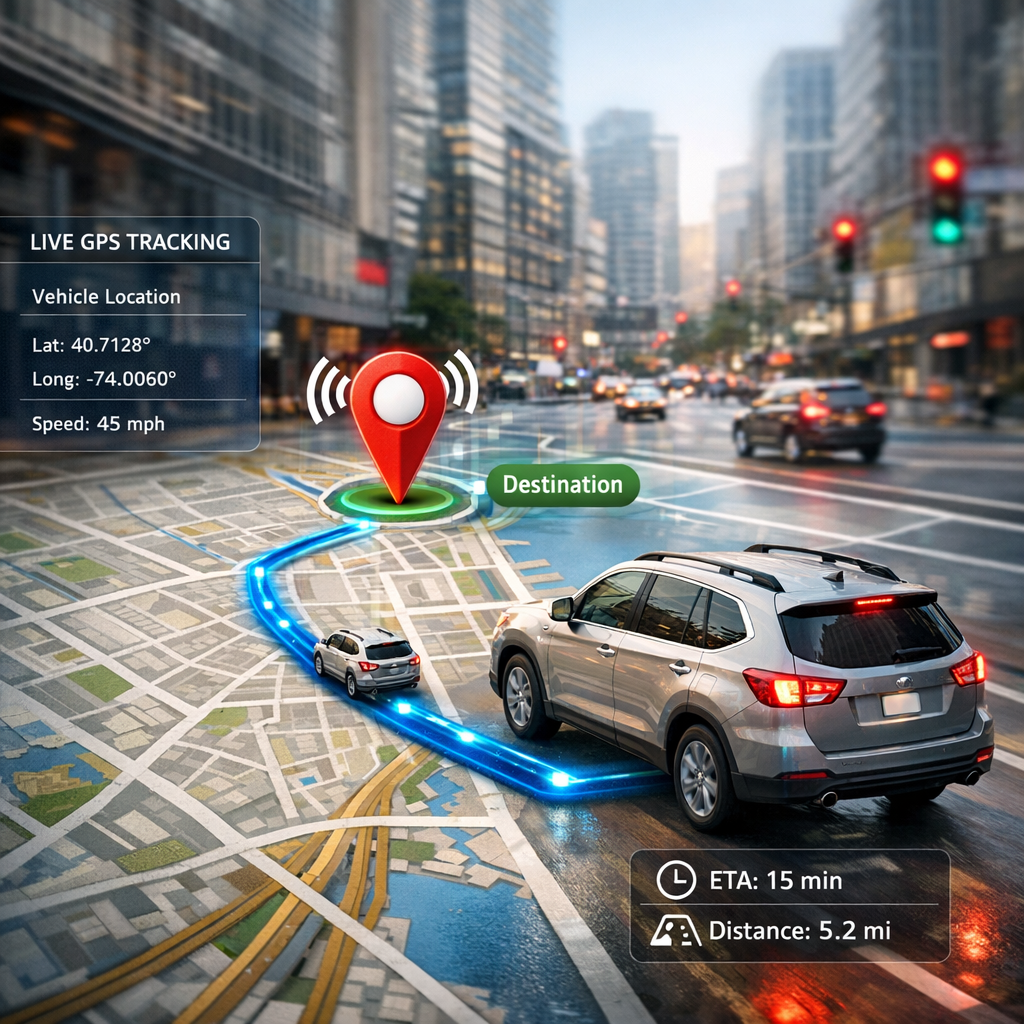
How gps trackers generate alerts: signals, triggers, and confidence
Alerts from gps trackers come from three basic sources: raw GNSS position changes, on-device sensors (motion, accelerometer, ignition), and cloud-based rules (geofences, speed thresholds, idle-time). A single alert may combine inputs — for example, a sudden location jump plus accelerometer data may create a "possible tampering" or "impact" alert. Understanding the source is the first step in deciding response levels.
Signal fidelity and false positives
Real world conditions — urban canyons, tree cover, parking garages — degrade satellite visibility and can produce jitter or multi-path errors that look like sudden relocations. Devices that rely on assisted localization (cell tower triangulation, Wi‑Fi) may issue lower-confidence updates labeled as "approximate". If your use case is vehicle gps tracking for route compliance, prioritize units with frequent polling and algorithms that suppress isolated outliers.
Common alert types you will see from gps trackers and what to do
Most systems categorize alerts. Familiarize yourself with these standard types and practical response logic:
- Geofence enter/exit — Rule-based; confirm timestamp, compare to scheduled activity, and check historical location. For homeowner uses (e.g., elderly family member), verify within two minutes before taking action.
- Speed violation — Often generated for vehicle gps tracking. Check consecutive samples to avoid acting on a single GPS spike. Use aggregated reports for enforcement.
- Movement when parked — Useful for asset tracking. Validate with ignition or motion sensor: a motion alert without ignition implies towing or theft in many designs.
- Power/tamper — High-priority: loss of A/C power to a hardwired tracker or removal of backup battery usually merits immediate attention and possible on-site check.
- Low battery — Schedule maintenance windows; prioritize devices on critical assets.
Comparison: device classes and how alerts differ
When evaluating gps trackers, you are choosing trade-offs between power, accuracy, connectivity, and tamper resistance. The alert semantics and reliability change with device class:
- OBD-II/ignition-powered units — Best for vehicle gps tracking where ignition state provides reliable context. Alerts tied to ignition are less ambiguous.
- Hardwired fleet trackers — Offer permanent power and tamper detection; alerts are reliable but installation is invasive.
- Battery-powered asset trackers — Useful for asset tracking and temporary placements; movement alerts may be primary, but battery and reporting intervals limit real time gps fidelity.
- BLE/Wi‑Fi adjunct devices — Provide high accuracy in short-range environments (warehouses); combine with cellular GPS for outdoor tracking.
Pros and cons hinge on your use cases: homeowners tracking a stolen bicycle will favor compact battery units with vibration alerts, while a delivery operator should select hardwired units with speed and ignition correlation.
Real-world scenario matrix
Scenario 1: Homeowner with elderly relative — prioritize geofence and low-battery alerts from a wearable or small tracker; require short polling intervals during active hours. Scenario 2: Small delivery fleet — hardwired or OBD units with frequent position updates and driver behavior alerts. Scenario 3: Construction equipment — rugged asset tracking with motion-triggered alerts and tamper detection. Matching alert semantics to workflow reduces false alarms and response time.
Buyer guide: evaluation criteria for alerts and systems
When choosing gps trackers, evaluate the alerting system against five criteria: accuracy, latency, context, configurability, and privacy controls.
- Accuracy — Check nominal GPS accuracy and whether AGPS or multi-constellation GNSS is used. Accuracy affects both geofence reliability and speed calculations.
- Latency (real time gps performance) — For recovery or active monitoring you need low-latency reporting. Confirm average and worst-case update times and whether the device supports immediate panic alerts.
- Contextual sensors — Devices that include ignition input, accelerometers, and tamper switches reduce ambiguous alerts by providing correlated evidence.
- Configurability — Look for granular alert thresholds, escalation chains, and customizable hold-off logic to reduce false positives.
- Privacy & data retention — Verify retention periods, exportability, and whether you can limit access to specific users or time windows.
Also consider integration: can alerts feed into your ticketing or dispatch system? If you want to browse devices before buying, check our GPS tracking collection for common models and deployment notes Browse GPS Trackers
Common mistakes and practical examples
Many buyers act on alerts without validating context. Examples:
- Responding to a single geofence exit without checking recent signal quality causes unnecessary dispatches. Best practice: check at least two consecutive high-confidence reports.
- Treating every motion alert as theft: assets in transit often show repeated motion spikes. Implement activity windows and combine with known schedules.
- Ignoring tamper alerts from hardwired units because installers failed to set up tamper zones. Test tamper detection during commissioning.
Practical example: a small landscaping company configured movement alerts for trailers. Initially they received frequent false positives because trailers were on ferries (cellular handovers). Adjusting the rule to require motion for three consecutive samples and adding slow-speed exemptions reduced false alarms by 80%.
Legal and ethical considerations for gps trackers (high-level US and EU)
Tracking raises legal and privacy issues that vary by jurisdiction. In the US, laws distinguish employer-issued trackers on company vehicles versus covert tracking of individuals; state statutes and federal wiretapping rules may apply in specific circumstances. In the EU, data protection principles under the GDPR impose obligations: processors must have lawful basis, limit retention, and honor data subject rights. Always document your lawful basis, provide clear notices to drivers or occupants where required, and minimize data collected to what is necessary for the purpose.
Operational controls: retain logs for the minimal time needed, restrict user access, encrypt stored location data, and implement audit trails for alert escalations. Consult legal counsel for operations involving tracking of employees or third parties. For implementation guidance on configuring real time gps alerts to be compliant and auditable, review our technical roadmap Discreet solutions
Frequently Asked Questions
Q: How accurate are alerts from consumer-grade gps trackers? A: Consumer units typically offer 3–10 meter accuracy outdoors under good sky view; accuracy degrades in urban canyons and indoors, so treat single-sample alerts with caution.
Q: Can I rely on a movement alert to confirm theft? A: Movement alerts are indicative but not definitive. Combine motion with tamper, ignition state, or consecutive high-confidence positions before escalating to law enforcement.
Q: How often should a fleet tracker report for effective monitoring? A: For active route monitoring, 10–30 second reporting intervals are common. For long-term asset tracking, reporting can be minutes to hours to conserve battery.
Q: Do gps trackers work in parking garages? A: GPS signals are often weak or absent indoors. Devices that supplement GNSS with Wi‑Fi or Bluetooth positioning offer better indoor performance, but expect degraded accuracy.
Q: What are acceptable retention practices for tracked location data? A: Retention must be justified by purpose. For operational safety, short-term retention (30–90 days) is common; for audits or compliance, longer retention may be needed but should be documented and secured.
Closing: Interpreting alerts from gps trackers requires reading signals in context — signal quality, device class, and configured rules all influence whether an alert demands immediate action or scheduled review. Use the evaluation criteria above when selecting devices, test alert logic under realistic conditions, and build privacy protections into your procedures to reduce legal risk while preserving operational value.