gps trackers: vehicle placement and signal reliability for homeowners and small fleets
Proper placement of gps trackers is the single most important factor for reliable location reporting in vehicles, whether you are a homeowner tracking a family car or managing a small fleet. Placement affects antenna orientation, exposure to sky view, interference from metal and electronics, and ultimately signal quality and update frequency. This article explains how placement influences reliability, compares common mounting options, offers real-world use cases and buyer criteria, and outlines legal boundaries to help you choose and position a device safely and lawfully. Read the complete GPS Trackers guide
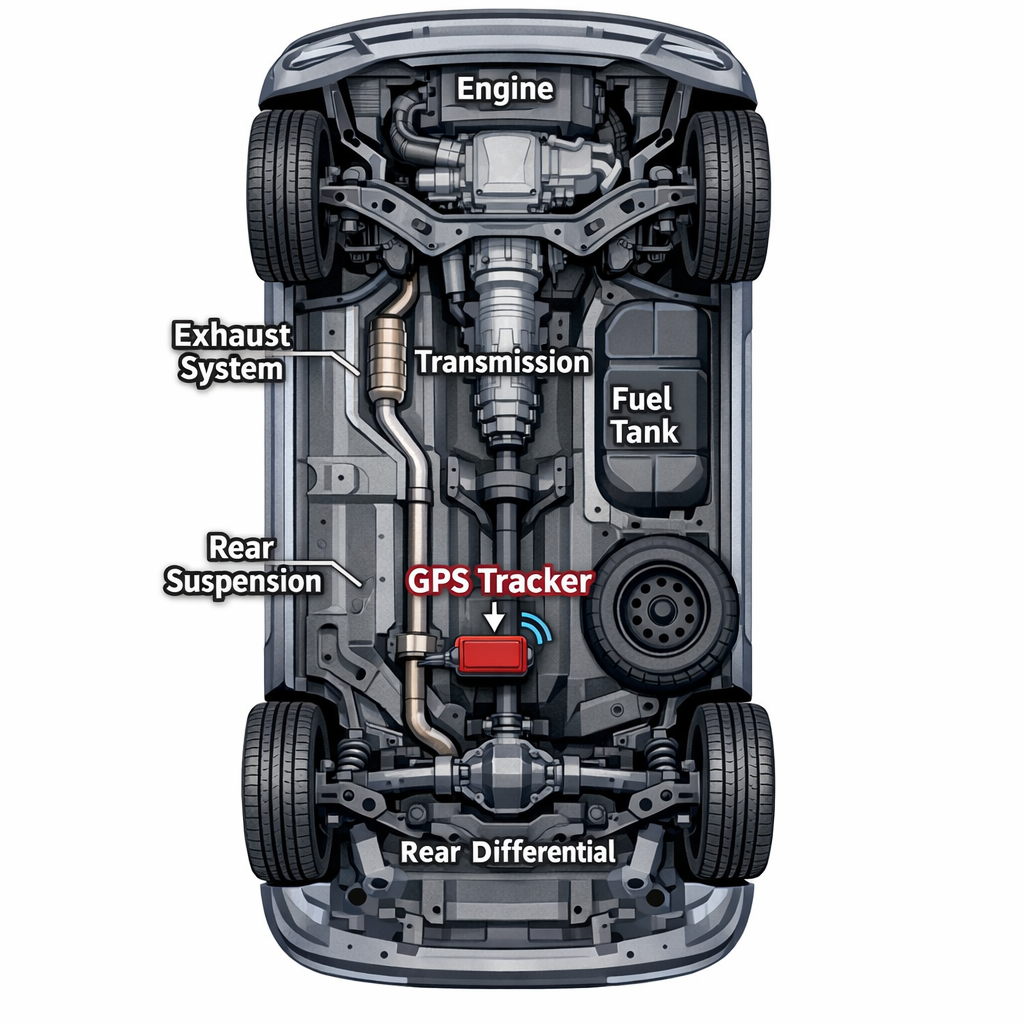
How gps trackers placement affects signal quality
Signal quality for gps trackers depends on three physical factors: line-of-sight to GPS satellites, radio propagation to cellular networks (for real-time devices), and electromagnetic interference inside the vehicle. A tracker placed with a clear rooftop view will typically lock satellites faster and maintain a low horizontal dilution of precision (HDOP), improving accuracy. Conversely, placement inside deep metal enclosures — trunks, under heavy-duty bumpers, or inside engine bays — blocks signals and forces devices to rely on intermittent fixes or assisted-GPS fallbacks.
When a vehicle gps tracker is mounted near the center of mass or inside the cabin, orientation of the internal antenna changes. Antennas have directional sensitivity; if the antenna plane is parallel to the sky, reception improves. If an antenna faces metal or is shielded by dense materials (glass with embedded heating elements, metallic films), signal quality degrades. Real-time trackers that use cellular networks to upload positions also require sufficient GSM/LTE signal. Locations with good satellite view but poor cellular reception will produce accurate local fixes that cannot be transmitted promptly, reducing practical reliability for live monitoring.
gps trackers: best and worst placement scenarios
Compare common mounting choices using a pros/cons approach to clarify trade-offs in accuracy, concealment, tamper-resistance, and maintenance.
Roof-mounted or under-roof positions (best for signal)
Pros: maximum sky visibility, fastest satellite lock, consistent HDOP, good cellular signal for live trackers. Cons: more visible to casual observers, may require professional installation to ensure weatherproofing. This is often the recommended choice for users prioritizing signal quality over concealment.
Underbody or chassis mounts (trade-offs)
Pros: good concealment, moderate tamper-resistance. Cons: metal and the vehicle body attenuate GPS and cellular signals; water, mud, and exhaust heat can shorten device life. For fleet vehicles operating in open roads, underbody mounts can work if you select devices with high-sensitivity receivers and external antennas where possible.
Inside the cabin: glove box, under seats (mixed reliability)
Pros: easy maintenance, protected from weather, hard for thieves to reach quickly. Cons: interior structures, especially dashboards and roofs with insulation or metallic content, reduce satellite reception. For homeowners tracking family vehicles at home or in urban environments with assisted positioning services, cabin location can be acceptable if you test signal quality.
Engine bay or trunk (worst for consistent signal)
Pros: excellent concealment and often good tamper-resistance. Cons: heavy interference from metal, heat, and noise; unreliable satellite fixes; shortened device lifespan. Use these only when concealment is critical and choose models designed and rated for harsh environments.
Comparison: factors to weigh when choosing placement
When evaluating placement options, structure your decision across priorities: signal quality, concealment, durability, power access, and compliance. A simple decision matrix helps: assign each priority a weight and score each mounting option. For example, if real-time location is critical and you need low latency updates, weight signal quality and cellular access higher; rooftop or under-roof placements will usually score best. If theft prevention is the primary concern, underbody or concealed cabin locations may score higher despite lower signal quality. Browse GPS Trackers
Use cases and decision logic for homeowners and small businesses
Scenario: a homeowner wants to monitor a teenager’s driving and geofence a few trips. Priorities: moderate concealment for privacy, consistent daytime tracking, and easy removal for charging. Recommendation: place the vehicle gps tracker under the rear parcel shelf or inside a center console with testing to confirm satellite lock times. Scenario: a landscaping small business runs a fleet of trucks with equipment that is often left at sites. Priorities: tamper-resistance, long battery life, and live alerts for movement. Recommendation: underbody or frame-mounted trackers with external antennas or repeaters and rugged enclosures; implement scheduled maintenance checks.
For businesses that ship vehicles between urban canyons and open roads, hybrid strategies work best: use a primary concealment mount plus an external, low-profile antenna for the tracker to improve satellite line-of-sight. In every use case, validate placement with field tests: measure time-to-first-fix, HDOP, and packet loss to your tracking server or platform before finalizing installation.
Buyer guide: evaluation criteria and common selection mistakes
Choose a tracker by evaluating receiver sensitivity, antenna options (internal vs. external), IP rating for weather exposure, and how the device handles periods of low signal quality (buffering, store-and-forward). Ensure the vehicle gps tracker supports the cellular bands used in your region and offers the telemetry frequency your use case requires. Beware of common mistakes: selecting devices on price alone, neglecting antenna placement, assuming 'hidden' equals 'reliable', and failing to test in representative conditions. Discreet solutions
- Receiver sensitivity: higher sensitivity models maintain locks longer in marginal conditions.
- Antenna flexibility: external antennas let you place the antenna for sky view while keeping the tracker hidden.
- Ingress protection: IP67+ ratings are important for underbody mounts.
- Power options: wired power offers continuous tracking; battery-only units must conserve transmissions and may miss real-time alerts.
Practical examples and common mistakes
Example 1 — Delivery van with frequent stops: a roof-mount under a low-profile housing increased signal quality and reduced fix times, which improved route verification and customer ETA accuracy. Example 2 — Personal car in an apartment garage: a tracker tucked in the glove box showed sporadic reporting; moving it to the parcel shelf improved satellite acquisition and cut missed geofence events by half. Common mistakes include relying on manufacturer coverage claims without in-situ testing, burying a device under multiple layers of insulation for concealment, and not accounting for urban canyon multipath in dense cities.
Legal & ethical considerations (high-level: EU and US)
Placement and use of gps trackers must respect privacy and consent laws. In the US, laws vary by state: tracking an employee vehicle generally requires clear policy and consent; tracking a private individual without consent can carry criminal or civil penalties. In the EU, the General Data Protection Regulation (GDPR) frames location data as personal data; lawful processing requires a legal basis (consent, legitimate interest with safeguards, or contract necessity) and clear data retention policies. Avoid placing trackers on vehicles you do not own or control without documented consent, and implement data minimization, secure storage, and access controls to reduce compliance risk. This section does not constitute legal advice—consult counsel for specific situations.
Frequently Asked Questions
Q1: How much does placement affect gps accuracy? A1: Placement can change accuracy by meters to tens of meters depending on obstruction, multipath, and antenna orientation; testing in the specific vehicle and environment provides the best estimate.
Q2: Can an internal antenna work as well as an external one? A2: Internal antennas can be adequate in open-sky conditions but are more susceptible to obstruction by vehicle materials; external antennas generally give superior and more consistent signal quality.
Q3: Is there a legal difference between tracking company and personal vehicles? A3: Yes—company policies and consent processes differ. Employer tracking typically requires a documented policy and employee notice; personal tracking is subject to privacy laws and may require explicit consent depending on jurisdiction.
Q4: Will placing a tracker under the vehicle void warranties or damage the device? A4: Underbody mounting without proper IP-rated enclosures can shorten device life and expose it to impact and water ingress; consult device specifications and a professional installer for warranty implications.
Q5: How do I test placement before committing? A5: Run a staged test: measure time-to-first-fix (TTFF), track for several hours in representative urban and rural conditions, log fix accuracy, and monitor packet delivery success to your platform; adjust location and retest until results meet requirements.
Educational closing
Placement of gps trackers is a technical and practical decision that balances signal quality, concealment, durability, and legal responsibility. Use structured comparisons, real-world testing, and clear policies to select the right combination of device and mount for your situation. Thoughtful placement and maintenance reduce false alerts, improve reliability, and protect privacy—delivering predictable, actionable location data for homeowners, operators of small fleets, and professionals responsible for asset security.