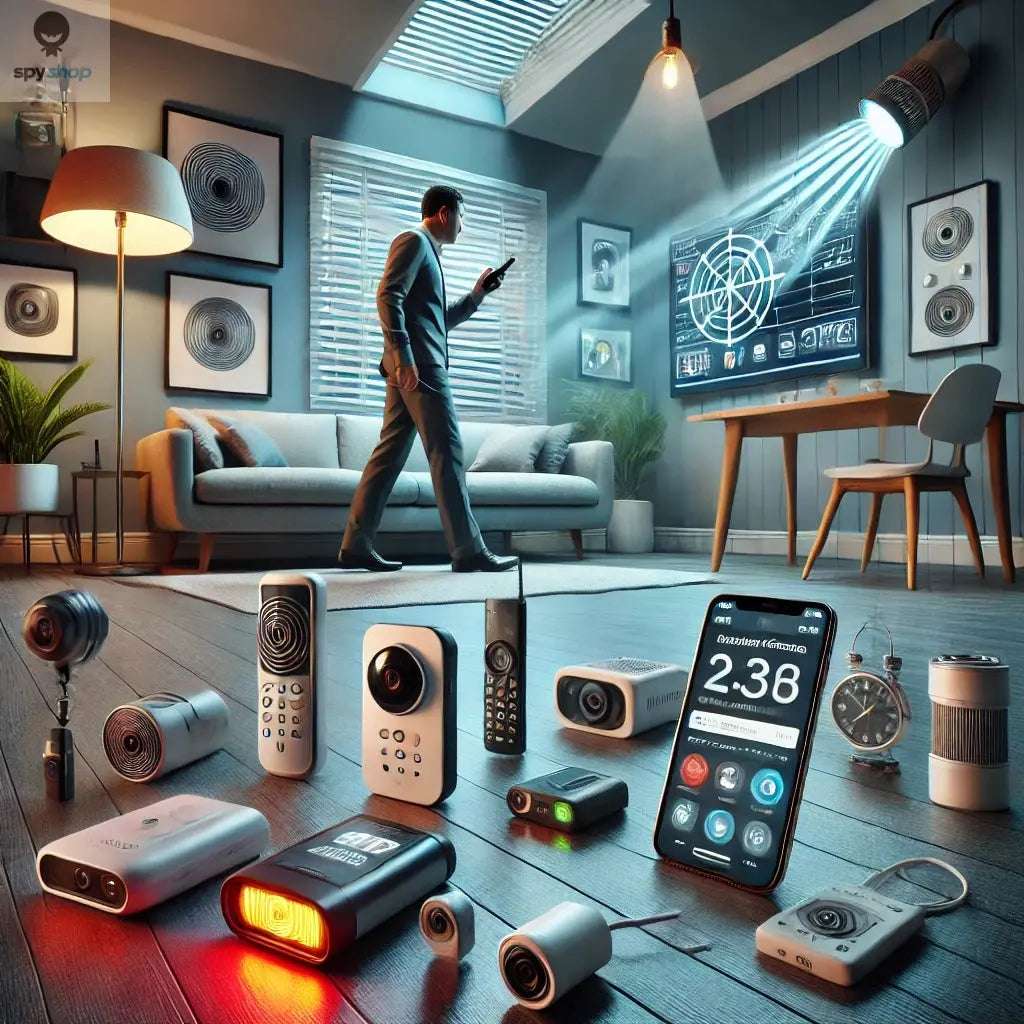
Hidden Camera Detection: Visual Checks and Tools
A visual check can reveal an unfamiliar object or lens, but no simple test can establish that a room is free of cameras. Use several methods and treat each finding as something to verify.

Begin with safe visual checks
Look for objects with a clear view of private areas, unexplained openings or items that have changed position. Ordinary appliances also contain LEDs, vents and sensors. A light, wire or unusual sound is not proof of surveillance. Do not dismantle sockets, smoke alarms or other safety equipment.
Look for possible lens reflections
With a torch near your eye line, slowly examine accessible surfaces from different angles. Some lenses reflect light; so do screws, glass and decorative objects. A reflection needs closer identification, and an obscured or badly angled lens can be missed. Avoid shining lights into people's eyes.
Understand electronic tools
An RF detector may reveal an active transmitter within its supported range. It also responds to legitimate wireless equipment and may miss wired cameras, local recording, intermittent transmissions and unsupported bands. An alert does not identify a camera by itself.
A phone's camera may show some infrared emitters if its filter permits it. Many cameras have no infrared lighting, and ordinary remotes or sensors may emit infrared. Network-discovery apps can list some accessible devices on a network you are authorised to inspect. They cannot reveal every camera or turn a normal phone into a general-purpose RF spectrum analyser.
Thermal imagers show surface temperature differences. They do not see through walls or reliably distinguish a camera from other warm electronics. Non-linear junction detectors can respond to electronic components, including innocent equipment; interpretation requires appropriate expertise.
If you find something concerning
Prioritise leaving an unsafe private space and documenting the object from a safe position. Do not destroy or immediately disable it. Report it to the appropriate property manager, platform or authorities. If stalking or abuse is possible, use a safer device for advice because changes may alert the person monitoring you.
Know when to request help
A competent specialist can combine inspection, signal analysis and other methods with a stated scope. Ask about qualifications, equipment and limitations. Neither an app scan nor a professional visit should be presented as a permanent guarantee against surveillance.

Written by PRIVATE D.O.O. Pecek