
Video Surveillance for Home and Small Business: When It Lowers Insurance Risk
Video surveillance can lower insurance risk in specific, documented circumstances when footage reduces uncertainty for insurers, supports faster claims resolution, or demonstrably deters repeated losses. Early in any risk-reduction assessment, confirm the recording scope and admissibility of evidence for your use case, whether you're equipping a suburban home with home security cameras or a corner shop with business surveillance. For a technical reference on system types and configurations, consult our detailed pillar analysis Read the complete Video Surveillance guide .
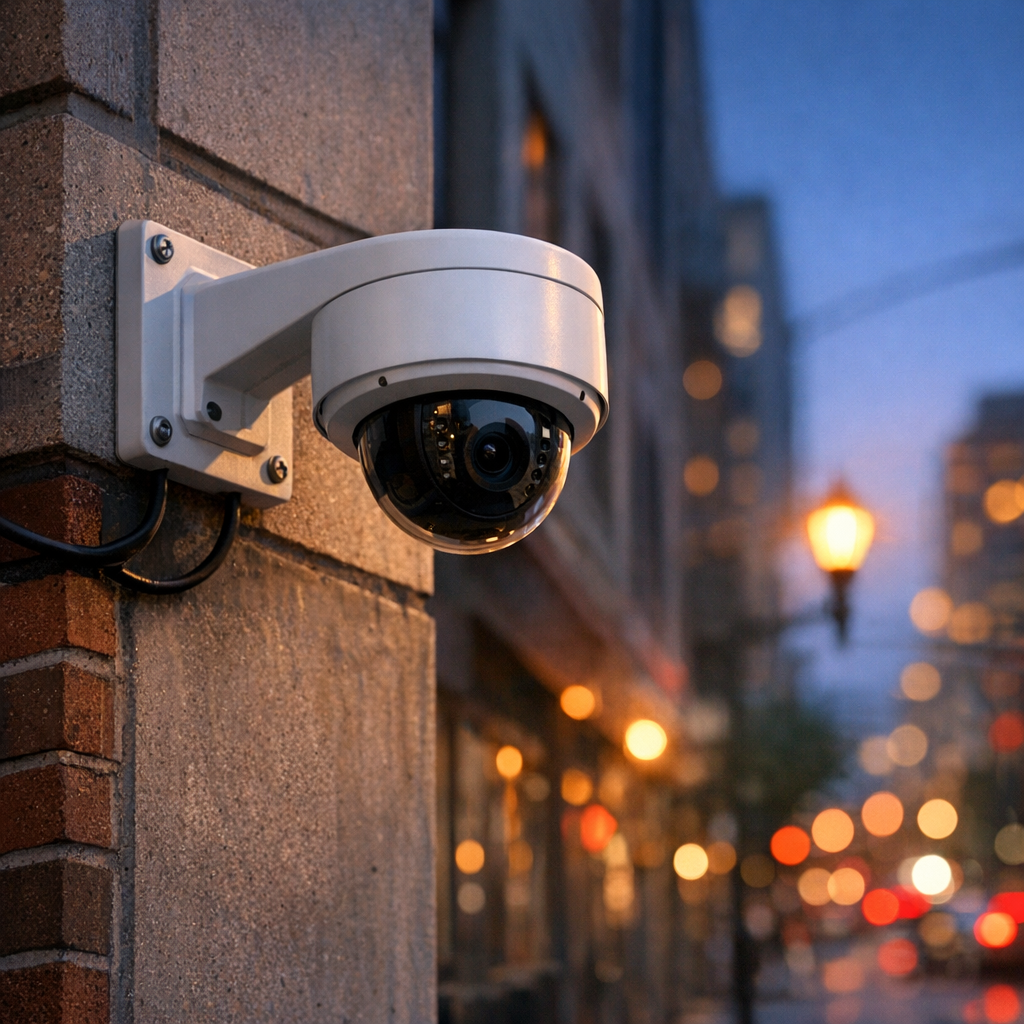
When video surveillance reduces insurance risk
Insurers respond to reduced uncertainty. Video surveillance reduces uncertainty when footage can (1) prove a covered loss occurred, (2) identify culpable parties, or (3) document the sequence and magnitude of damage. Common scenarios where video surveillance demonstrably lowers risk include repeated package theft at a residence, forced-entry burglaries at small businesses, and vandalism on managed properties. In each instance, usable footage shortens investigation time, lowers fraud suspicion, and can validate claims without costly forensic inspection.
How video surveillance affects premiums and claims
Not all camera installations affect premiums. Insurers typically evaluate whether the system meaningfully reduces probability of loss or severity of loss. Premium reductions are most likely when cameras are integrated with other controls (alarms, lighting, access control) and when footage is recorded reliably with timestamps and secure storage. Conversely, poorly installed cameras with intermittent recording, no chain-of-custody, or obstructed views offer little value and may not influence underwriting.
Comparing outcomes: deterrence vs. evidence
- Deterrence: Visible cameras alone can reduce opportunistic crime; insurers may consider this when supported by neighborhood claim history.
- Evidence: High-quality, retrievable footage affects claim outcomes directly by proving loss and identifying suspects.
Selection criteria that matter to insurers
When choosing between products and configurations, prioritize attributes insurers cite: reliable timestamping, tamper detection, redundant storage (on-site and encrypted cloud), and clear night performance. Resolution requirements vary by use case — license-plate capture requires higher bitrate than general perimeter monitoring. For homeowners, modern home security cameras with secure cloud retention often meet insurer expectations; for retailers, multi-camera business surveillance arrays with controlled access to footage are preferable. Explore category options in our surveillance camera collection Browse Video Surveillance for comparison points.
Technical features insurers commonly require
- Timestamps and synchronized time servers (NTP) to verify event chronology
- Secure storage with access logs to demonstrate who viewed or exported footage
- Resolution and frame rate sufficient to identify faces or plates where needed
- Power resilience and tamper alerts to reduce the risk of disabled cameras during incidents
Real-world use cases and decision logic
Use-case analysis clarifies when to invest and what to expect from insurers.
1. Suburban homeowner — parcel theft
Problem: Frequent porch package thefts. Decision logic: Install a visible, oriented home security camera focused on the porch, enable cloud retention for at least 30 days, and maintain clear signage. Outcome: Insurer views reduced repeat exposure and clear evidence of theft; claims for stolen items are easier to validate and may be paid faster. Maintain police reports and footage exports to preserve chain-of-custody.
2. Small retail store — overnight break-ins
Problem: Forced entry and inventory loss after hours. Decision logic: Deploy business surveillance with interior and exterior coverage, high-resolution cameras for register and stockrooms, and redundant storage. Integrate with alarm panels and lighting. Outcome: Footage enabling suspect identification and proving forced entry can lower recovery costs and may result in premium credits if the system is monitored and meets vendor or insurer standards.
3. Construction site — material theft
Problem: Intermittent theft of materials and equipment. Decision logic: Combine fixed cctv systems with remote monitoring and solar or battery backup to avoid blind spots. Timestamped evidence supports claims and can be used to pursue criminal restitution. Insurers may require proof of active monitoring and persistent power for reductions to apply.
For additional procedural guidance on evidence handling and system specifications, see the extended procedures in our resources Discreet solutions.
Common mistakes that negate insurance value
Several frequent errors prevent cameras from lowering insurance risk: obscured lenses, inconsistent recording schedules, failure to synchronize clocks, absence of retention policies, and not notifying employees or the public as required. Another mistake is relying on single-point storage vulnerable to theft or deletion; insurers favor redundancy and documented access controls. Finally, assuming audio recording automatically helps is risky — in many jurisdictions audio triggers additional legal obligations that can create liability rather than reduce risk.
Legal and ethical considerations (EU and US high-level)
Video surveillance intersects with privacy and data protection obligations. In the EU, GDPR principles require lawful basis, data minimization, retention limits, access controls, and clear notification for recorded individuals. In many US states, laws focus on expectations of privacy and consent for audio. Employers must balance legitimate monitoring against employee privacy rights and often need to notify staff and maintain policies. For public-facing cameras, signage that informs the public of recording is both a best practice and a legal expectation in many jurisdictions. When footage contains personal data, secure storage and breach notification protocols are essential to avoid regulatory penalties and secondary liability.
Practical examples and implementation checklist
Before installing cameras with the intent to influence insurance risk, run this checklist: define the loss scenarios you want to address; select cameras with insurer-relevant features; ensure correct placement and lighting; implement redundant, tamper-evident storage; maintain clear retention and deletion policies; log and control access; post required notices; and coordinate with local law enforcement on evidence preservation. Failing to formalize these steps is a common mistake that undermines the evidentiary value of footage.
Frequently Asked Questions
Q1: Will any camera installation reduce my premiums?
A1: No. Premium reductions depend on the system's ability to reduce loss probability or severity, and on insurer criteria. Reliable recording, integration with alarms, and documented procedures increase the chance insurers will consider a reduction.
Q2: How long should I retain footage to help claims?
A2: Retention depends on risk exposure and insurer expectations. Common minimums are 30–90 days for general monitoring, but extend retention when investigations are active. Retention must comply with legal limits in your jurisdiction.
Q3: Can I use footage in court or to support a police report?
A3: Yes, when chain-of-custody and metadata are intact. Export originals, document the export process, and avoid editing footage that could undermine admissibility.
Q4: Does audio recording help insurance claims?
A4: Audio can help identify perpetrators but raises legal issues. Many jurisdictions require consent for audio recording; improper use can create liability that outweighs any benefit to a claim.
Q5: Are wireless home security cameras acceptable to insurers?
A5: Wireless cameras can be acceptable if they provide reliable, time-synced footage with secure storage and tamper alerts. Insurers will evaluate reliability, encryption, and backup power or storage arrangements.
Educational closing
Video surveillance can lower insurance risk when configured and managed to produce reliable, admissible evidence and when it meaningfully reduces the chance or impact of loss. The decision to install cameras should be driven by concrete loss scenarios, insurer requirements, and legal obligations. Careful selection, correct installation, documented retention and access procedures, and awareness of privacy laws create the conditions under which video surveillance shifts uncertainty in your favor. Use the checklist and use-case logic in this article to evaluate options objectively and to avoid common pitfalls.