Voice recorders for homeowners and small businesses: comparing always-on vs voice-activated when missed recordings matter
Choosing voice recorders for environments where every utterance matters requires a careful look at the tradeoffs between voice-activated modes and always-on recording. This article compares device behavior, detection limits, and legal boundaries so homeowners, small business owners, and professionals can decide when a voice activated recorder is appropriate and when it risks missed evidence or noncompliance. Read the complete Voice Recorders guide
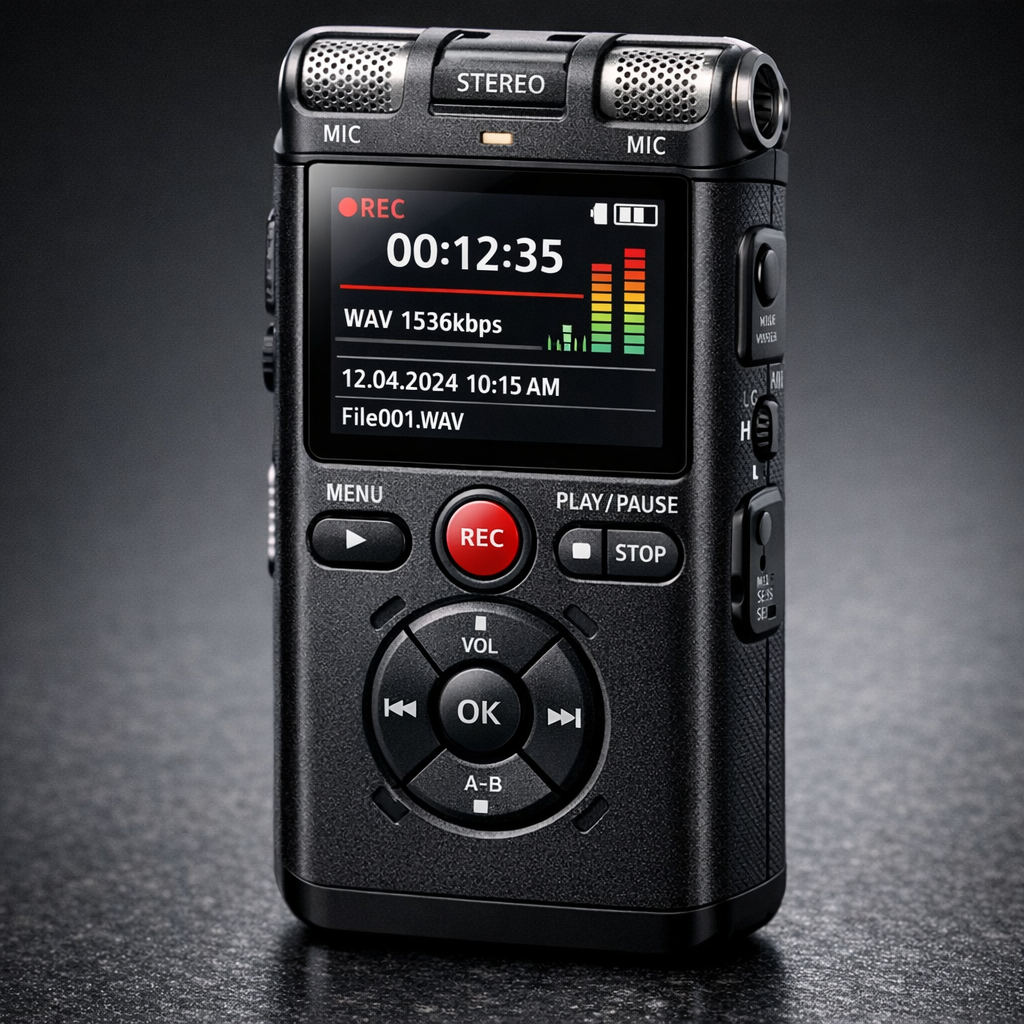
Why voice recorders miss audio: activation versus always-on
At the core of missed audio is a trigger mechanism. Voice activated recorders listen for a threshold of amplitude or spectral energy before storing audio; always-on devices continuously buffer and write samples regardless of detected sound. The activation approach reduces storage and simplifies review but can drop the first syllable, quiet replies, or speech masked by ambient noise. For many residential disputes or small-business incidents, that missing fragment can change admissibility or interpretation.
Voice recorders: technical comparison of modes and detection limits
Comparing voice-activated and always-on recorders requires examining sensitivity, latency, pre-record buffering, and file segmentation. Sensitivity is adjustable on some digital voice recorder models, but increasing sensitivity raises false triggers from background noise. Latency describes time between sound onset and actual write-to-storage; short latency with a pre-record buffer captures preceding seconds and mitigates missed starts. Always-on units eliminate trigger latency but demand more storage and power.
Sensitivity and false triggers
Voice activated recorder sensitivity is expressed as a threshold level. In quiet rooms, low thresholds detect whispers; in noisy retail or workshop settings, the same threshold produces continuous files. Many users misconfigure sensitivity—too high and low-volume statements vanish; too low and files are fragmented by rustling or HVAC hum.
Pre-record buffers and firmware behavior
A digital voice recorder with a pre-record buffer (commonly 1–10 seconds) captures audio preceding trigger events; this is the single most effective technical mitigation against missed openings. Firmware design also influences how files are split and how quickly devices recover from processing tasks such as voice activity detection (VAD), compression, or indexing. When comparing models, look for explicit pre-record specifications and practical tests rather than advertised battery life alone. Discreet solutions
Choosing voice recorders: comparison and buyer criteria
When selecting devices, buyers should weigh objectives, environment, and legal requirements. For private investigatory use in a quiet home, a voice activated recorder with a one- to five-second pre-buffer can be an efficient choice. For frontline customer interactions, security monitoring, or contractor disputes where continuous evidence is preferable, always-on digital voice recorders or dedicated audio loggers are safer. Consider five criteria: trigger reliability, buffer length, storage throughput, power and durability, and data export formats for chain-of-custody.
Evaluation checklist
- Trigger reliability: Test voice-activated thresholds in typical ambient conditions at the installation site.
- Buffer length: Prefer devices that advertise or demonstrate at least 2–5 seconds of pre-record buffering.
- Storage and format: Choose formats (WAV/FLAC) that preserve forensic quality; lossy compression can obscure characteristics relevant to analysis.
- Power profile: For continuous monitoring, prioritize battery-backed or mains-powered solutions with undervoltage protection.
- Export and metadata: Reliable timestamping, unalterable file identifiers, and simple export procedures support evidentiary integrity.
For a curated set of devices organized by recording style and price, check the appropriate category. Browse Voice Recorders
Use-case scenarios and decision logic
Practical decisions are best framed as scenarios. Below are common situations with recommended modes and decision logic.
Home dispute or neighbor noise
Objective: capture intermittent late-night noise or isolated comments. Choice: voice-activated recorder with a moderate sensitivity and a pre-record buffer because it balances long-duration monitoring and manageable file sizes. Conduct a site test to ensure soft sounds are detected.
Reception desk, retail incidents, or point-of-sale disputes
Objective: preserve full exchanges, opening remarks, and cash handling conversations. Choice: always-on digital voice recorder or hybrid mode (continuous low-rate recording with high-quality triggered capture). The cost of storage is outweighed by the need to avoid missed startup words.
Contractor or onsite inspections
Objective: capture verifiable statements during inspections where ambient noise varies. Choice: always-on device or a voice-activated recorder with long pre-buffer and directional microphone to prioritize speech over mechanical sounds.
Practical examples and common mistakes
Example 1: A homeowner installs a popular voice activated recorder in the hallway to document threats. The device missed the initial threat because the speaker’s volume was low; the homeowner assumed the recorder consistently captured incidents. Error: not testing with realistic voice levels and failing to enable or verify pre-record buffering.
Example 2: A small business uses a digital voice recorder at the checkout. They enable aggressive sensitivity to avoid missing comments; the result is dozens of short, irrelevant files triggered by chair shifts and doors, increasing review time and storing nonessential personal audio. Error: prioritizing sensitivity without proper noise filtering.
Common mistake checklist:
- Relying on advertised battery life without testing under continuous loads.
- Assuming voice-activated equals discreet—some devices announce or blink, revealing presence.
- Not exporting files with timestamps or retaining originals, which weakens evidentiary chains.
- Neglecting firmware updates that fix VAD bugs or add pre-buffer features.
Legal & ethical considerations (EU and US highlights)
Legal rules about recording differ by jurisdiction and context; compliance is essential. In the United States, many states allow single-party consent recordings (one person in the conversation consents), but several states require all-party consent—recording in those states without permission can result in criminal and civil liability. In the EU, privacy and data protection frameworks such as the GDPR require lawful basis for processing personal data, proportionality, and transparency when audio targets identifiable individuals. Always assess whether the recording is justified, document the lawful basis, and minimize data retention.
Operational safeguards: limit access to recordings, use encrypted storage, keep retention policies short, and log access. When recordings are used in employment contexts, labor or workplace laws may impose additional notice or consultation obligations. For sensitive locations like healthcare or changing rooms, recording is typically prohibited. This article does not provide legal advice; consult counsel for jurisdiction-specific compliance.
Frequently Asked Questions
Q1: Will a voice activated recorder save battery compared to always-on devices?
A1: Yes—voice-activated modes typically reduce recording time and therefore power use, but actual battery savings depend on ambient noise and trigger frequency; heavy false triggers can negate expected savings.
Q2: Can firmware updates improve missed recordings?
A2: Yes. Updates can refine voice activity detection, reduce latency, and add or extend pre-record buffers; always test after updating to confirm behavior in your environment.
Q3: Is compressed audio acceptable for evidence?
A3: Compressed formats lose detail. Lossless formats preserve waveform characteristics better for analysis and are preferred when recordings may be scrutinized legally.
Q4: How long should I retain recordings?
A4: Retention should be proportional to purpose—retain only as long as necessary for incident resolution or legal needs, and document retention policies to support compliance with privacy rules.
Q5: What is the simplest test to verify a voice activated recorder won’t miss important speech?
A5: Perform site-specific tests using representative voices and volumes, including whispering and overlapping ambient noise, and verify that pre-recorded buffers capture the start of utterances.
Educational closing
Selecting between voice-activated and always-on voice recorders is a decision of tradeoffs: convenience, storage, and discretion versus completeness and evidentiary reliability. Homeowners and small businesses should prioritize realistic testing, understand device firmware behavior, and apply legal safeguards before deploying any recorder. Thoughtful configuration—sensitivity tuning, buffer confirmation, and retention controls—reduces the risk of missed recordings while aligning with privacy obligations. For a structured comparison of models and configurations, consult the product category reviews to match technical specifications to your use case.