Geofencing GPS Tracker Strategies for Homeowners and Small Fleets to Prevent Vehicle Theft
A geofencing GPS tracker, vehicle GPS tracker and focused GPS theft prevention plan can alert owners and managers the moment a vehicle crosses a predefined boundary. When configured correctly, virtual boundaries generate GPS alerts that notify users before a vehicle leaves an authorised area, creating response time to intercept or mitigate loss. This guide explains how those alerts are generated, compares geofencing to other anti-theft technologies, offers real-world use cases, and outlines legal and operational considerations for homeowners, small businesses and fleet operators. Read the complete GPS Trackers guide
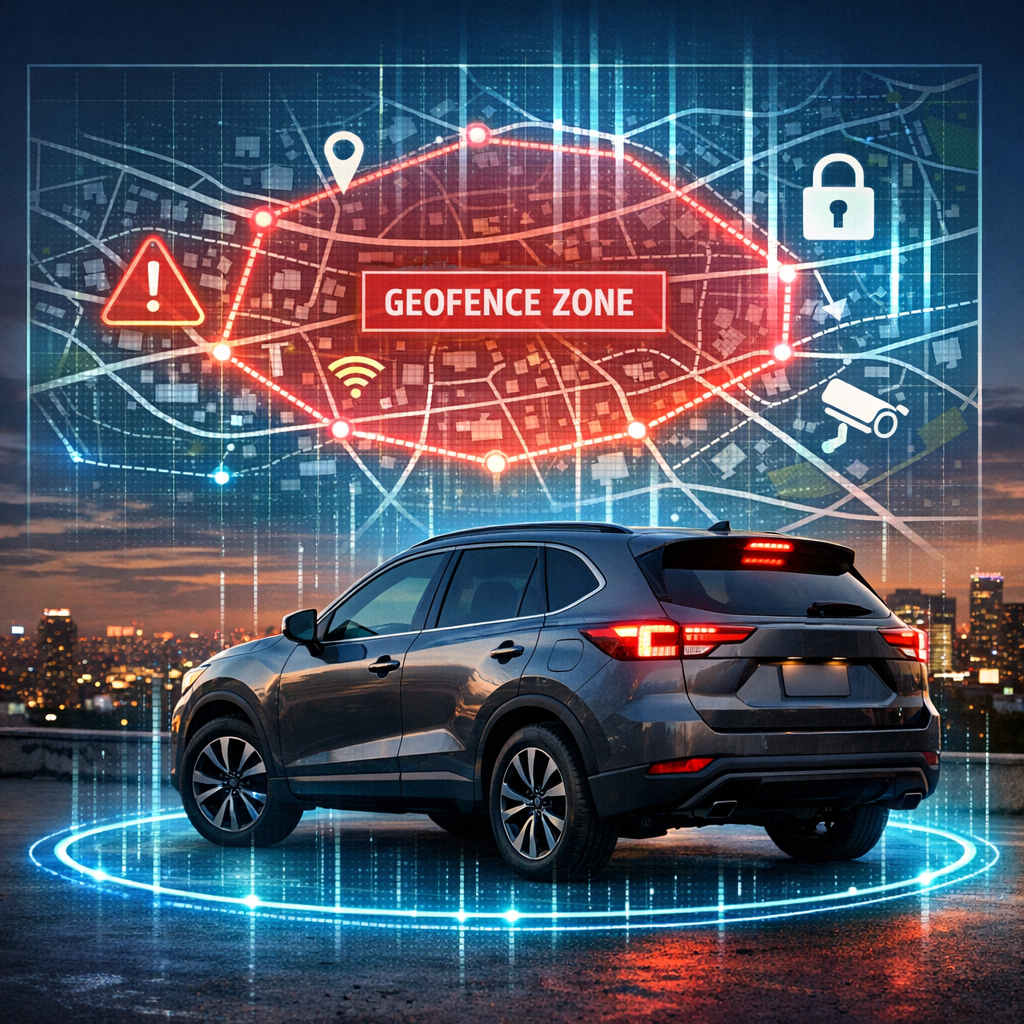
How a geofencing GPS tracker generates alerts before a vehicle leaves
A geofencing GPS tracker defines a virtual perimeter—circle, polygon or radius—around a location (home, parking lot, depot). The device reports its position to a cloud service or local server using GPS coordinates, cellular or satellite telemetry. The platform compares the live coordinates against the geofence rules and triggers GPS alerts when rules are violated: exit, entry, loitering, or schedule breaches. Two elements determine early warning capability: reporting cadence (how often the tracker sends location) and the geofence logic (how the system interprets boundaries and movement).
Reporting cadence options range from one-second real-time tracking to periodic updates every few minutes to conserve battery. For preventive anti-theft alerts you need a shorter cadence or intelligent hybrid modes that increase frequency when motion is detected. Geofence logic includes buffer zones, direction filters (only trigger on outbound movement), and predictive thresholds that account for GPS error. Well-designed systems combine movement sensors, accelerometers and historical patterns to reduce false alarms while still alerting before a vehicle crosses the boundary.
geofencing GPS tracker design: sensors, reporting cadence and alert logic
Hardware choices shape how early and reliably alerts arrive. A device with an inertial measurement unit (IMU) detects engine-on or towing events and wakes a tracker into high-frequency reporting. On-vehicle wired trackers that integrate with the vehicle power and CAN bus can report immediately when the ignition starts; battery-powered portable trackers need motion wake thresholds tuned to vehicle dynamics. Data path reliability—cellular coverage, SIM provisioning, fallback to satellite—affects whether an alert actually reaches the owner in time.
Pros and cons of common configurations
- Wired OBD/Hardwired trackers: Fast, constant power for frequent updates and tamper detection; may require professional installation.
- Battery-powered covert trackers: Easy to hide and install; limited reporting unless motion-based wake logic is excellent.
- Hybrid units: Combine wired power with battery backup; useful for stopping tamper attempts that cut power.
Why geofencing is one of the most valuable anti-theft features
Geofencing converts passive location history into proactive security. Instead of discovering a theft after the fact, owners receive GPS alerts the moment a vehicle departs an authorised area. This enables immediate actions: remote immobilisation (where legally and technically possible), dispatching a nearby employee or law enforcement, or activating camera systems. For small fleets, geofence alerts reduce response time across multiple assets and support automated workflows—alerts sent to managers, drivers, or security providers depending on severity and schedule.
Geofences also reduce alert fatigue by constraining alerts to meaningful boundaries. For example, a valet zone can have a wide permissive fence during business hours and a tight overnight fence. That contextual control gives teams better situational awareness without swamping them with noise.
Comparison: geofencing GPS tracker vs other anti-theft measures
Comparing geofencing to alternatives clarifies its role in a layered security strategy. Immobilisers physically prevent engine start but require integration and cannot track movement once a vehicle is on the move. RFID and smart-key safeguards protect access but offer no location data. CCTV provides visual evidence but its coverage is fixed. A geofencing GPS tracker offers detection range, mobility, and the ability to alert remotely, making it complementary to physical and electronic locks.
- Geofencing vs. motion-only alerts: Motion will detect movement but may produce false positives (wind, towing). Geofence combined with motion reduces false positives and focuses on departures from important areas.
- Geofencing vs. continuous live tracking: Continuous live tracking gives full history and pursuit capability but increases data costs and may be unnecessary when the objective is spot-checking zone integrity. Geofencing provides focused alerts without 24/7 monitoring costs.
Real-world use cases and decision logic
Homeowner scenario: A homeowner parks an ATV or secondary vehicle behind a gate. A battery-powered geofencing GPS tracker with motion wake and a one-minute reporting cadence is sufficient: it alerts when the vehicle exits the fenced yard after hours, enabling the owner to call authorities or check security cameras.
Small fleet scenario: A landscaping company needs to prevent unauthorized after-hours vehicle use. Hardwired trackers integrated with ignition detection and two geofences (depot and customer sites) provide immediate GPS alerts when a van leaves a depot outside assigned hours. Managers receive automated SMS or app notifications and can route a nearby supervisor.
High-risk assets (luxury or high-theft regions): Use wired trackers with tamper alerts, backup battery, and encrypted telemetry. Combine geofence exit alerts with an automated immobilisation plan where legal—it maximises recovery odds by stopping the vehicle before it reaches major roads.
When choosing configuration, weigh the required detection lead time, acceptable false positive rate, installation complexity and recurring connectivity costs. Browse GPS Trackers
Practical examples and common mistakes
Example 1: A rental business set a 50-meter geofence around its lot but left the reporting cadence at 15 minutes. A theft occurred and the first GPS alert arrived an hour later—too late for recovery. Lesson: align cadence to risk; short reporting intervals or motion-triggered bursts are essential where early response matters.
Example 2: A fleet manager used a single global geofence for all sites. When one vehicle crossed an authorised customer site, it generated unnecessary alerts. Lesson: implement site-specific geofences and schedules to avoid noise.
Common mistakes to avoid:
- Setting geofences smaller than practical GPS error margins, causing false alarms.
- Ignoring time-based rules—day/night behaviors require different boundaries and sensitivities.
- Failing to test tamper and power-cut detection—thieves often disable power first.
- Overlooking data retention and privacy settings required by corporate policy or law.
Legal & ethical considerations (US and EU high-level)
Tracking vehicles touches privacy and employment law. In the US, state laws vary on consent and notification; employers typically must inform employees if vehicles are monitored, and personal-use expectations should be documented. In the EU, GDPR considerations apply: personal data processing requires a lawful basis, minimisation, and clear retention policies. When trackers record locations linked to identifiable drivers, controllers must ensure transparency, access rights and data security measures.
Key compliance steps: maintain written policies describing what is tracked and why, limit retention to business needs, secure telemetry and account access, and obtain any required consent. When immobilisation or remote control features exist, evaluate local laws and liability—remote actions that disable a vehicle in motion can create safety risks and legal exposure.
Choosing a geofencing GPS tracker for GPS theft prevention: comparison and buyer criteria
Select devices based on three pillars: detection reliability, alert delivery, and compliance features. Detection reliability covers GPS accuracy, IMU sensors and power options. Alert delivery includes cellular coverage, notification methods (SMS, push, email), and redundancy (backup SIMs or satellite where available). Compliance features mean audit logs, role-based access, configurable retention and consent workflows. Consider subscription tiers: cheaper plans may limit geofence counts or reporting cadence.
Evaluation checklist:
- Does the device support motion-triggered high-frequency reporting?
- Can you configure buffer zones and direction filters to reduce false positives?
- Are tamper and power-cut alerts supported and tested?
- Does the platform keep secure logs suitable for legal or insurance claims?
- Are alerts delivered through preferred channels and integrated into existing dispatch tools?
Frequently Asked Questions
How quickly will a geofence alert arrive?
Alert speed depends on device reporting cadence and network delivery; with wired trackers and real-time reporting it can be seconds, while battery devices with periodic updates may take minutes. Configure motion-triggered bursts for faster alerts.
Can geofencing prevent theft by itself?
Geofencing is preventive and provides early warning but is most effective as part of layered security that includes physical locks, immobilisers and response procedures.
Are there legal limits to tracking company vehicles?
Yes. Employers should document monitoring policies, inform drivers, and follow local privacy laws; EU GDPR adds obligations for lawful basis and data minimisation.
What causes false geofence triggers and how do I reduce them?
Common causes are GPS drift, too-small fences, and coarse reporting intervals. Use buffer zones, direction filters and sensor fusion (GPS + accelerometer) to reduce false positives.
How do I choose between a wired tracker and a portable unit?
Choose wired trackers for high-reliability monitoring, tamper awareness and continual reporting. Portable battery units are suitable for temporary tracking or covert deployment where wiring is not feasible.
Educational closing
Geofencing GPS tracker alerts turn location data into actionable security signals that can stop theft before a vehicle leaves an authorised area. Understanding how reporting cadence, sensor fusion and fence logic work together lets homeowners and businesses design reliable, compliant systems. Evaluate devices by detection reliability, alert delivery and legal safeguards, and avoid common mistakes like misconfigured zones or insufficient reporting frequency. Thoughtful implementation—with clear policies and testing—maximises recovery chances while limiting privacy and liability risks. Discreet solutions