Artikel: Video Surveillance for Homes and Small Businesses: How Night Vision Actually Works
Video Surveillance for Homes and Small Businesses: How Night Vision Actually Works
Video surveillance is often described in marketing as “works in the dark,” but understanding how night vision actually works gives property owners, facility managers, and security professionals the context needed to select the right system and stay compliant. This article explains infrared principles, contrasts infrared CCTV with alternative low-light technologies, walks through common use cases, and frames legal and ethical boundaries for deployment. It focuses on practical decision logic and buyer evaluation criteria rather than product hype. Read the complete Video Surveillance guide
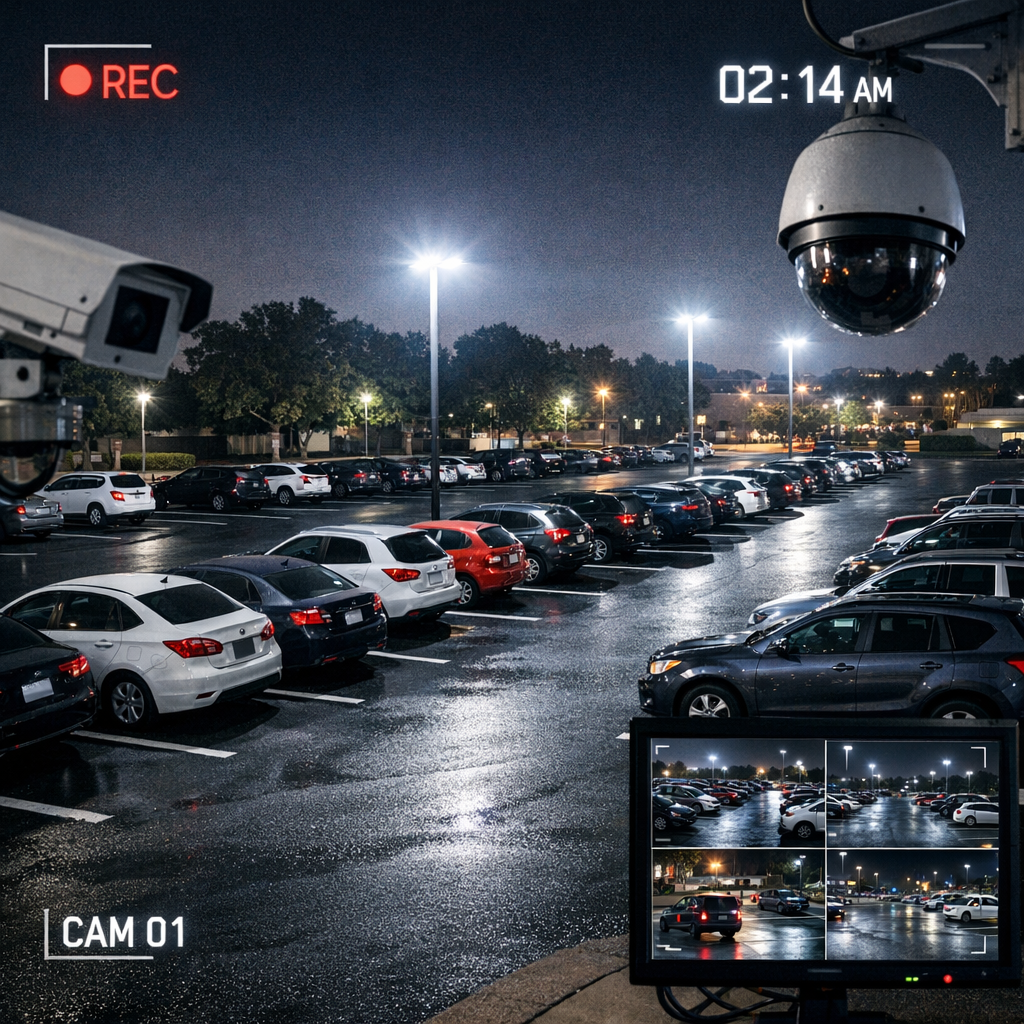
How video surveillance uses infrared light
At its simplest, night-capable video surveillance systems either amplify available light or create their own illumination. Infrared solutions fall into the latter group: they add an invisible light source so standard imaging sensors can form a usable picture. Infrared (IR) refers to wavelengths longer than visible red light; inexpensive surveillance LEDs typically emit in the 700–940 nm band. Sensors in many cameras are silicon-based CMOS or CCD chips that retain sensitivity into the near-infrared range, so an IR illuminator plus a monochrome image pipeline produces clear outlines and motion detail even where human vision fails.
Active versus passive infrared approaches
Active infrared uses on-board LEDs or external illuminators to light the scene with invisible light. Passive systems rely on thermal infrared sensors that detect emitted heat (long-wave IR, often 8–14 µm). Thermal imaging is excellent for detecting people and vehicles in total darkness or through smoke, but it provides less surface detail and comes at a higher cost than near-infrared CCTV. For many homes and small businesses, near-infrared night vision cameras paired with IR LEDs balance cost and identification capability.
How video surveillance compares: infrared CCTV and alternatives
When evaluating technologies, compare three attributes: image detail, detection range, and environmental robustness. Infrared CCTV (near-IR) excels at detail within its illumination range and integrates easily with analytics that expect contrast-based images. Low-light, or ‘‘starlight’’ CMOS sensors, amplify available photons to produce color or near-color images with very low noise, which can be preferable when preserving color cues is important. Thermal systems offer long-range detection and penetrate conditions like fog and smoke better than visible/near-IR systems but sacrifice facial detail and color information.
- Infrared CCTV: Best for close-to-medium range identification under controlled lighting; lower cost; visible artifact-free night images when combined with IR LEDs.
- Low-light sensors (starlight): Maintain color at very low light levels; useful where streetlights or ambient sources exist but may struggle in total blackout.
- Thermal imaging: Superior for detection and perimeter surveillance; limited in fine feature identification; higher price point.
Choosing video surveillance: buyer guide for night vision cameras
Selecting the right night-capable system requires matching technical specs to use-case priorities. Prioritize sensor sensitivity (measured as lux or equivalent), IR illumination range (explicitly stated in meters), pixel resolution at the intended detection distance, and whether the camera supports automatic IR cut filters for accurate daytime color. Consider additional practical criteria such as power options (PoE simplifies installs), ingress protection ratings for outdoor units, and support for analytics if you plan to use motion or object detection. Browse Video Surveillance
Key evaluation metrics
- Lux rating: Lower lux means the sensor needs less visible light to produce an image; for IR-only scenarios, check stated performance in 0 lux with IR on.
- IR range and beam pattern: A quoted range is idealized; beam spread and reflector design determine how even illumination will be across a scene.
- Resolution and compression: Higher resolution helps identification but increases bandwidth; evaluate edge storage and efficient codecs.
- Analytics compatibility: Some analytics require contrast and edge detail; infrared monochrome images often perform well, but verify vendor claims with real-world footage.
Real-world use cases and decision logic
Applying video surveillance technology depends on environment and objective. For a residential driveway, a single 1080p night vision camera with a 20–30m IR range and PoE is often sufficient to capture license plates and faces at close range. Retail storefronts typically benefit from a mixed approach: low-light wide-angle cameras for color retention during dusk combined with targeted infrared domes for after-hours coverage of entrances. Industrial perimeters and critical infrastructure lean toward thermal detection for early alerts, supplemented by infrared CCTV for identification after an alarm. Practical deployments often mix sensor types to match detection and identification phases of a response plan.
Decision logic checklist
- Define primary objective: detection (presence) versus identification (who/what).
- Map likely detection distances and angle of view.
- Choose sensor and illumination to cover the farthest point where identification is required.
- Factor in environmental variables: glare, reflective surfaces, seasonal foliage.
Practical examples and common mistakes
Example: A small café installed a single IR dome to cover a rear alley. The camera’s IR reflected off wet cobblestones, creating bloom and washing out the image. The correct remediation was an angled mount combined with a narrower beam IR illuminator and a camera with better exposure control. Common mistakes include over-relying on claimed IR range without considering beam pattern, installing cameras behind glass without accounting for IR reflection, and choosing thermal when identification-level detail is required. Another frequent error is neglecting maintenance: IR LEDs degrade over time and environmental soiling reduces effective range.
Legal and ethical considerations
Deploying video surveillance with night-capable cameras requires awareness of privacy and data protection obligations. In the EU, general data protection obligations apply where surveillance captures identifiable individuals; that means documenting lawful basis, minimizing capture of public areas where possible, and ensuring secure retention and access controls. In the US, expectations are more state-specific: avoid areas with a reasonable expectation of privacy (bathrooms, bedrooms), post clear signage when recording, and secure recorded footage to limit unauthorized access. These are high-level considerations—not legal advice—but they illustrate the importance of combining technical design with policy: retention schedules, access logs, and purpose limitation reduce both privacy risk and liability. Discreet solutions
Frequently Asked Questions
1. How does infrared affect facial recognition? Infrared provides high-contrast, monochrome images that can aid motion detection and basic identification, but performance depends on the recognition algorithm and image resolution.
2. Can IR LEDs harm night wildlife or neighbors? Near-infrared used in surveillance is invisible to humans but some animals may detect near-IR; avoid excessive flood illumination and place lights to minimize spill.
3. Will glass protect a camera placed behind a window at night? Glass can reflect IR back into the lens and produce glare; use external mounts or anti-reflective housings and angle the camera to avoid direct reflections.
4. Is thermal better than infrared CCTV for perimeter security? Thermal is often superior for initial detection at long range or through obscurants, but infrared CCTV is typically better for downstream identification and evidence collection.
5. How long should I keep night surveillance footage? Retention should follow your documented policy: keep footage long enough for investigative needs but not longer than necessary. Data protection rules may dictate maximum retention and access controls.
Choosing and operating night-capable video surveillance requires aligning technical capabilities with legal responsibilities and operational goals. Infrared CCTV offers an accessible way to extend monitoring into darkness, while thermal and low-light sensors fill specific niches. The most reliable systems combine appropriate hardware selection, thoughtful siting, and clear policies on data handling. By breaking choices into detection versus identification needs, testing in real conditions, and accounting for compliance and privacy, homeowners and small businesses can deploy effective, defensible night surveillance without overpaying or creating unnecessary privacy exposure.