Artikkeli: Voice recorders: Real-world battery life vs advertised numbers for homeowners and small businesses
Voice recorders: Real-world battery life vs advertised numbers for homeowners and small businesses
When shopping for voice recorders, buyers are often presented with battery life figures and long standby time estimates that seem to promise days or weeks of unattended operation. Those numbers matter, but they rarely tell the full story for homeowners recording family meetings, small businesses logging customer interactions, or professionals capturing interviews. This article cuts through manufacturer claims to compare advertised metrics with measurable, real-world endurance, explain legal boundaries, and give practical selection logic for different scenarios.
How voice recorders’ battery life is measured versus real use
Manufacturers typically report battery life under highly specific conditions: a single test codec, minimal gain settings, and often cyclical recording (e.g., 5 minutes on / 55 minutes off) or continuous low-bitrate audio. Those test protocols produce headline numbers—sometimes expressed as continuous recording hours, sometimes as standby time—but they do not reflect variable microphone sensitivity, ambient noise, higher sample rates, or real-world user behavior. Understanding the difference between laboratory battery life and field battery life is the first practical step for buyers evaluating devices for real needs. Read the complete Voice Recorders guide
Choosing voice recorders for real-world endurance: comparison and buyer criteria
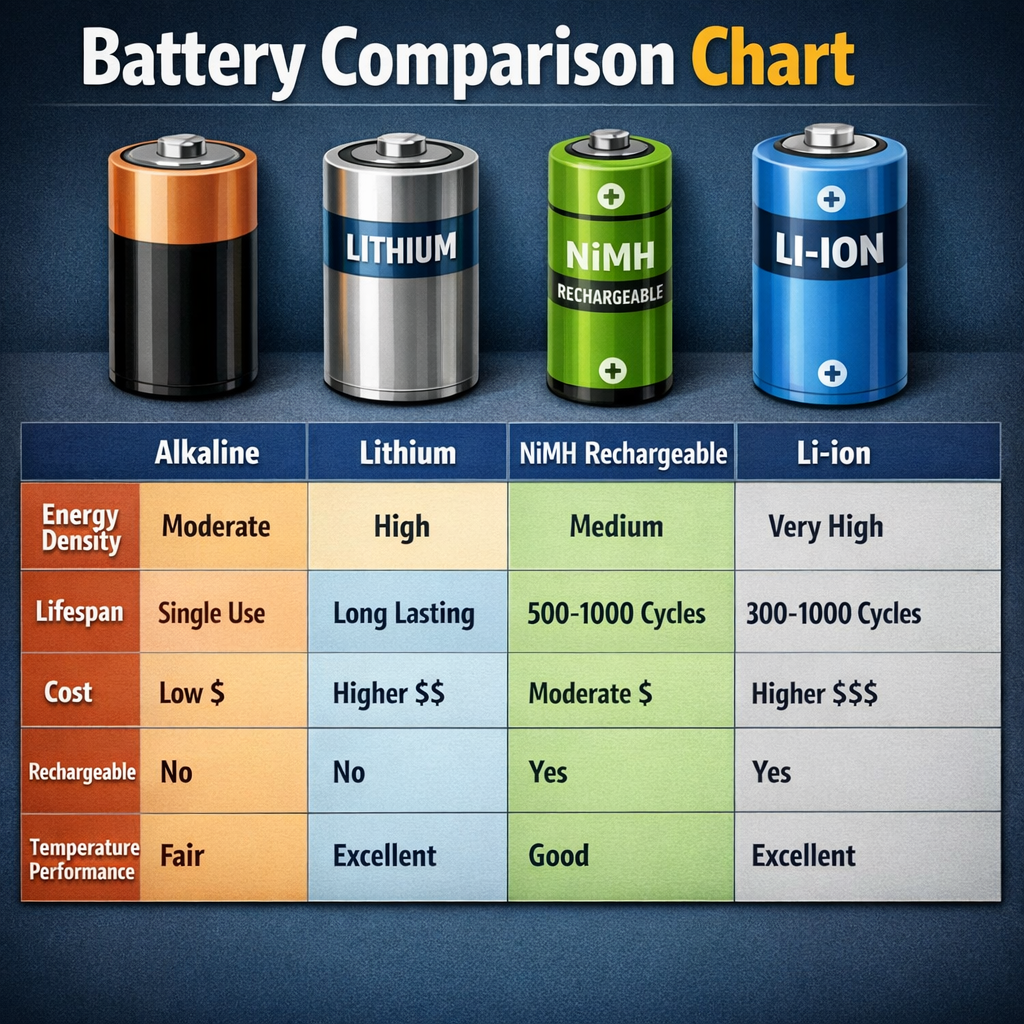
When you compare models, categorize the factors that change battery drain and weigh them against advertised claims. Key technical variables include codec and bitrate (MP3 at 128 kbps uses less power than WAV at 24-bit/96 kHz), whether the mic preamp is always powered, onboard noise reduction processing, and the power draw of wireless features such as Bluetooth or Wi‑Fi. Secondary real-world concerns are the battery chemistry (Li-ion vs removable AA), whether the device supports power‑bank charging, and the accuracy of displayed remaining battery percentage.
Practical comparison checklist
- Recording mode: Continuous high‑quality vs voice‑activated recording.
- File format: Uncompressed files dramatically increase power usage and storage demand.
- Wireless features: Bluetooth for remote control or Wi‑Fi syncing reduces effective battery life.
- Power options: Removable batteries allow quick field swaps; integrated Li-ion favors compactness but requires charging.
- Idle behavior: Some models have aggressive low‑power standby that extends standby time but may delay wake from voice activation.
Real-world scenarios and decision logic
To move from abstract numbers to a decision, map common use cases to endurance requirements. For example, a homeowner recording a two‑hour depositions-style family meeting needs a stable continuous charge for 2–4 hours but can accept higher bitrates for clarity. A small business capturing weekday customer calls may require a recorder with long standby time to remain on a desk for days and a reliable voice‑activation mode to save storage. Field journalists need long, predictable continuous run times with removable batteries or hot-swap options.
Scenario: homeowner recording infrequent long sessions
If sessions are infrequent but long (2–8 hours), prioritize robust continuous battery life, clear battery reporting, and the ability to use an external USB power source while recording. Choose formats that balance clarity and size—WAV for high-stakes transcription, or high‑bitrate MP3 when storage is limited.
Scenario: small business needing long standby time
For phone‑room or front-desk applications where the device is idle most of the week but must wake reliably, prioritize models with tested standby time and dependable voice-activation thresholds. Confirm how devices handle long idle periods: some will enter deep sleep and miss low‑level speech, reducing practical uptime. Consider devices that allow scheduled wake windows and check how vendor firmware updates affect standby performance. Browse Voice Recorders
How advertised standby time is calculated and why it can mislead
Standby time is often estimated by assuming minimal background processes and infrequent wake events. In practice, real standby time is influenced by background firmware tasks, Bluetooth advertisement intervals, and the frequency and loudness of wake events. A recorder rated for weeks of standby may practically only hold several days when left on a noisy counter where incidental sounds trigger wake cycles. Look for test reports or independent reviews that measure standby time under similar ambient conditions to your intended use.
Common mistakes buyers make when interpreting battery life claims
Buyers make three recurring errors: treating peak numbers as typical, ignoring codec and mic gain settings, and failing to assess the impact of wireless features. Another common oversight is neglecting environmental factors—cold weather reduces effective battery capacity, and high ambient noise increases processing and recording duty cycles, both shortening operational life.
- Mistake 1: Buying for headline hours of continuous recording without testing the preferred recording settings.
- Mistake 2: Assuming standby time equals long unattended operation without factoring in the device’s sensitivity and false wakes.
- Mistake 3: Choosing a model with non-removable battery without confirming charging logistics for field use.
Practical tests to perform before deployment
To confirm a device meets your needs, run three short field tests before committing: a continuous recording at your target format and gain for a representative duration, a standby test in the intended environment to measure wake reliability and actual standby time, and a mixed-use test that simulates your daily pattern of on/off, wireless syncs, and occasional high-volume events. Record conditions and results so you can compare models objectively. For teams, circulate a standard test protocol so comparisons are consistent. Discreet solutions
Legal and ethical considerations (US and EU high-level)
Legal constraints affect how and when voice recorders can be used. In the US, federal law requires one-party consent in many contexts, but several states require two-party consent for audio recordings, which affects whether a recorder’s endurance is even relevant for unattended captures in public-facing businesses. In the EU, the GDPR frames audio collection as personal data processing; organizations must have a lawful basis and observe data retention limits and security obligations when storing recorded speech. These legal frameworks also influence device selection: built‑in encryption and secure deletion features can reduce compliance risk for business use. This overview is informational and not legal advice—consult counsel for specific obligations in your jurisdiction.
Practical examples and trade-offs
Example A: A landlord wants a device to capture neighbor disputes that occur intermittently over weeks. The priority is long standby time combined with reliable voice activation and encrypted storage to protect privacy. A model with proven standby performance, removable batteries, and in-device encryption is preferable to a model that advertises high continuous recording hours but poor idle endurance.
Example B: A contractor needs high‑quality recordings of site meetings lasting up to six hours. For this continuous high-fidelity use, the codec and microphone preamp dominate battery draw. A device tested for continuous WAV recording at target sample rate and supporting USB passthrough charging will be more dependable than one with only big headline numbers for compressed audio.
Frequently Asked Questions
Q1: How much does format choice affect battery life?
A: Significantly. Uncompressed formats increase write activity and processor use, shortening battery life compared with compressed formats at low bitrates.
Q2: Does voice activation always save battery?
A: Not always. If the wake sensitivity is too high or ambient noise is frequent, voice activation can cause many short wake cycles that consume more energy than continuous low-bitrate recording.
Q3: Can external power improve real-world endurance?
A: Yes. USB power banks or mains USB adapters allow continuous operation beyond internal battery limits, but confirm the device supports charging while recording and whether it disables charging safety features during active write cycles.
Q4: How do environmental conditions affect standby time?
A: Cold reduces battery capacity; high ambient noise increases wake events. Both shorten effective standby time relative to manufacturer lab estimates.
Q5: Are advertised standby time and battery life reliable for legal evidence use?
A: Advertised numbers are a starting point but insufficient for evidence-critical scenarios. Conduct controlled tests at your intended settings to ensure continuous recording and chain-of-custody practices.
Educational closing
Advertised battery life and standby time for voice recorders provide useful benchmarks, but responsible selection depends on matching those figures to real-world variables: format, gain, wireless features, ambient conditions, and legal constraints. By running simple field tests, prioritizing the right trade‑offs—removable batteries, USB charging, encryption, or superior standby schemes—and accounting for local recording laws, homeowners and small businesses can choose recorders that meet operational needs without relying on optimistic advertising. For deeper technical comparisons and model reviews, consult detailed device tests and manufacturer specifications to verify claims in the context of your use cases.