GPS Trackers for Long-Term Monitoring: Vehicle and Asset Selection Guide
Selecting gps trackers for long-term monitoring requires balancing legal limits, power strategy, connectivity, and data retention policies to remain compliant while meeting operational needs. This article explains the technical trade-offs and legal boundaries for homeowners, small businesses, and professionals who need reliable vehicle gps tracking and asset tracking over months or years.
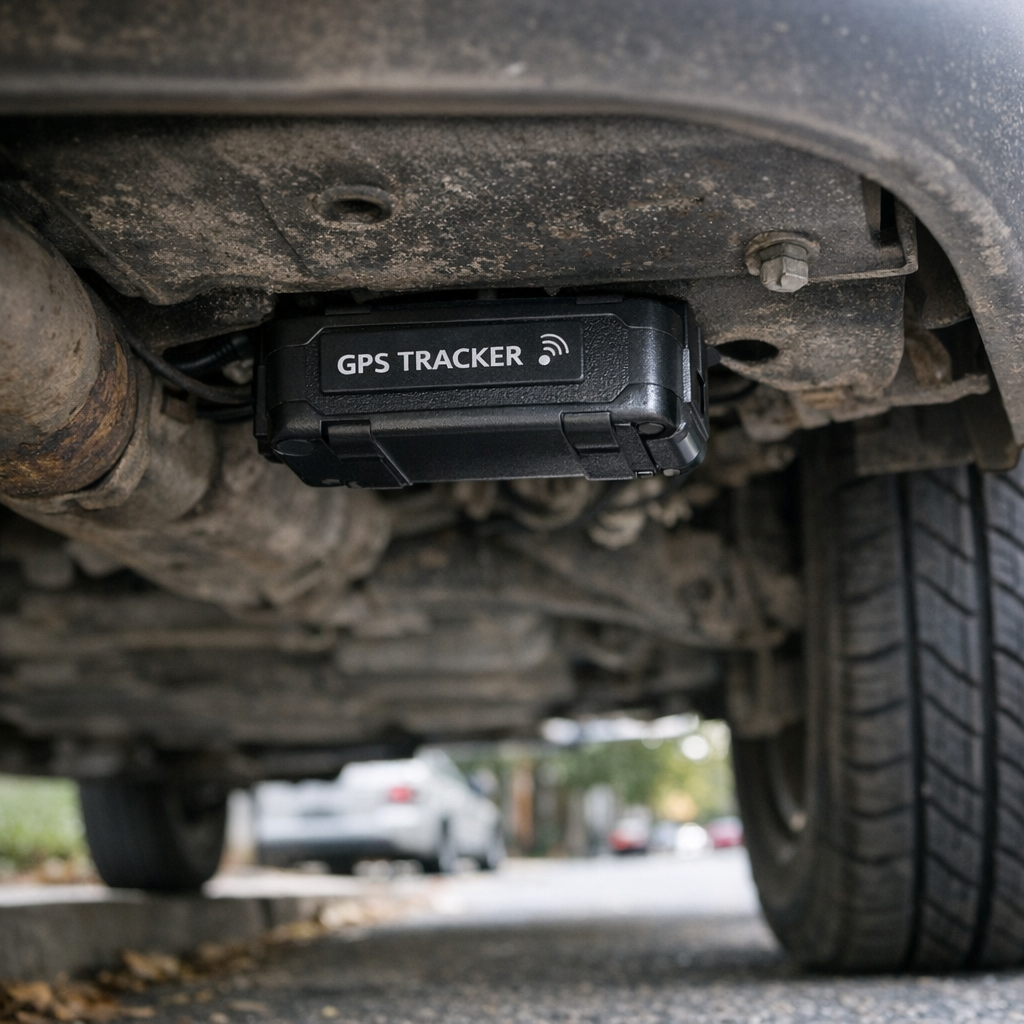
Choosing gps trackers for long-term monitoring: buyer criteria
Long-term deployments change the priority order for typical buyer criteria. Battery life, power options, and low-power standby modes move ahead of raw feature lists. Equally important are firmware update procedures, supported cellular bands, subscription models for real time gps feeds, and vendor transparency on data handling. For vehicles that can access constant power, wired hardwired trackers with tamper alerts are often preferable; for movable assets, compact battery-powered units with configurable beacon intervals can reduce maintenance needs. When assessing vendors, check their documented retention policies and whether they permit exporting device data for audits. Browse GPS Trackers
Comparison of gps trackers: power, connectivity, and form factor
A systematic comparison helps match devices to use cases. Evaluate along these axes:
- Power source: wired, internal battery, replaceable battery, or solar-assisted. Wired devices suit vehicles but require professional installation; internal long-life batteries suit discreet asset tracking.
- Connectivity: 2G/3G/4G/LTE-M/NB-IoT and satellite. LTE-M and NB-IoT extend battery life and network availability for long-term asset tracking in regions with operator support, while satellite is expensive but necessary for remote asset tracking beyond cellular coverage.
- Reporting mode: continuous real time gps streaming vs. interval reporting vs. event-triggered reporting. Continuous real time gps is useful for high-risk vehicle monitoring but consumes more data and power.
- Installation and concealment: form factor and mounting options affect tamper risk and detection. Hardwired trackers with ignition sensing reduce false positives for vehicle gps tracking.
- Durability and certifications: IP ratings, vibration resistance, and operating temperature range determine suitability for exposed assets or fleet vehicles.
Match the axes to scenarios: courier vans often need low-latency real time gps with hardwiring and ignition sensing; construction equipment benefits from durable, solar-assisted devices with interval reporting and geofence alerts.
Pros and cons matrix (practical summary)
- Wired vehicle trackers — Pros: continuous power, reliable reporting, better tamper detection. Cons: installation cost, visible wiring can be found by someone intent on disabling it.
- Battery-powered asset trackers — Pros: no wiring, small form factor, flexible placement. Cons: battery replacement schedule, potential for missed check-ins if intervals are too sparse.
- Cellular LPWAN (LTE-M/NB-IoT) — Pros: long battery life, good indoor penetration in some markets. Cons: limited availability in certain regions and lower throughput for frequent location updates.
- Satellite-enabled devices — Pros: coverage anywhere. Cons: high cost, limited messaging, not ideal for continuous real time gps unless budget allows.
Use cases and decision logic for long-term deployments
Define the monitoring objective before selecting hardware. For recovery/business continuity the priority is survivability and tamper alerts; for operations optimization, the priority shifts to reporting frequency and integration with routing and telematics systems. Example decision logic:
- If the goal is theft recovery of personal vehicles: prioritize hidden, hardwired trackers with immobilize-capable integrations, tamper detection, and near-real-time position updates.
- If the goal is asset tracking of containers on a job site: choose rugged battery trackers with multi-month standby and scheduled check-ins to conserve battery while providing sufficient location accuracy.
- If the goal is fleet telematics for route optimization: select devices with CAN-bus or OBD-II connectivity to capture vehicle diagnostics plus frequent position updates and proven cloud integrations.
Operational considerations include logistics for battery replacement, SIM plan renewal, and firmware management. For large fleets, favor devices that support remote firmware updates to avoid costly site visits. Read the complete GPS Trackers guide
Practical examples and common mistakes
Real-world examples clarify trade-offs:
- Small delivery business: A local courier replaced consumer-grade trackers that reported every minute with LTE-M devices set to 30-second updates during active hours and 10-minute sleep intervals overnight. Result: reduced data costs, acceptable routing visibility, and eight-week battery life on portable units.
- Homeowner with seasonal trailer: A trailer owner chose a low-duty-cycle asset tracker that reports daily and on motion events, avoiding frequent battery swaps while ensuring recovery capability if stolen.
- Property manager monitoring equipment: Solar-assisted units with vibration-triggered wakeups provided continuous presence data and reduced manual maintenance visits.
Frequent mistakes to avoid:
- Choosing a device based solely on advertised battery life without modeling real-world reporting intervals and temperature effects.
- Overlooking cellular band compatibility with local carriers, which can render a tracker unusable after network shutdowns.
- Failing to verify data export and retention options; locked ecosystems can complicate audits or migration between providers.
- Assuming continuous real time gps is necessary; many use cases tolerate interval reporting and greatly extend battery life.
Legal and ethical considerations for long-term gps trackers use
Long-term monitoring raises legal and ethical questions. In the United States, laws vary by state but generally restrict placing trackers on property you do not own or without consent. Surveillance of employees requires clear policies, notice, and often a legitimate business interest; covert monitoring of individuals can expose an operator to civil and criminal liability. In the European Union, long-term personal data processing falls under data protection rules (GDPR) when individuals are identifiable. That requires a lawful basis for processing, data minimization, purpose limitation, retention limits, and transparent notices. For fleet operators and landlords, implement clear retention schedules, role-based access to tracking data, and documented lawful bases for processing personal location data.
Operational compliance checklist:
- Document the lawful basis for tracking (consent, legitimate interest, contractual necessity) and keep records.
- Notify monitored individuals and provide a privacy contact for inquiries.
- Limit access to location feeds and audit access logs; encrypt data at rest and in transit.
- Define retention windows and purge or anonymize older location histories.
When in doubt, consult a qualified privacy or employment lawyer. Technical choices can reduce regulatory exposure: favor on-device anonymization, differential reporting, or aggregated telemetry when precise individual traces are unnecessary. Discreet solutions
Implementation planning and procurement checklist
Before procurement, run a pilot for the intended environment for at least one seasonal cycle if possible. The checklist below helps structure vendor evaluation:
- Define required reporting interval, acceptable latency for real time gps, and minimum accuracy.
- List environmental constraints: mounting locations, temperature range, water exposure, and anti-tamper needs.
- Verify carrier and band compatibility for each deployment region and ask about fallback roaming options.
- Confirm firmware update process, API access for integrations, and export formats for audits.
- Model total cost of ownership including hardware, installation, subscriptions, and maintenance visits.
Frequently Asked Questions
Q: How long can a typical battery-powered gps tracker last in long-term monitoring?
A: Battery life varies by reporting frequency, temperature, and device efficiency; expect weeks to months—optimize reporting intervals and use motion-triggered wakeups to extend life.
Q: Is continuous real time gps always necessary?
A: No. Continuous real time gps is vital for high-security or recovery scenarios, but many operational uses work with interval reporting and event-triggered updates to balance battery and data costs.
Q: Can I legally place trackers on company vehicles?
A: Often yes, but you must comply with employment laws and privacy rules: inform employees, document the legitimate business purpose, and limit data access and retention.
Q: Which connectivity option is best for remote assets with no cellular coverage?
A: Satellite-enabled trackers are the reliable option but are costlier and better for occasional position reports rather than full continuous streams.
Q: How do I avoid vendor lock-in with tracking platforms?
A: Require open data export, documented APIs, and clear data retention policies during procurement; test data export procedures during the pilot phase.
Educational closing
Choosing gps trackers for long-term monitoring is a multi-disciplinary decision: technical constraints, operational processes, and legal obligations must all align. Start by defining monitoring objectives, simulate real-world duty cycles in a pilot, and document compliance measures before scaling. Thoughtful selection and configuration reduce maintenance costs, improve reliability, and limit legal risk while delivering the visibility needed to protect vehicles and valuable assets.