gps trackers indoors and underground: use cases for homeowners & fleets
gps trackers can work well in open sky but their performance changes dramatically indoors and underground; homeowners, small fleets, and security professionals must weigh technical limits, legal boundaries, and alternative methods before deciding on a tracking strategy. This article focuses on practical use cases and decision logic for environments where satellite signals are degraded, and outlines comparisons, common mistakes, and selection criteria for reliable real-time location solutions.
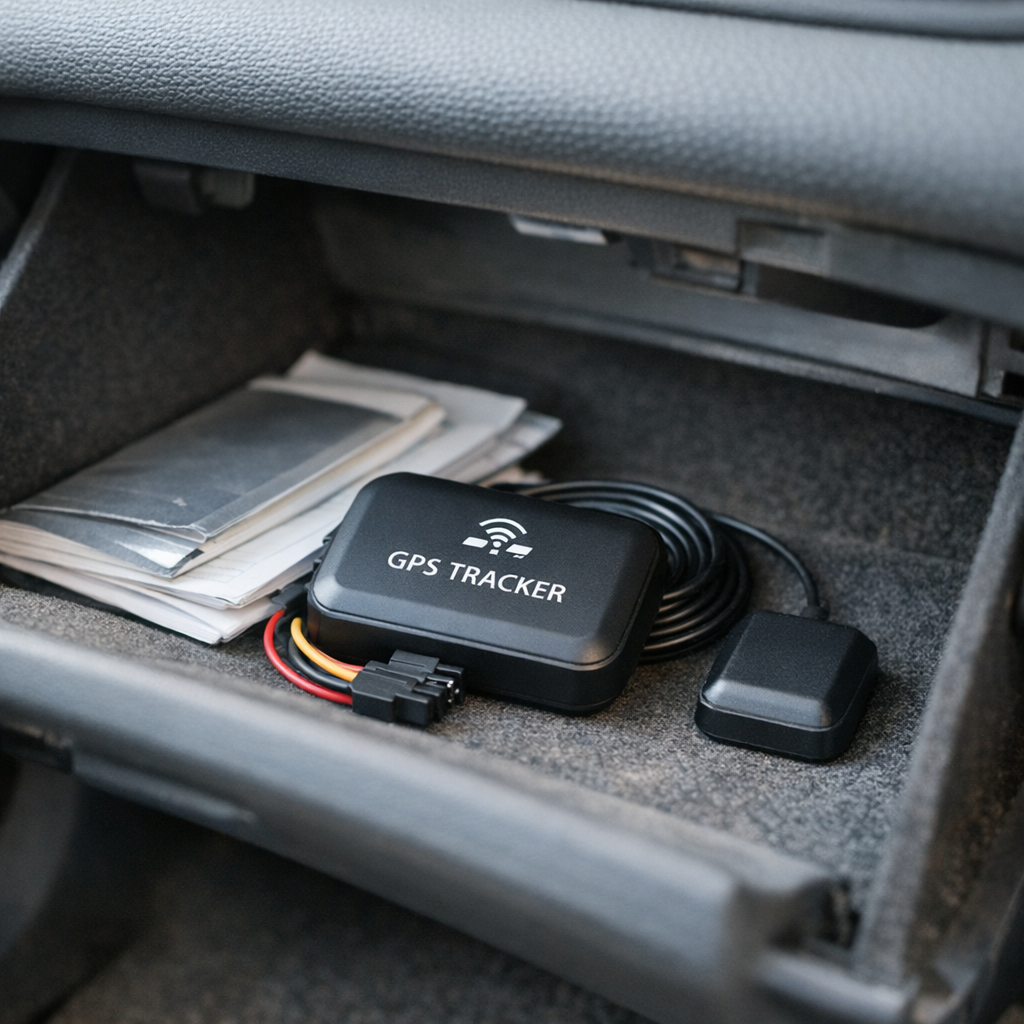
Why gps trackers lose signal indoors and underground
Signals from global navigation satellite systems (GNSS) are weak by the time they reach consumer devices—typically around -130 dBm. Those microwatt-level signals are easily absorbed or reflected by building materials, soil, and reinforced concrete. Metal cladding, underground parking, elevator shafts, and dense urban canyons produce attenuation, multipath interference, and signal shadowing. Even strong cellular or Wi‑Fi signals cannot restore satellite visibility; they can at best offer alternative positioning. Understanding these physical constraints is the first step to realistic expectations for vehicle gps tracking and asset tracking in built environments. Read the complete GPS Trackers guide
Why gps trackers: technical mechanisms and fallback options
Modern gps trackers include multiple strategies to improve indoor and underground performance: larger antennas, external antenna ports, multi-constellation GNSS (GPS, GLONASS, Galileo), aided GNSS (A‑GNSS), assisted cellular triangulation, Wi‑Fi positioning, Bluetooth Low Energy (BLE) beacons, and inertial measurement units (IMUs). Each has trade-offs. Antennas improve reception but require placement; A‑GNSS reduces time-to-first-fix but still needs occasional satellite visibility; cellular and Wi‑Fi provide coarse fixes (tens to hundreds of meters) while BLE and UWB offer high precision at short ranges. Selecting the right combination depends on the use case and acceptable accuracy for real time gps requirements.
Comparison: indoor vs underground performance for vehicle gps tracking and asset tracking
Comparing scenarios helps choose a solution rather than assuming a single device solves all problems. Below are structured comparisons for common needs.
- Vehicle gps tracking — indoor garage: Vehicles parked in single-level residential garages often lose direct satellite view. A tracker placed high on the dash with an external antenna routed to the windshield can regain periodic fixes; otherwise expect long gaps and reliance on cellular
- Vehicle gps tracking — underground parking or tunnels: Signal loss is frequent and prolonged. Cellular triangulation gives coarse location, but accurate lane-level tracking is unlikely without external infrastructure (repeaters or installed beacons)
- Asset tracking — indoor inventory: High-value assets inside buildings require short-range technologies: BLE tags, RFID, or UWB anchored to a building network. GPS trackers alone are not effective for shelf-level accuracy
- Asset tracking — containers in basements or vaults: If assets move unpredictably, hybrid devices that store GNSS fixes and upload when connectivity returns are useful; live real time gps is rare in deep underground spaces
These comparisons show that vehicle gps tracking and asset tracking needs diverge: vehicles may accept intermittent updates, while assets often need location certainty inside structures.
Use cases and decision logic
Below are practical decision trees for three user types: homeowners, small fleets, and security pros. Each presents the core questions to decide whether a gps tracker is the right tool or if alternative technologies are required.
Homeowners: stolen car or family safety
- Primary question: Do you need real-time recovery in urban areas or periodic location logs? If the former, prioritize devices with external antenna options and cellular fallback; if the latter, a compact tracker with aggressive power-saving and stored fixes may suffice.
- Garage scenarios: Test device in the actual garage. If fixes fail frequently, consider routing an antenna or installing a small external antenna in a concealed location to preserve battery life and location reliability.
Small fleets: route verification and recovery
- Primary question: Is continuous telematics required while vehicles operate indoors (e.g., warehouses)? If yes, integrate vehicle gps tracking with site-installed BLE or Wi‑Fi beacons and adapt telematics software to accept multi-source inputs.
- Urban deployments: Use multi-constellation trackers and expect periodic dropouts in tunnels—implement geofencing logic that tolerates brief gaps to avoid false alerts.
Security professionals and asset managers
- Primary question: Are assets stationary in confined spaces or mobile across mixed environments? Stationary indoor assets are better served by RFID/UWB networks; mobile assets may need hybrid tags that combine GNSS logging with opportunistic uploads when connectivity resumes.
For real-time gps expectations, define acceptable latency and positional error up front. Many failures stem from mismatched expectations rather than technical limits. Browse GPS Trackers
Choosing gps trackers for indoor and underground scenarios
When evaluating devices, score candidates against these criteria:
- Positioning architecture: GNSS-only vs hybrid (GNSS + cellular + Wi‑Fi + BLE + IMU). Hybrid usually wins indoors.
- Antenna options: Built-in ground-plane optimized antennas versus external antenna ports. External antenna capability is crucial for vehicle gps tracking in obstructed placements.
- Data modes: Real-time streaming versus buffered logging. Buffered logging with time-stamped fixes is essential where continuous connectivity is not guaranteed.
- Power profile: Frequent GNSS fixes drain batteries; consider deep-sleep schedules, motion-triggered wake, or wired power for vehicles.
- Integration and APIs: Ability to ingest alternative location sources (Wi‑Fi fingerprints, BLE beacon IDs) into the same tracking platform for consistent reporting.
- Durability and mounting: Weatherproofing and secure mounts, especially for fleet vehicles or outdoor assets.
Common evaluation mistakes include assuming advertised ‘real time gps’ updates are continuous in all environments, ignoring antenna placement, and underestimating data costs for continuous cellular fallback.
Practical examples and common mistakes
Example 1: A homeowner installs a compact battery tracker under the seat to deter theft. The device reports last-known location weeks earlier because the seat blocked satellite view and the tracker assumed no motion. Correct approach: mount for sky view or choose a device with cellular uplink when motion is detected.
Example 2: A delivery fleet uses cheap GNSS-only devices and sees frequent tunnel dropouts causing false route deviations. Fix: upgrade to multi-constellation devices with IMUs and adjust geofence tolerance to reduce false positives.
Example 3: A museum tries to track portable exhibits with gps trackers expecting room-level accuracy. GPS fails; better solution is BLE beacons with a managed anchor network. Relying on the wrong tool is a recurring operational cost.
- Common mistakes: ignoring line-of-sight, misreading accuracy specs, not testing devices in actual deployment spots, and failing to document data retention and access policies.
Legal & ethical considerations
In the EU and US, location tracking is regulated by privacy and employment laws; requirements vary by jurisdiction and context. For homeowners tracking their own property or vehicles they own, obligations are minimal, but clear data security practices are required to protect personal data. Employer-provided trackers used for staff vehicles demand transparent policies, consent where required, and limits on off-duty monitoring. Rental or shared-property scenarios require explicit consent and clear retention limits.
Retention and access: keep location logs only as long as necessary for the stated purpose, encrypt stored data, and restrict access to designated administrators. Treat location data as sensitive: unauthorized disclosure can create safety risks and legal exposure. While this article is educational and not legal advice, consult counsel for policy templates and compliance steps relevant to your jurisdiction. Discreet solutions
Frequently Asked Questions
Q: Can gps trackers get a reliable fix inside a concrete garage?
A: Often not reliably. Expect intermittent fixes unless you use an external antenna or hybrid positioning methods; test the device in the actual garage before relying on it.
Q: Will a cellular connection fix poor GPS inside tunnels or basements?
A: Cellular triangulation can provide coarse location (hundreds of meters) but not the meter-level precision of GNSS; it’s useful as a fallback for coarse tracking.
Q: Are there gps trackers specifically for underground assets?
A: No consumer tracker provides continuous satellite positioning deep underground; look for hybrid devices that log GNSS and use local networks (BLE/UWB/RFID) or install infrastructure to support precise tracking.
Q: How do I evaluate ‘real time gps’ claims from manufacturers?
A: Check update intervals, fallback networks used, antenna specs, and whether the device buffers fixes when offline. Ask for real-world test results in the type of environment you’ll deploy in.
Q: What privacy steps should small businesses take when deploying trackers?
A: Publish a clear tracking policy, limit monitoring to business needs, obtain consent where required, minimize retention, and secure transmission and storage with strong encryption.
Educational closing
Selecting and deploying gps trackers for indoor or underground use requires a pragmatic blend of physics-aware expectations, the right mix of technologies, and careful policy design. Define the required accuracy and latency first, test devices in-place, and consider hybrid systems or infrastructure upgrades where GNSS alone cannot meet requirements. Thoughtful evaluation prevents wasted spend and privacy risks while delivering operational value for homeowners, fleets, and asset managers alike.