gps trackers: legal reasons stolen vehicles aren't recovered for owners and fleets
gps trackers are widely promoted as a solution to theft, but recovery rates for stolen vehicles remain lower than many owners expect. This article examines the legal, procedural and technical reasons why a working vehicle gps tracking device does not always lead to recovery, and it provides practical scenarios, compliance checkpoints and selection criteria for homeowners and small businesses evaluating asset tracking and real time gps solutions.
Why gps trackers don't guarantee vehicle recovery: legal and practical barriers
At first glance, a functioning gps tracker that transmits coordinates should make recovery straightforward. In practice, law enforcement involvement, civil liberties protections, cross-jurisdictional hurdles and device limitations combine to reduce successful outcomes. Criminal investigation priorities and resource allocation are controlled by statute and policy; police typically prioritize violent crime. When a stolen vehicle is primarily a property crime without clear evidence of danger to people, responding officers may be constrained by departmental recovery thresholds and legal standards for searches and seizures.
Device reliability is also a legal consideration: data from a tracker can be admissible only if its chain of custody and operational integrity are demonstrable. Poorly documented installations, noncompliant firmware, or trackers that rely on third-party cloud services with weak data retention policies can produce data that a prosecutor or court will discount. Property owners and fleet managers should understand how tracking data will be treated under evidence rules and whether service providers retain logs that support law-enforcement processes. Read the complete GPS Trackers guide
Comparing gps trackers outcomes: scenarios where devices succeed or fail
A structured comparison helps clarify expectations. Consider three scenarios: (1) a city street theft where the thief keeps the vehicle intact; (2) an organized theft ring that strips vehicles for parts; (3) an off-grid hide where the vehicle is concealed in private property across jurisdictions. In scenario (1), a tracker that reports in real time can enable rapid location and recovery if the owner calls police immediately and law enforcement allocates resources. In scenario (2), thieves often remove or disable trackers quickly or sell components to chop shops, making recovery rare. In scenario (3), private-property and trespass laws complicate response: police may require warrants or owner permissions before entering to retrieve the vehicle.
From a compliance perspective, outcomes hinge on timeliness of reporting, the ability of the tracker to provide continuous coordinates (real time gps capability), and legal thresholds for police intervention. Asset tracking systems that offer geofencing and tamper alerts increase the chance of an early alert, but those features must be paired with documented procedures for reporting and evidence preservation to influence legal outcomes.
Technical limits, countermeasures and legal thresholds
Technical measures criminals use—signal jammers, GPS spoofers, or simply cutting power and removing batteries—are effective and often legal gray areas for enforcement. In many jurisdictions, addressing jamming or spoofing requires specialized detection equipment and prosecutor interest. Even with precise coordinates, officers typically need clear authority to enter private property to seize a vehicle; exigent circumstances exceptions are narrow. The legal threshold for a warrant is influenced by the quality of the tracker-generated data, which brings us back to chain-of-custody and service-provider logs.
Data retention and admissibility
Service-level agreements and privacy policies affect how long a tracker vendor retains raw telemetry. Short retention windows or poor timestamp synchronization can make reconstructing a continuous location history difficult. If the telemetry is stored only in a foreign jurisdiction or by a provider that cannot produce reliable logs, prosecutors may decline to base search warrants on that evidence. Owners should request retention and export options in writing from vendors when compliance is a priority for recovery efforts.
Practical examples and common mistakes
Example 1: A homeowner installs a plug-in OBD vehicle gps tracking device. The vehicle is stolen at night. The tracker reports location intermittently because the thief disabled the OBD port. The owner waits several hours before notifying police, diminishing the chance of recovery. Common mistake: assuming intermittent reporting is sufficient for a warrantable probable cause.
Example 2: A small delivery fleet uses hardwired trackers with tamper alarms. A driver reports theft immediately after receiving a geofence alert. The vendor provides minute-by-minute telemetry and a tamper log; police use that information to obtain a warrant and recover the vehicle. Positive factors: continuous reporting, vendor cooperation and immediate reporting.
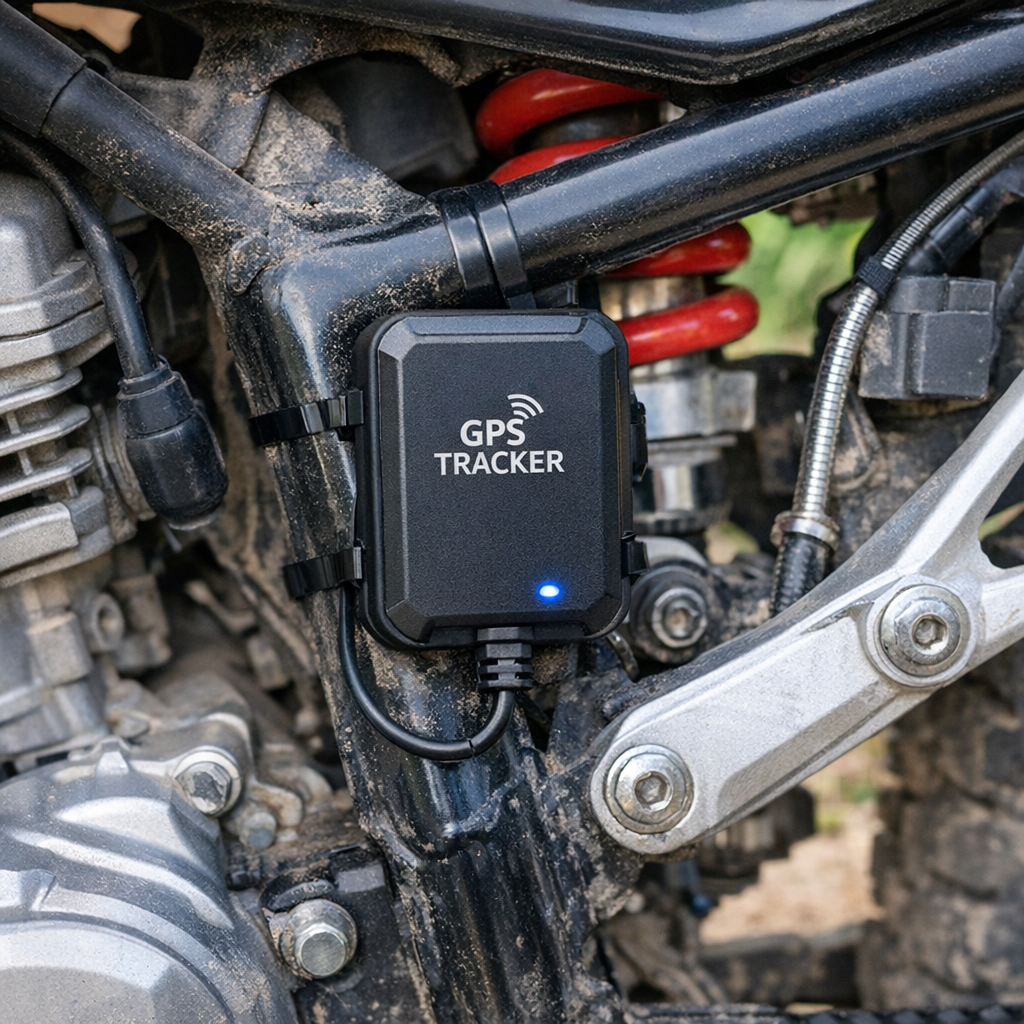
Example 3: A motorcycle owner hides a compact asset tracking unit in a frame. The thief locates and removes the device within hours. The owner assumed concealment alone would be adequate. Common mistake: underestimating motivated thieves and overestimating concealment without tamper detection or backup power.
Operational mistakes frequently seen in recovery failures include delayed reporting, lack of documented proof of ownership, failure to preserve device logs, and reliance on consumer-grade devices without vendor support for law-enforcement requests.
Legal and ethical considerations (EU and US high-level, non-legal advice)
Both EU and US frameworks affect how gps trackers can be used and how tracking data may be handled by third parties. In the EU, GDPR imposes obligations on controllers and processors: collected location data is personal data and requires a lawful basis, data minimization, and secure storage. Employers and fleet managers must balance legitimate business interests against employee privacy and must document policies and consent where required. In the US, privacy law is more sectoral; state laws and expectations about reasonable expectations of privacy influence admissibility and civil risk.
Ethically, deploying gps trackers on vehicles that are used by multiple people (e.g., employees, family members) requires transparent policies, notice and, where appropriate, consent. Failure to provide notice can create civil liability and complicate collaborations with law enforcement. Vendors that offer back-end access to police should have clear, documented processes for lawful access and for responding to subpoenas or warrants.
Practical compliance steps: maintain written tracking policies, limit retention to what is necessary for legitimate purposes, secure telemetry with encryption, and ensure vendor contracts include cooperation clauses for evidence preservation and law-enforcement requests. Browse GPS Trackers
Buyer guide: how to evaluate gps trackers for legal robustness and recovery utility
When selecting a device for vehicle gps tracking or asset tracking, evaluate these criteria: evidence-grade logging (immutable timestamps and export formats), secure transmission and storage, continuous power or battery backup, tamper detection, geofencing and alerting speed, and vendor support for law enforcement. Also verify vendor policies on data retention, jurisdiction of servers, and willingness to provide forensic exports with chain-of-custody documentation.
Consider deployment context: for privately owned cars used by a single owner, personal-use trackers with reliable uptime might be sufficient. For fleets or high-value assets, choose enterprise-grade systems that provide audited logs and a documented escalation path for rapid coordination with police. Avoid solutions that rely solely on mobile apps with undocumented cloud services; require SLA commitments and export capabilities before purchase. Discreet solutions
Frequently Asked Questions
Q1: Can police use gps tracker data to enter private property and recover my vehicle? Police can use tracker data to inform investigations, but entering private property typically requires either consent, exigent circumstances, or a warrant based on probable cause. The quality of tracker data affects warrant decisions.
Q2: Does placing a gps tracker on my company vehicle violate employee privacy laws? It depends on jurisdiction and purpose. Employers should have clear written policies, limit tracking to business purposes, and comply with local data protection and labor laws.
Q3: How long should a vendor retain tracker telemetry to support recovery efforts? Retention should be long enough to support investigations and legal processes—commonly 90 days or more—and vendors should provide exportable, timestamped logs upon request.
Q4: Are consumer gps trackers admissible in court? Consumer devices can be admissible if their data integrity and chain of custody are demonstrable. Devices with undocumented storage or unreliable timestamps are less persuasive to courts.
Q5: What immediate steps increase the chance of recovery when a vehicle is stolen? Report theft to police immediately, preserve device telemetry and account access credentials, document ownership, and inform the tracker vendor so they can preserve logs and assist law enforcement.
Choosing and deploying gps trackers requires balancing technical capability with legal and operational processes. Expect that tracking increases the likelihood of recovery in many cases, but not certainty. The legal landscape—evidence rules, privacy obligations and policing priorities—often determines whether a tracker’s data translates into a recovered vehicle.
This analysis aims to clarify risks, compliance obligations, and decision logic so homeowners, small businesses and fleet managers can make informed choices about gps trackers, vehicle gps tracking, asset tracking and real time gps systems without overstating outcomes.