gps trackers: where accuracy fails for homeowners and fleets
When installing or buying gps trackers for a car, trailer, or portable asset, users expect consistent location data. In practice, gps trackers can lose accuracy in everyday settings — inside buildings, near tall structures, in dense foliage, or when devices shift to cell-based fallback. Understanding the technical limits, common failure modes, and legal boundaries helps homeowners, small businesses, and fleet managers decide when a tracker is fit for purpose and when additional systems or policies are required. For a technical overview of real-time location fundamentals consult our in-depth resources Read the complete GPS Trackers guide .
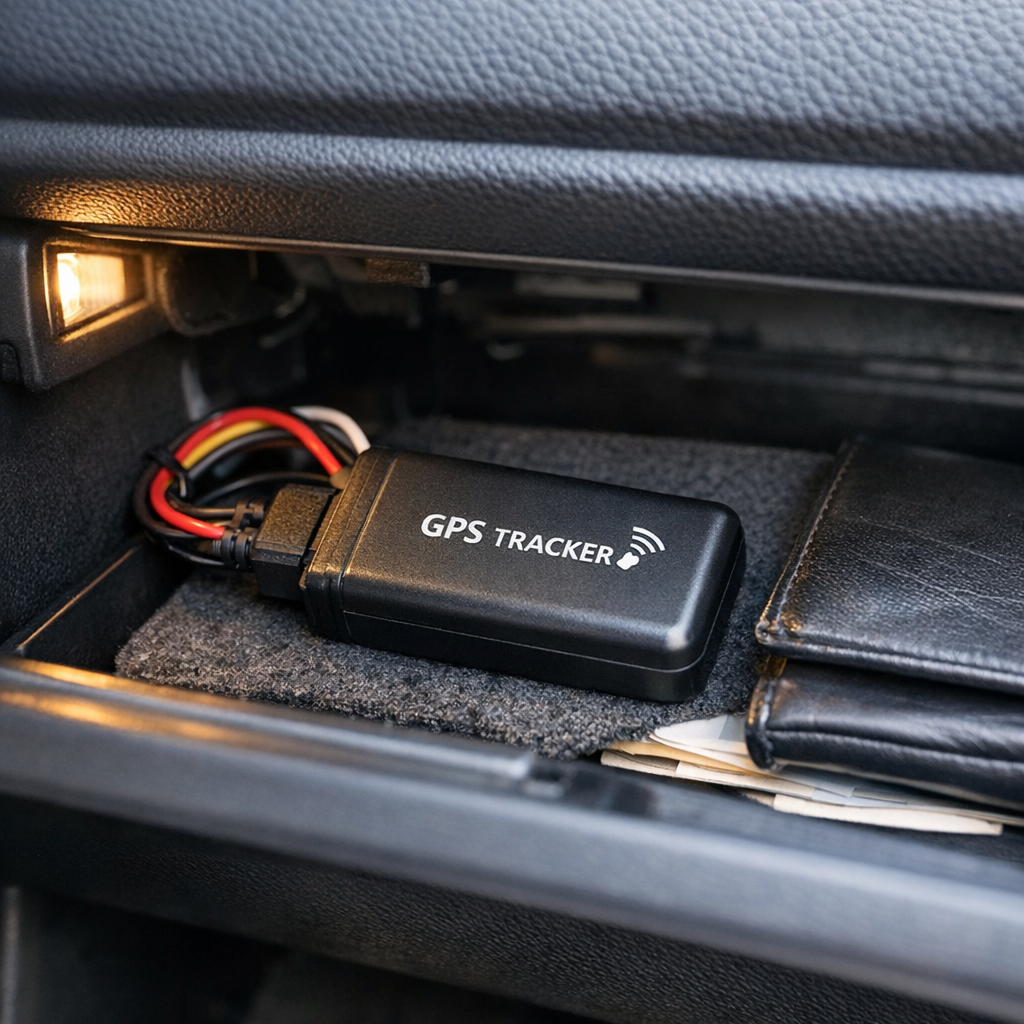
Common conditions where gps trackers lose accuracy
GPS trackers depend on satellite visibility, receiver quality, and environmental conditions. Signals weaken or reflect in three typical daily scenarios: urban canyons, indoor parking and storage, and wooded or mountainous terrain. In urban canyons, tall buildings cause multipath — satellites' radio signals bounce before arriving at the receiver, which can add tens of meters of error. Indoor parking or basements often block direct line-of-sight to satellites; many trackers then switch to assisted positioning using cell towers or Wi‑Fi, producing coarser fixes that are fine for a general area but unsuitable for pinpoint recovery. In dense foliage or steep valleys, signal attenuation and satellite geometry can extend fix times or produce jittery tracks.
Comparing gps trackers: device types and vulnerabilities
Not all gps trackers behave the same under the same conditions. Consumer plug-and-play OBD devices, battery-powered covert trackers, and industrial asset tracking units use different antennas, chipsets, and processing algorithms that affect real time gps performance. OBD trackers have good power and often perform periodic high-frequency reporting but their antenna placement inside the cabin can degrade satellite visibility. Battery trackers prioritize power savings with low-power GNSS chips and reduced reporting cadence; they may report a last-known-good fix followed by cell-based coarse updates. Industrial asset tracking devices are typically ruggedized, may include multi-constellation GNSS (GPS, GLONASS, Galileo), and sometimes combine inertial sensors to bridge brief dropouts.
When choosing between models, consider antenna quality, multi-constellation support, and whether the device uses dead-reckoning or inertial measurement to smooth short outages. For side-by-side technical comparisons and performance expectations in mixed environments, review manufacturer test data and customer field reports; a technical primer on real time GPS performance can clarify trade-offs Discreet solutions.
How user behavior and installation affect accuracy
Installation and routine use strongly influence outcomes. Placing a tracker inside a glove compartment, behind heavy metal, or under a thick bumper reduces signal strength and increases time-to-first-fix. For vehicle gps tracking, roof-mounted or high dash positions typically yield the best satellite visibility. In small businesses tracking equipment, securing the tracker to a non-metallic surface and ensuring it has a clear view of the sky during expected reporting windows improves reliability. Routine behaviors — parking in a covered structure overnight, leaving a device buried in a box, or letting a battery-run tracker power down between long sleeps — produce predictable gaps that appear as lost accuracy in logs.
Practical examples and common mistakes
Example 1 — Home driveway vs. underground garage: A homeowner places a compact battery tracker in a garage and expects the same precision as parking in the driveway. The device reports coarse cell-based coordinates while in the garage and high-precision GNSS fixes when the car moves outside. The mistake is assuming continuous GNSS availability; the mitigation is mounting the tracker where it can see the sky or adding a repeater solution for indoor coverage.
Example 2 — Fleet routing in dense city centers: A delivery company uses low-cost trackers on vans and sees positional drift that complicates route reconciliation. The drivers assume the tracker is wrong and manually override logs. The underlying issue is multipath and short GNSS outages; the correct approach is upgrading to units with multi-constellation GNSS and inertial fusion to reduce drift during momentary blockages.
Example 3 — Asset tracking with long sleep cycles: A contractor tags equipment with battery-saving asset tracking units that sleep for days. When equipment is moved briefly, the next wake cycle reports a distant, stale location. The common mistake is mismatching reporting intervals to operational needs; increase wake frequency for high-risk assets or use motion-triggered wake to capture relocations.
Typical configuration mistakes
- Ignoring antenna placement recommendations and mounting devices behind metal or inside enclosures.
- Relying solely on GNSS without assessing fallback accuracy or cellular/Wi‑Fi triangulation quality.
- Using long sleep intervals for assets that frequently move or are high value.
- Failing to account for urban multipath in route history analysis.
Buyer guide: evaluation criteria and selection logic
When evaluating gps trackers, apply a use-case-driven checklist rather than vendor marketing. Key criteria include antenna type and placement options, multi-constellation GNSS support, update frequency and configurable reporting modes, fallback positioning methods, battery life under realistic duty cycles, and the availability of inertial sensors for dead-reckoning. For vehicle gps tracking, prefer devices designed for continuous power with external antenna options. For asset tracking, prioritize battery life and motion-triggered reporting. If you need near-continuous location with sub-5-meter accuracy in urban areas, factor in additional technologies such as cellular A-GNSS assistance, external roof antennas, or hybrid systems that combine GNSS with Bluetooth beacons.
Buyers often overlook lifecycle costs: subscription data for real time gps feeds, replacement batteries, and installation labor. Test devices in the specific environments where they will operate before rolling them into production. For quick access to compatible models and category-level choices, see our GPS devices collection when deciding which form factor matches operational constraints Browse GPS Trackers.
Legal and ethical considerations
Location data is sensitive and regulated differently across jurisdictions. In the United States, employers typically can use gps trackers on business property and company vehicles but should provide clear policies and obtain consent where appropriate to avoid privacy disputes and potential state-level restrictions. In the European Union, processing location data is subject to GDPR; lawful bases such as legitimate interest or contract can apply, but transparency, data minimization, retention limits, and robust security are required. Retaining raw location history indefinitely or sharing live feeds without access controls increases compliance risk.
Operational controls reduce legal exposure: document the legitimate purpose for tracking, limit collection to what is necessary, restrict access to location feeds, implement retention and deletion schedules, and provide employees and customers with privacy notices. For covert tracking or monitoring of private individuals, consult counsel; in many U.S. states and EU member countries such practices are tightly regulated or prohibited. Non-legal best practices include encryption of telemetry, role-based access to platforms, and audit logs for administrative actions.
Mitigation tactics and layered solutions
Address accuracy loss with layered mitigation: improve physical installation (better antenna placement), upgrade to multi-constellation receivers, enable inertial fusion, adjust reporting intervals to capture critical movements, and combine gps trackers with complementary technologies such as Bluetooth beacons for indoor handoffs, RFID for controlled environments, or vehicle telematics with CAN-bus integration. For high-value or mission-critical assets, plan redundancy: multiple trackers or periodic manual checks to validate automated feeds.
Frequently Asked Questions
Q: Why do my gps trackers show the wrong location after parking in garages?
A: Garages block satellite signals; many trackers switch to cell-based or last-known fixes until GNSS visibility returns, causing coarse or stale locations.
Q: Can firmware updates improve accuracy?
A: Yes. Firmware can enable multi-constellation use, change tracking algorithms, and improve inertial sensor fusion, all of which can reduce errors without hardware changes.
Q: How does vehicle gps tracking compare to smartphone location accuracy?
A: Dedicated vehicle trackers often use optimized antennas and continuous power, yielding more consistent GNSS performance than phones, but smartphones may use richer sensor fusion and Wi‑Fi data for precise indoor fixes.
Q: Are there legal limits to using gps trackers on employee vehicles?
A: Jurisdiction matters. Employers should implement transparent policies, limit tracking to business needs, and comply with state and national privacy laws to reduce liability.
Q: What mistakes cause most lost fixes for asset tracking units?
A: Common mistakes are poor mounting, overly long sleep cycles that miss moves, and assuming cellular fallback provides meter-level precision when it is typically tens to hundreds of meters.
Educational closing
Evaluating where gps trackers lose accuracy requires combining environmental awareness, device capabilities, and operational policy. Technical limits such as satellite visibility, multipath, and antenna placement are predictable; they can be mitigated through better hardware choices, thoughtful installation, and layered systems design. Equally important are legal and privacy controls that govern acceptable use of location data in the US and EU. Applying a use-case-driven buyer checklist and testing devices in representative conditions will reduce surprises and align expectations with actual performance.