Voice recorders for long unattended sessions: buyer's guide for homeowners and small businesses
Selecting voice recorders for long unattended sessions requires balancing battery life, storage management, trigger strategy, and legal boundaries; this guide explains the decision logic for homeowners, small businesses, and professionals planning 8+ hour deployments.
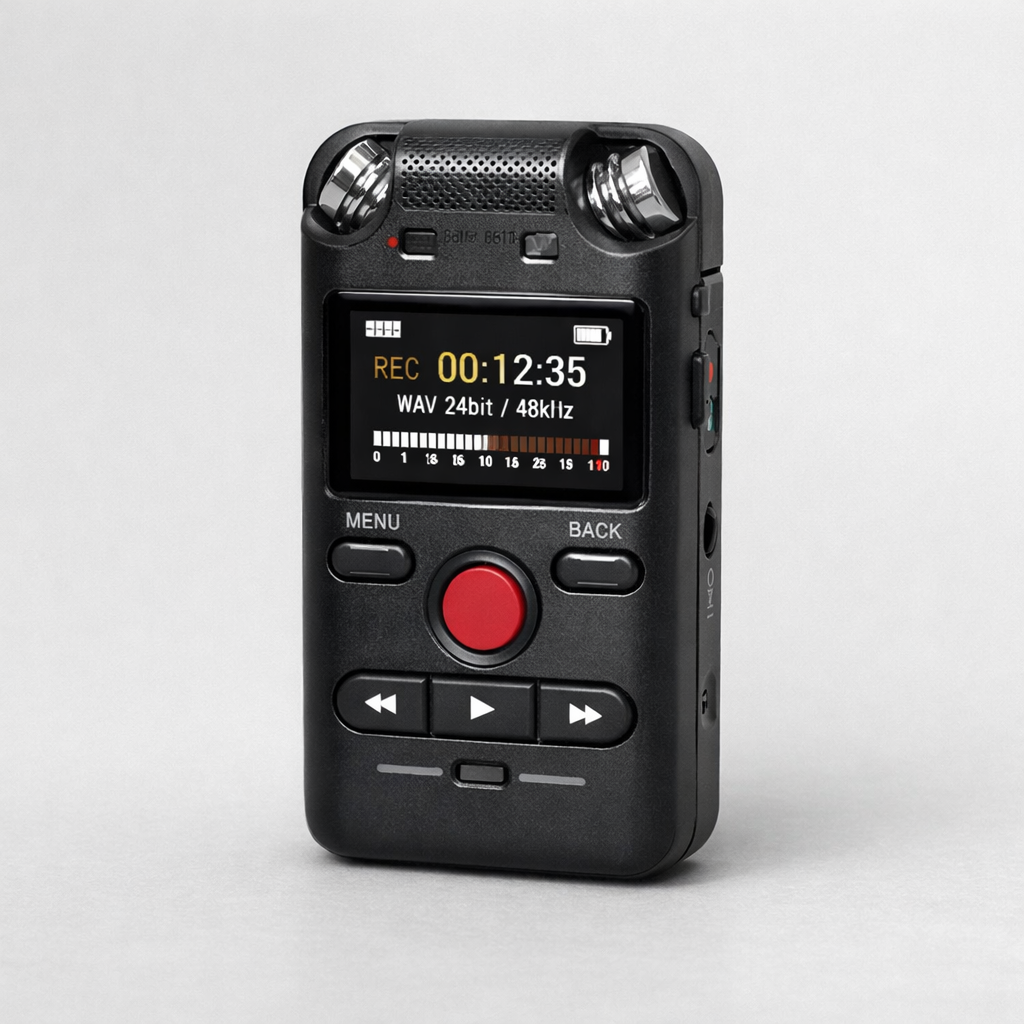
How voice recorders differ for long unattended sessions
Not all recorders are engineered to run reliably when left unattended for many hours or days. For this use case you must evaluate continuous power options, low-power standby modes, automated file rotation, and robust housing to avoid accidental shutdown. A basic digital voice recorder optimized for interviews will not behave like a purpose-built long-duration device. Consider whether you need a small digital voice recorder for portability, a model with USB power passthrough, or a cassette-style legacy device with external power.
Long unattended sessions typically change the relative importance of features: battery runtime and power management systems move to the top of the checklist, followed by storage strategy and automatic recovery from interruptions. A voice activated recorder may conserve storage and extend usable battery life, but trigger thresholds and false positives must be tuned to the environment.
Key comparison criteria when choosing voice recorders
When comparing models side-by-side, use consistent criteria. Below are the categories most relevant to long unattended deployments, with practical metrics to request from manufacturers or verify in reviews.
- Power and runtime: battery capacity (mAh), support for USB-C pass-through charging, external power input, and runtime under both continuous and standby modes.
- Storage strategy: onboard capacity, microSD expansion limits, file system type, loop recording and file rotation behavior, and maximum single-file length.
- Sensitivity and audio quality: microphone type (electret vs MEMS), frequency response, bitrate options, and noise floor—trade-offs between intelligibility and file size.
- Trigger modes: continuous recording vs voice-activated recording and hybrid schedules; adjustable thresholds and pre-record buffers reduce missed words.
- Reliability features: surge protection, auto-restart after power loss, temperature tolerance, and physical tamper resistance for unattended placements.
- Data security and format: encryption at rest, common codecs (WAV/MP3), and ease of importing into review software.
- Physical form factor: concealability, mounting options, and weather resistance when deployed outdoors or in garage/storage settings.
Quantifying runtime and storage
Ask sellers for realistic figures: e.g., a 3000 mAh device with 12 hours of claimed continuous recording may last weeks in voice-activated mode depending on environment. Estimate storage by bitrate: a 64 kbps mono MP3 uses roughly 28 MB per hour; at higher fidelity (128–320 kbps) multiply accordingly. Loop recording that overwrites oldest files can allow indefinite deployments if data retention strategy tolerates rolling logs.
Choosing voice recorders: scenario-based recommendations
Match device attributes to scenarios rather than picking the model with the longest listed battery. Below are decision paths for common use cases.
Home monitoring while away (privacy-aware)
For homeowners wanting to capture intermittent activity inside a property (e.g., babysitter checks, pet behavior), prioritize a discrete form factor with voice-activated recording, configurable sensitivity, and clear legal labeling for household members. Use local storage with periodic manual retrieval to avoid cloud exposures.
Browse Voice RecordersIf you need a range of portable options for indoor monitoring, review the collection for models that support microSD expansion and USB power.
Small retail or office after-hours monitoring
Small businesses require devices that tolerate temperature swings and provide secure file management. Opt for recorders that support external power or can be plugged into a continuous USB supply. Choose a codec and file naming pattern compatible with your evidence workflow, and consider tamper-resistant mounting.
Field interviews or stakeouts lasting multiple days
Professionals conducting extended field recordings should prioritize external battery packs, modular memory cards to swap without stopping recording, and an ability to timestamp files accurately. A digital voice recorder with adjustable low-cut filters helps reject wind or traffic noise and preserves intelligibility.
Practical examples and common mistakes
Real-world deployment examples illustrate how criteria interact.
- Example: night-shift retail monitoring — Using a recorder with 128 GB microSD and voice-activated mode, a shop owner captured two incidents across 48 hours. Because loop recording was enabled and sensitivity low, both incidents were saved as discrete files under 1 MB each.
- Example: long-term observatory recording — A homeowner used continuous recording at 64 kbps with an external USB power bank. File fragmentation occurred when the device auto-restarted after power glitches; selecting a model with auto-recovery eliminated gaps.
Common mistakes to avoid:
- Relying solely on manufacturer runtime claims without testing in the target environment.
- Using default voice-activation thresholds; this frequently produces many short files or misses soft speech.
- Failing to verify time-stamping and file naming conventions, complicating later review.
- Neglecting secure storage/export procedures—unprotected recordings risk data leaks and non-compliance.
Legal and ethical considerations for long unattended recording
Recording laws and ethical expectations shape what is permissible and advisable. This section provides high-level guidance, not legal advice.
United States (high-level)
U.S. law varies by state: some states require one-party consent for audio recordings, others require all-party consent. The location of the device matters—private spaces like restrooms are off-limits, and expectation of privacy should guide placement. Businesses conducting routine monitoring usually post notices and restrict access to recordings. When in doubt, consult local counsel before deploying long unattended sessions.
European Union (high-level)
In the EU, privacy frameworks such as the GDPR impose obligations where recordings contain personal data. Collecting audio in workplaces or public-facing areas requires a lawful basis, data minimization, purpose limitation, and secure retention policies. Employers should conduct impact assessments for prolonged audio monitoring and inform affected individuals.
Across jurisdictions, document your retention policy, secure storage method, and who has access. Implement technical measures like password protection and consider encryption for sensitive recordings. Ethical practice favors transparency when recordings capture identifiable individuals; balance safety objectives with privacy.
Evaluation checklist: how to vet a candidate recorder
Use this checklist during purchase and testing to ensure a model fits long unattended use:
- Power: test continuous run-time with intended settings and any external power sources.
- Trigger Behavior: validate voice activation across distances and background noise levels.
- Storage: confirm max microSD capacity, file length limits, and loop-record behavior.
- Recovery: simulate power loss and confirm auto-restart and file integrity.
- Security: verify password protection, encryption options, and physical security mounts.
- Compliance: map recording plans to local legal requirements and document consent or notices if required.
- Interoperability: ensure exported files import cleanly into your review or transcription tools.
Read the complete Voice Recorders guide For a deeper technical walkthrough of recording formats and long-form deployment tips, consult our detailed pillar resource on advanced recorder techniques.
Frequently Asked Questions
Q: How long can a typical consumer voice recorder run unattended on battery?
A: Consumer runtimes vary widely; many recorders list 10–20 hours continuous use, but voice-activated modes and low-bitrate settings can extend effective deployment to days when combined with external power.
Q: Are voice activated recorders reliable for capturing soft speech in a quiet room?
A: They can be, but success depends on microphone sensitivity, threshold settings, and pre-record buffer length. Test in the actual environment and adjust thresholds to avoid clipping initial syllables.
Q: What storage strategy prevents file loss during very long sessions?
A: Use high-quality microSD cards, enable loop recording only if overwriting is acceptable, and choose models with robust auto-save and file-flush behavior. Periodic card swaps with redundancy reduce single-point failures.
Q: Can I use a smartphone app instead of a dedicated digital voice recorder for unattended recording?
A: Smartphones are capable but present risks: battery management, OS updates, notifications, and security exposures can interrupt recording. Dedicated recorders are typically more reliable for unattended, long-duration tasks.
Q: What steps reduce legal risk for business monitoring after hours?
A: Post clear notices where required, limit recordings to necessary areas, implement strict access controls and retention schedules, and consult legal counsel to ensure compliance with local consent and employment laws.
Closing: making a defensible choice for long unattended recording
Choosing the right voice recorders for long unattended sessions is a matter of matching device capabilities to the operational environment and legal constraints. Prioritize power architecture, storage behavior, and reliable trigger modes, and always validate performance with realistic field tests. Document policies for access and retention to address compliance and privacy concerns, and apply the evaluation checklist before final selection to reduce surprises during deployment.
Discreet solutionsIf you plan professional deployments, review advanced device comparisons and real-world test reports to refine your shortlist before purchasing.