Článok: Voice Recorders for Homeowners and Small Businesses: Consent & Legal Boundaries
Voice Recorders for Homeowners and Small Businesses: Consent & Legal Boundaries
Choosing and using voice recorders raises specific legal and compliance questions for homeowners and small businesses. This article focuses on recording laws and consent requirements, explains where risks arise, and offers practical decision logic for when and how to record conversations lawfully.
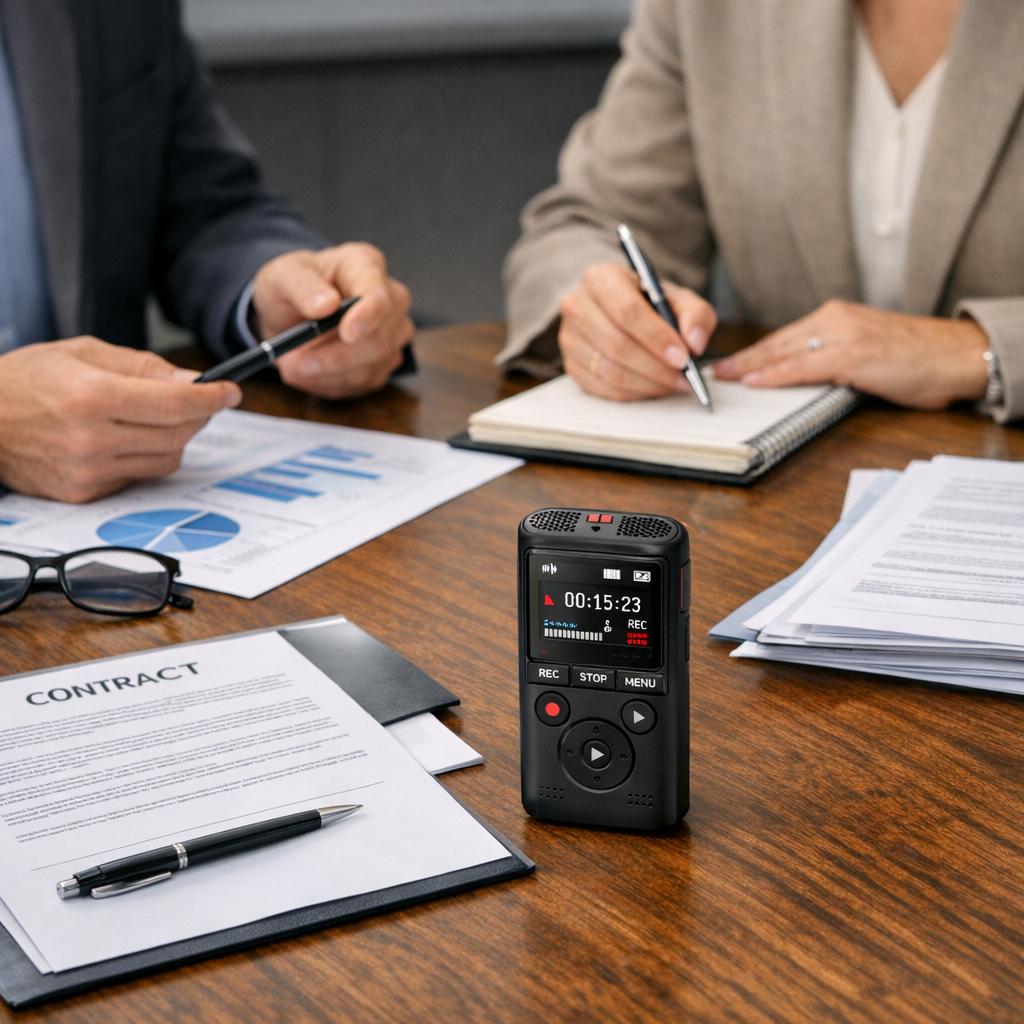
Voice recorders: Consent basics and recording laws
At the center of lawful recording is consent. Laws vary by jurisdiction, but two core rules appear repeatedly: whether at least one party to the conversation must consent, and whether all parties must be notified or agree. In many U.S. states, one-party consent is sufficient; in several others, and in various EU member states, explicit consent from all participants is required. Understanding which category applies to your location and the location of other parties is a primary compliance duty before using a device.
For businesses and homeowners, consent is not only statutory: it can create admissibility or contractual consequences. For example, a business that records customer calls without required notice risks regulatory fines, private litigation, and loss of trust. Homeowners who record household members or guests may face privacy claims or criminal exposure where all-party consent laws apply.
Comparing voice recorders by legal risk and use case
Not all recording scenarios carry equal legal exposure. Compare three common use cases: logging internal meetings, customer service calls, and casual home recordings. Internal meetings where every participant is on notice and has consented (written or announced) typically present the lowest legal risk. Customer service call centers must combine notice, policy, and retention controls to satisfy regulatory and contractual obligations. Casual home recordings — where the recorder is concealed or participants are unaware — are the highest risk category and can trigger criminal statutes or civil liability in many jurisdictions.
When evaluating devices, consider features that support compliance: visible indicator lights, clear audio timestamps, easy export of consent logs, and secure storage options. These features do not replace legal requirements but help demonstrate intent to comply. Browse Voice Recorders
Choosing voice recorders: legal and practical comparison
Selection logic should weigh legal boundaries as heavily as technical specifications. Key evaluation criteria include:
- Transparency features: Does the device provide a visible or audible recording indicator that can be used to notify participants?
- Metadata and timestamps: Can the device produce tamper-evident timestamps and export logs to support chain-of-custody?
- Storage and encryption: How is data stored and protected? Encrypted local storage and secure export reduce the risk of unauthorized disclosure.
- Ease of announcing consent: For organizations, does the recorder integrate with call systems to play consent notices or capture verbal agreement?
- Retention controls: Does the solution allow automated deletion policies aligned with legal retention obligations?
Comparing devices across these axes helps owners choose recorders that facilitate lawful use. For more detailed product-level comparisons and discreet vs. professional models, consult our extended resource on recorder capabilities. Read the complete Voice Recorders guide Discreet solutions
Use-case scenarios and decision logic
Scenario 1: Home dispute or safety recording
If a homeowner considers using a voice recorder to document a domestic dispute or potential criminal behavior, priority should be safety and legal counsel. In one-party consent jurisdictions, recording to protect physical safety may be lawful, but recordings obtained without required consent can be inadmissible or result in counterclaims. The decision logic: assess immediate safety needs, consider contacting authorities, and if recording, document context, secure the file, and consult counsel before disclosure.
Scenario 2: Small business staff meetings
Small businesses that record staff meetings need clear policies and consistent notice. A practical compliance path: adopt a written recording policy, distribute to staff, post reminders before recording, and retain signed acknowledgments when feasible. If a business operates across state lines or with EU residents, add jurisdiction-specific clauses to consent language and retention schedules.
Scenario 3: Customer calls and service recordings
For client interactions, regulators and private contracts often require express notice and the ability for the other party to opt out or receive a summary. Where consent is necessary, design call flows that announce recording and require verbal agreement for sensitive conversations. Maintain an indexed consent record tied to the recording file for auditing purposes.
Practical examples and common mistakes
Example 1: An owner records a contractor conversation without notice in a two-party consent state. The contractor later sues for privacy violations; the recording is suppressed in court because it was made illegally. Lesson: check local recording laws before capturing on-site conversations.
Example 2: A small clinic records patient intake calls with a verbal notice but lacks retention policies. A data breach exposes recordings, leading to regulatory penalties. Lesson: consent without secure storage and retention controls is incomplete compliance.
Common mistakes to avoid:
- Assuming one-party consent applies everywhere — cross-border interactions complicate consent.
- Using concealed recorders as a default — concealment increases legal and ethical risk.
- Failing to log or tie consent to a specific recording — weak evidence of consent undermines legal defensibility.
- Neglecting data security and retention — exposure or indefinite retention invites regulatory scrutiny.
Legal & ethical considerations (EU/US high-level, non-legal advice)
United States: U.S. federal law generally allows one-party consent for recordings in interstate contexts, but state laws can vary significantly. Many states require all-party consent for private conversations. Businesses should map applicable state laws for every participant and apply the strictest relevant standard when in doubt. Regulatory frameworks (such as industry-specific rules for finance or healthcare) may add layers of obligations beyond state statutes.
European Union: The EU approach emphasizes data protection and privacy rights. Recording that captures personal data often triggers obligations under the General Data Protection Regulation (GDPR), including lawful basis for processing (consent or legitimate interest), transparency obligations, data minimization, and rights to access or erasure. In practice, organizations must document legal grounds for recording, implement safeguards, and honor subject rights.
Ethical considerations: Even where recording is lawful, consider proportionality and purpose limitation. Record only what is necessary, retain data for the shortest period consistent with legitimate purposes, and avoid secret recording where transparent alternatives exist. Ethical practice reduces reputational risk and often aligns with better legal outcomes.
Frequently Asked Questions
Q: Do I need consent to record a conversation in my home? A: It depends on your jurisdiction. Where all-party consent is required, you must inform every participant; in one-party states, one participant's consent may be enough.
Q: Can I use a voice recorder to document workplace misconduct? A: Recording may be permissible if you comply with applicable labor, privacy, and criminal laws. Employers should consult counsel and adopt clear policies before relying on recordings as evidence.
Q: Are recordings admissible in court if obtained without notice? A: Courts vary. Illegally obtained recordings are often suppressed or excluded; civil liability can also arise. Admissibility should not be assumed without legal review.
Q: How long should I keep recorded files? A: Retention should match legal, regulatory, and business needs. Shorter retention reduces risk; document your retention schedule and delete recordings when no longer necessary.
Q: What technical steps reduce legal exposure when recording? A: Use recording devices with clear indicator features, retain consent logs tied to files, encrypt storage, and implement access controls and deletion policies to limit unauthorized disclosure.
Educational closing
Voice recorders are useful tools for evidence gathering, quality control, and documentation, but their lawful use requires an understanding of recording laws, consent requirements, and data protection obligations. Apply a stepwise decision process: identify jurisdictions, choose transparent devices and policies, document consent and retention, and implement technical safeguards. When in doubt about admissibility or cross-border scenarios, seek legal counsel to reduce risk and ensure recordings serve legitimate, lawful purposes.