Članek: 4K security cameras for homes and small businesses: why resolution isn’t everything
4K security cameras for homes and small businesses: why resolution isn’t everything
4K security cameras are often marketed as the automatic solution to unclear footage, but resolution alone cannot guarantee usable surveillance evidence; placement, lens choice, lighting and legal constraints shape whether a high-resolution image becomes meaningful for identification or incident reconstruction.
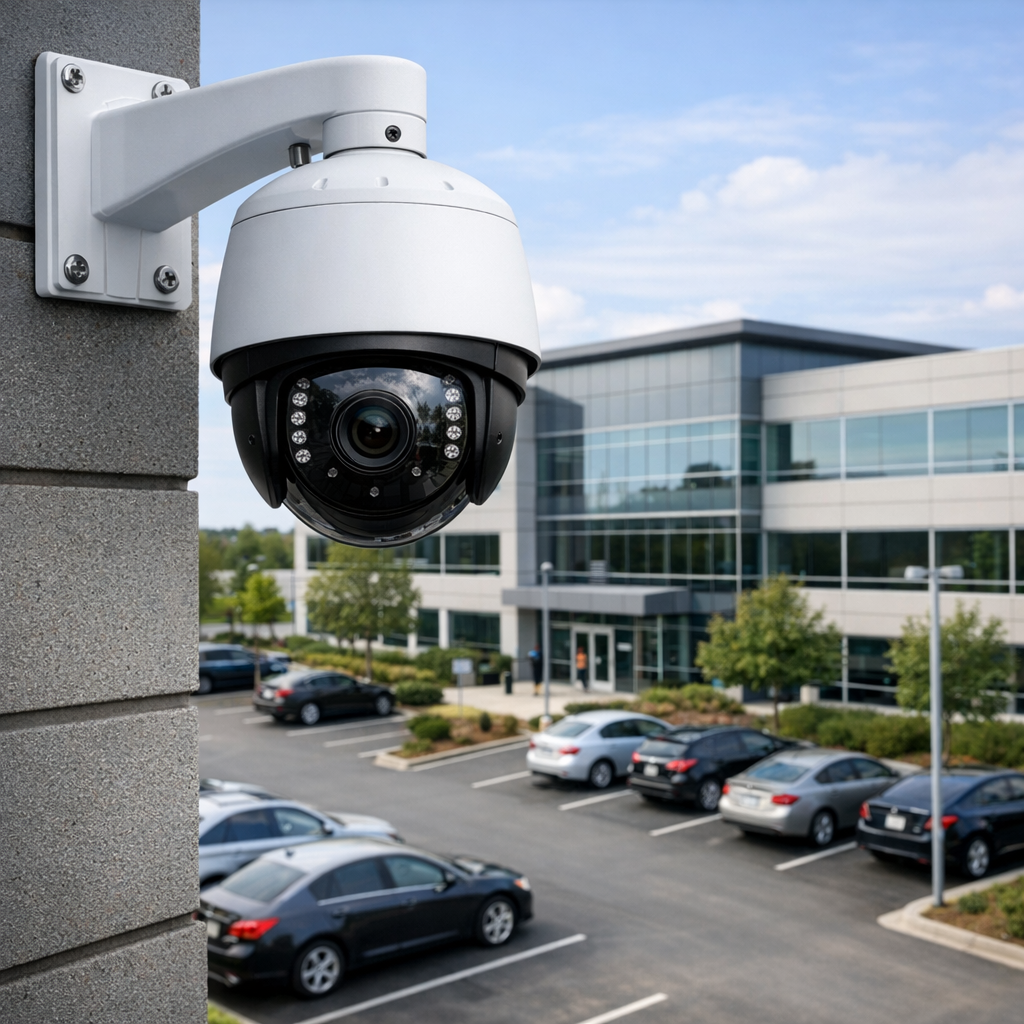
Why 4K security cameras alone don't guarantee useful surveillance evidence
High pixel count increases detail in controlled conditions, yet a 4K sensor can still deliver unusable video when a camera is poorly placed, has the wrong lens, faces adverse lighting, or is operated in violation of privacy rules. A 4K file with motion blur, overexposure or a distant subject may look impressive on spec sheets but fail to produce clear faces, readable license plates, or the kind of security footage quality that holds up in investigation or court.
Understanding how resolution interplays with optical and environmental factors helps homeowners and small business owners evaluate whether 4K security cameras are the right investment for a given use case. For systematic guidance on overall surveillance strategy, consult our foundational article on video systemsRead the complete Video Surveillance guide .
Choosing 4K security cameras: balancing resolution, placement, lighting and lens selection
Selecting 4K security cameras requires matching sensor resolution to lens field of view and mounting location. A wide-angle lens paired with a 4K sensor spreads pixels over a larger scene, reducing the pixels per subject and undermining identification at distance. Conversely, a telephoto lens concentrates pixels on a smaller area, improving recognition but narrowing coverage and increasing the need for precise camera placement. When you assess models, compare effective pixels on target rather than only megapixels.
Lighting conditions determine how many usable pixels you get in practice. Daylight scenes are forgiving, but backlight, strong contrast and night conditions expose limitations of many 4K modules. If you plan to monitor darker approaches, evaluate night vision cameras and low-light sensitivity (measured as lux) alongside resolution. IR illumination can help, but it alters contrast and may wash out details if the subject is too close to the diodes.
Comparison: resolution vs placement, lighting, and lens — pros and cons
Resolution (pros): more image detail when pixels are used effectively; better cropping flexibility in post; improved optical character recognition when paired with suitable optics. Resolution (cons): larger storage and bandwidth needs, overconfidence that can mask other failures, and diminishing returns when the scene or lens cannot resolve detail at target distance.
Placement (pros): correct mounting angles and distances maximize the effective pixels on critical zones like entryways and cash registers; reduces occlusion and improves facial angle capture. Placement (cons): poor choice creates blind spots and forces digital zooms that cannot recover lost detail. Practical camera placement ties directly to expected incident trajectories and sightlines.
Lighting (pros): good illumination preserves contrast and color, enabling better facial recognition and color-based evidence. Lighting (cons): dynamic ranges and sudden glare can defeat auto-exposure. Combining exposure management, HDR-capable cameras, and supplemental lighting often yields more reliable footage than resolution increases alone.
Lens selection (pros): choosing the proper focal length and quality optics ensures sensor pixels map to useful image detail at the target distance. Lens selection (cons): cheap or mismatched lenses introduce softness, chromatic aberration and distortion that negate the advantages of higher sensor resolution.
When to prioritize resolution
Opt for 4K security cameras when targets are medium-to-far distance and the installation can support lenses that concentrate pixels on the subject. Examples include parking lot surveillance where license plate legibility across several lanes is required and warehouses where identifying actions across aisles benefits from pixel headroom.
When to prioritize placement and optics
Prioritize camera placement and quality lenses when monitoring entrances, counters, or compact high-value zones. In these cases, a well-placed 1080p camera with the correct focal length and exposure settings can outperform a 4K camera that is mounted improperly or uses a wide, low-quality lens.
Practical examples and common mistakes
Scenario 1 — Retail storefront: A store installs 4K security cameras high on a storefront facade. The cameras capture large areas but use wide-angle lenses, leaving faces small in the frame. During a theft, the footage lacks facial detail. The correct approach was to add supplemental cameras focused on the transaction area with appropriate focal length, not just increase resolution.
Scenario 2 — Residential driveway: A homeowner chooses a 4K camera to capture license plates across the street. The camera is mounted behind a glass pane and aimed at a steep angle; reflections and rain render the footage unreadable. A better solution blends camera placement out of reflective surfaces, a narrow field lens, and targeted lighting.
Common mistakes include relying exclusively on manufacturer megapixel claims, mounting cameras at excessive height, pairing 4K sensors with poor lenses, and neglecting exposure controls or IR placement for night scenes. Another frequent error is thinking footage compression is negligible: high-resolution streams compressed aggressively can lose crucial detail; balance codec settings with recording capacity.
Avoid these mistakes by testing each camera in-situ before finalizing mounts and by reviewing recorded clips during night and peak glare conditions. Consider trial runs to validate security footage quality across typical incident scenarios.
Buyer guide: evaluation criteria and selection logic
When evaluating 4K security cameras and other video surveillance cameras, use a checklist:
- Effective pixels on target: Calculate the pixels-per-foot at the intended mounting distance for the primary zone of interest.
- Lens specifications: Choose the focal length and optical quality that deliver the needed resolution on target.
- Low-light performance: Review lux ratings and sample night footage; compare IR implementation if night vision cameras are required.
- Dynamic range and exposure controls: Prefer cameras with WDR/HDR modes where backlight and mixed lighting are common.
- Compression and storage: Balance H.264/H.265 settings against retention requirements and network capacity.
- Mounting and vandal resistance: Ensure housings, mounting hardware and wiring routes support intended placement and legal constraints.
Use-case logic: For perimeter monitoring choose higher resolution combined with telephoto capability; for entry points prioritize angle and lens to obtain facial profiles at close range. For mixed lighting environments, select sensors with strong dynamic range over raw pixel count.
Consider checking available models on the surveillance cameras category before purchase to match your use case and physical constraintsBrowse Video Surveillance.
Legal & ethical considerations
Installing 4K security cameras and other video surveillance cameras comes with legal and ethical responsibilities. In the United States, rules differ by state, but common boundaries include avoiding audio recording without consent in many jurisdictions and not placing cameras where people expect privacy, such as bathrooms or private living spaces. In the European Union, the GDPR emphasizes data minimization, purpose limitation and secure processing — you must justify why high-resolution footage is necessary and ensure secure retention and access controls.
Operational best practices include clear signage where required, limited retention policies, encryption of stored footage, role-based access control for recorded media, and documented incident handling procedures. High-resolution footage increases privacy risk because it can reveal sensitive personal data; therefore, adopt stricter access logs and deletion schedules for 4K recordings. These steps reduce legal exposure and demonstrate a compliance-oriented approach to surveillance evidence handling.
Where local law requires consent or notification, ensure policies are visible and staff are trained. Consult local authorities or a legal advisor for jurisdiction-specific compliance; these notes are high-level and do not constitute legal advice. For technical policy framing and system design guidance, our broader video surveillance resource can help align technology choices with compliance needsDiscreet solutions.
Frequently Asked Questions
Q1: Will upgrading to 4K security cameras automatically improve facial recognition?
A1: Not automatically. Recognition improves only if the camera is placed and focused so faces occupy sufficient pixels, and lighting/exposure allow clear capture; otherwise higher resolution yields little benefit.
Q2: How does lens choice affect CCTV resolution?
A2: Lens focal length and optical quality determine how sensor pixels map to scene detail. A poor lens can blur or distort, negating the extra pixels of a 4K sensor.
Q3: Are night vision cameras in 4K better than 1080p at night?
A3: Not necessarily. Many 1080p cameras have better low-light sensitivity and effective IR implementation. Evaluate lux performance and nocturnal sample footage rather than resolution alone.
Q4: Do I need extra storage for 4K security cameras?
A4: Yes. 4K increases bitrate and storage requirements; compression helps but may reduce usable detail. Plan retention, bandwidth and backup accordingly.
Q5: Can high-resolution footage create greater privacy liabilities?
A5: Yes. 4K footage may capture detailed personal data, increasing obligations under privacy laws. Apply strict access controls and retention limits to mitigate risk.
Educational closing
Resolution is one component of security footage quality but not a substitute for correct system design. Homeowners and small businesses should evaluate how 4K security cameras interact with placement, lens selection, lighting and compliance obligations to determine whether higher resolution will translate into reliable, admissible surveillance evidence. Conduct in-situ tests, prioritize camera optics and exposure controls where identification is critical, and couple technical choices with clear data handling policies to achieve meaningful, legally defensible results.