Video surveillance blind spots businesses overlook and how to fix them
Video surveillance is central to loss prevention and safety for many businesses, but common blind spots—technical, operational, and legal—undermine its effectiveness and create compliance risks. This article examines the precise areas organizations tend to ignore, compares technical options, walks through real-world use cases, and offers decision logic for selecting and configuring systems so they close gaps without creating new liabilities.
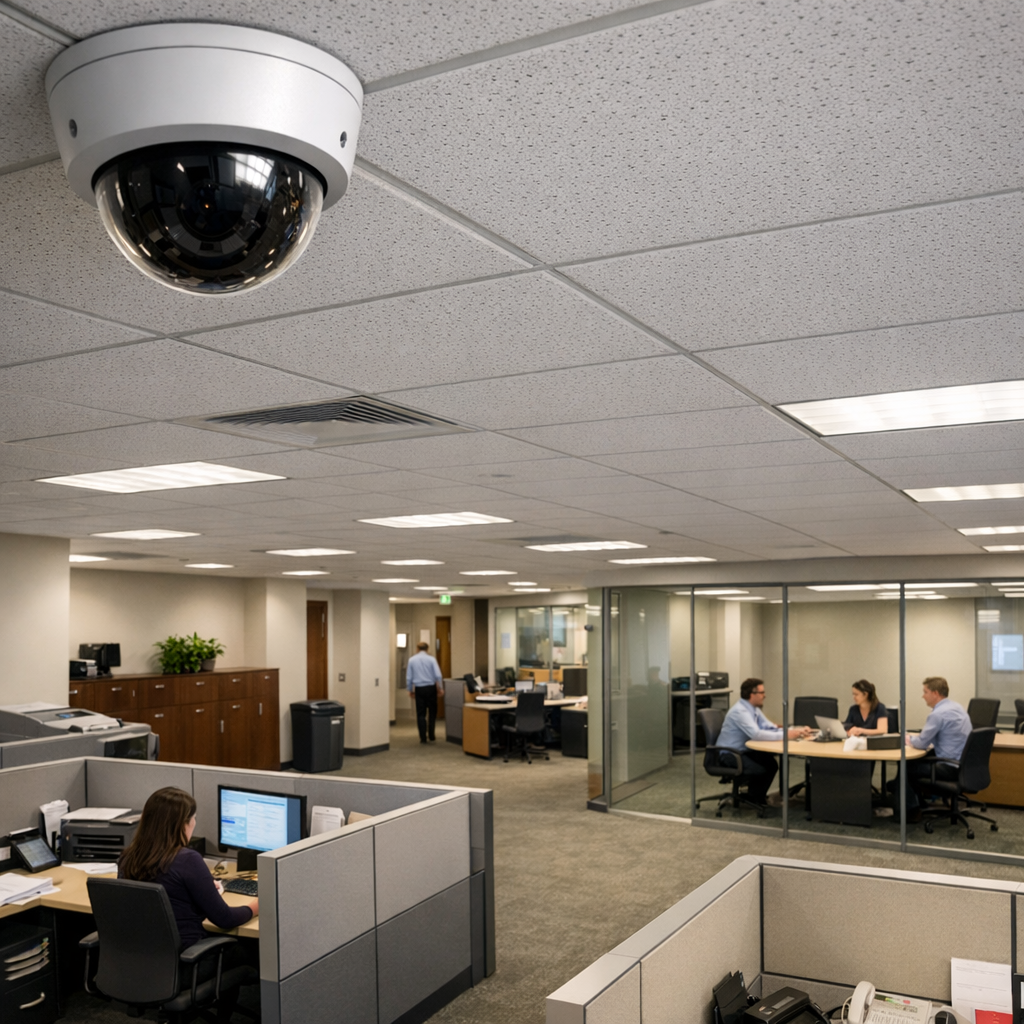
Common blind spots in video surveillance
Businesses routinely miss five categories of blind spots: physical occlusion, improper coverage geometry, insufficient image quality, network and storage bottlenecks, and policy gaps that limit usable evidence. Physical occlusion includes shelves, signs, or temporary staging that hides key aisles; coverage geometry refers to cameras with the wrong fields of view or poor overlap between units; image-quality gaps arise when cameras can’t resolve faces or license plates at required distances; network and storage problems erase footage during busy periods; and policy gaps mean footage exists but cannot be legally or operationally used.
Each blind spot has a distinct detection method. Walk the site during peak activity and record with a test camera at different times and light levels. Compare actual coverage to a map of critical assets and entrances; don’t assume a single wide-angle camera replaces two targeted cameras. For basic planning principles see the site design checklist that complements operational policy reviews Read the complete Video Surveillance guide
Technical comparisons for reducing video surveillance blind spots
Choosing the right camera type and configuration is a trade-off. Fixed wide-angle domes cover broad spaces but reduce detail at distance; PTZ cameras provide targeted detail but can miss events when not actively pointed. High-resolution 4K sensors capture more detail but demand more bandwidth and storage, whereas lower-resolution cameras with good optics and IR may perform better in low light. Consider these structured comparisons:
- Fixed dome vs PTZ — Fixed cameras provide continuous coverage; PTZ adds focus-on-demand. Use PTZ to investigate after detection, not as sole coverage for corridors.
- Wide-angle lens vs varifocal — Wide-angle handles open areas; varifocal lets you tune focus to preserve facial or plate detail at specific ranges.
- High resolution vs smart compression — Higher megapixels improve recognition but multiply storage. Use analytics-triggered retention to keep high-res clips only when needed.
- Wired PoE vs wireless — PoE gives consistent throughput; wireless is flexible for temporary sites but risks packet loss and local interference that create footage gaps.
When upgrading an older system, run a side-by-side test. Mount new units next to legacy cameras and log detection rates and identification success across a business week. If a change improves detection but creates storage pressure, evaluate on-device analytics that discard irrelevant frames and keep incidents.
Operational blind spots: policies, access, and maintenance
Even technically perfect coverage can fail if procedures are weak. Common operational blind spots include unclear retention rules, uncontrolled user access to footage, and infrequent maintenance schedules that let cameras drift off-angle or suffer lens contamination. A business surveillance policy should define who can view footage, under what circumstances footage is retained or deleted, and how chain-of-custody is handled for evidentiary clips.
Train staff on camera etiquette and incident reporting so footage is preserved promptly. Periodic audits must check camera alignment, frame rates, and timestamp integrity. Maintain a change log for any physical relocations or configuration changes to preserve forensic reliability. For device selection and lifecycle guidance for on-premise CCTV systems, consult vendor and technical checklists before procurement Browse Video Surveillance
Maintenance checklist
- Quarterly lens cleaning and alignment verification
- Monthly storage integrity checks and backup verification
- Access log reviews every 90 days to detect unauthorized viewing
- Annual firmware updates scheduled and tested off-hours
Use-case scenarios and decision logic
Different business models create different blind-spot priorities. Below are three typical scenarios with recommended decision logic.
Retail storefront with frequent customer flow
Problem: Shoplifting often occurs near blind aisles and fitting rooms; resolution at checkout counters must support identification.
Decision logic: Use a mix of fixed varifocal cameras at entrances and high-resolution counters; add high-frame-rate narrow-angle cameras over registers for transactional evidence. Combine with shelf-level cameras only where shrink has been historically high. Deploy analytics for loitering detection rather than continuous retention of all footage.
Small manufacturing facility with yard and loading dock
Problem: Loading bays face occlusion from parked vehicles and changing staging; license plate capture is required for third-party validation.
Decision logic: Install a layered approach: long-range varifocal or LPR-focused cameras at driveway approaches, medium-range cameras covering dock doors with overlapping fields, and a PTZ for monitoring dynamic yard operations. Ensure timestamps are synchronized across devices.
Professional office with reception and sensitive storage rooms
Problem: Privacy concerns and regulatory limits constrain where cameras can be placed, while secure storage rooms require audit trails.
Decision logic: Use visible cameras in common areas for deterrence and concealed cameras only where legally permissible and documented in policy. Combine access-control logs with video evidence for room-entry audits and enforce strict role-based access to footage.
Practical examples and common mistakes
Example 1: A small chain replaced aging analog cameras with a single panoramic unit in each outlet. Result: fewer devices but persistent blind spots at cashwraps and nearby aisles where detail was lost. Fix: add targeted varifocal cameras at transaction points and configure retention policies to keep high-resolution clips on incident triggers.
Example 2: A property manager installed high-resolution cameras but routed them through a congested wireless network shared with tenant Wi‑Fi. Result: packet loss during peak hours erased crucial footage. Fix: move cameras to a segregated PoE network or upgrade to dedicated links and introduce buffer storage on the NVR.
Common mistakes to avoid: assuming a single camera covers layered risks; equating pixel count with identification performance without testing lens and light conditions; neglecting access controls and retention policies that make footage inadmissible or noncompliant.
Legal & ethical considerations
Implementing video surveillance requires balancing security benefits with privacy and regulatory obligations. In the United States, federal law does not uniformly govern private video surveillance in non-sensitive areas, but state laws can restrict audio recording, mandate notice, or impose limits in employee monitoring. In the European Union, GDPR principles apply: surveillance must have lawful basis, be proportionate, and include transparent notices and data subject rights. Always conduct a data protection impact assessment for systems that capture identifiable personal data or profile behavior.
Key compliance steps include defining retention limits based on purpose, minimizing captured fields of view to necessary areas, maintaining access logs to footage, and providing clear signage. For workplace monitoring, consult employment law and collective bargaining agreements where applicable; employee consent may not be sufficient if monitoring is disproportionate.
When sharing footage with law enforcement, preserve chain-of-custody and document disclosure requests. Consider redaction tools for footage released externally to protect unrelated individuals’ privacy. For broader operational policies and template language that aligns technical setup with legal safeguards, review recommended policy frameworks and internal audit procedures Discreet solutions
Frequently Asked Questions
Q: How can I detect unseen blind spots before incidents occur?
A: Conduct timed walkthroughs during peak and low light, use temporary test cameras, and compare observed coverage to a mapped list of critical assets and ingress/egress points.
Q: Are wireless cameras reliable for permanent business surveillance?
A: Wireless cameras are useful for flexibility but can suffer interference and packet loss. For permanent installations, use wired PoE where possible and reserve wireless for temporary or low-risk locations.
Q: What retention period is appropriate for business surveillance footage?
A: Retention should be purpose-driven: short for routine monitoring (30–90 days), longer for incidents or regulated environments. Align retention with legal obligations and minimize storage of nonessential recordings.
Q: Can I rely on analytics to replace additional cameras?
A: Analytics can reduce review time but cannot create coverage where optical geometry fails. Use analytics to enhance detection and retention, not to substitute for needed viewpoints.
Q: How do I ensure footage is admissible in legal proceedings?
A: Maintain accurate timestamps, secure storage, access logs, and documented chain-of-custody for exported clips. Regularly test system integrity and retain metadata with recordings.
Educational closing
Closing the blind spots in video surveillance requires a combined technical, operational, and legal approach: map coverage against critical risks, compare device trade-offs in context, establish deliberate policies for access and retention, and test systems under realistic conditions. Thoughtful design prevents common failures—loss of critical evidence, privacy violations, and unnecessary costs—while giving businesses an operationally robust and legally defensible surveillance practice.