Mini cameras for homeowners and small businesses: why tiny devices often produce worse footage
Choosing mini cameras for a home or small business seems straightforward: small size, easy concealment, and minimal installation. Yet many users discover after purchase that the footage is grainy, distorted, or otherwise unusable. This article explains why mini cameras can perform worse than larger small security cameras, with practical use cases, selection logic, and legal boundaries to help owners make informed decisions.
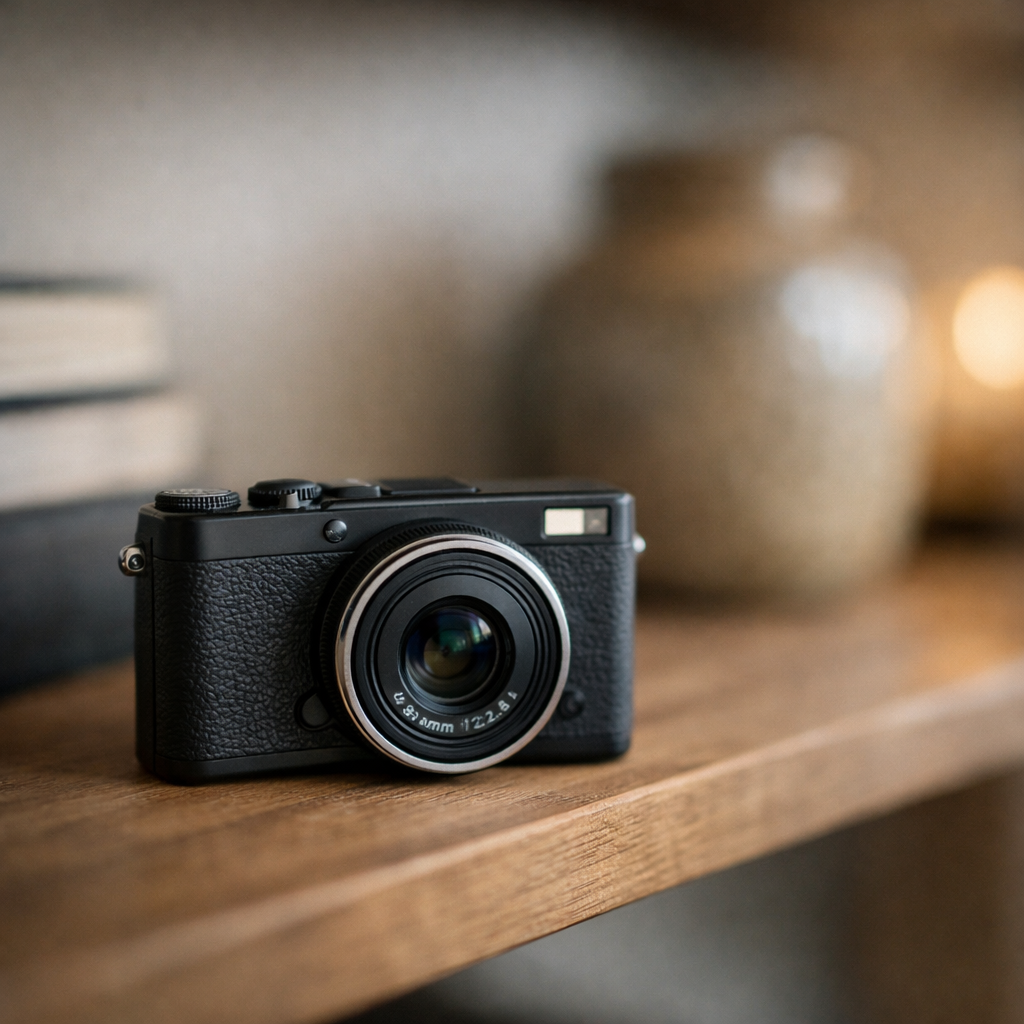
Why mini cameras underperform: optics, sensors, and power limitations
Mini cameras trade physical volume for convenience. Reducing size forces compromises: smaller lenses collect less light, tiny image sensors have lower dynamic range, and compact housings limit heat dissipation. Those three hardware limits combine to degrade image quality, especially in real-world conditions where lighting changes or motion occurs. Consider a typical low-light corridor: a full-size small security camera with a 1/2.8" sensor will capture clearer, less noisy images than a sub-20mm mini camera that relies on a 1/4" sensor and a plastic lens.
Optical constraints also affect field of view and distortion. Miniature wide-angle lenses often introduce barrel distortion or soft edges to maintain a compact profile. Compression plays a role too: many mini cameras use aggressive H.264 settings to conserve bandwidth, producing macroblocking and artifacts on faces or license plates. These trade-offs are inherent to shrinking optics and electronics, not always the result of poor manufacturing.
Why mini cameras fail in specific use cases: motion, low light, and capture requirements
Choosing a camera requires mapping the task to the camera's capabilities. Mini cameras may be acceptable for static scene monitoring at close range but will often fail when the use case requires:
- Capture of moving subjects at distance (vehicles, running people)
- Facial identification under varying light
- Reading fine detail such as serial numbers or small printed text
For example, a discreet camera placed in a reception area to record faces during daylight could work, but the same device in a dim hallway or for entrance identification at night will likely produce unusable frames. That mismatch between expectation and capability is the most common reason homeowners and small businesses report disappointment.
Comparing mini cameras with small security cameras: structured pros and cons
When comparing mini cameras to more conventional small security cameras, evaluate across these axes: image quality, concealment, installation complexity, power and connectivity, and legal risk. A compact table in your head helps decide:
- Image quality: small security cameras typically win due to larger sensors and optics.
- Concealment: mini cameras are easier to hide but often at the expense of image fidelity.
- Installation: mini cameras may allow discreet placements but can complicate access for maintenance and rewiring.
- Power and connectivity: battery-powered minis conserve wiring but produce intermittent recording and higher compression.
- Cost per performance: cheap minis can underperform more expensive small security cameras that deliver dependable footage.
Understanding these trade-offs helps select the right device for the scenario rather than defaulting to the smallest option.
Selecting mini cameras: buyer criteria and common mistakes
When you evaluate mini cameras for a specific role—like package monitoring or a back-office deterrent—use a checklist: sensor size, lens aperture, native resolution at intended frame rate, codec and bitrate settings, low-light capability, mounting angle, and power source. Measure the planned viewing distance and lighting during the target period. Many buyers skip this step and assume resolution numbers tell the whole story; they do not. A 4K mini camera with a tiny sensor may still underperform compared with a 1080p small security camera with a larger sensor.
Common mistakes include choosing a mini camera solely for aesthetics or concealment, ignoring IR performance in practical terms, and failing to test compression settings. Another frequent error is assuming battery operation is a neutral benefit—batteries introduce duty cycles that can miss events and force higher compression to conserve storage, degrading footage quality. Avoid these mistakes by prioritizing image capture goals over size alone.
Practical selection logic
Start by defining your primary objective: identification, deterrence, or documentation. Identification demands the highest continuous image quality and stable power; deterrence benefits from visibility; documentation tolerates lower fidelity. Match the camera choice to that objective. For identification, favor a small security camera with a larger sensor; for discreet evidence capture where only a short-range view is needed, a mini camera may be acceptable.
Real-world scenarios and decision logic
Scenario 1: A neighborhood storefront needs to capture clear license plates at night. A mini camera hidden in a security sign will likely fail because of low-light sensor limits and narrow effective resolution at distance. The correct decision is a mounted small security camera with a larger sensor and IR illumination. Browse Mini Cameras
Scenario 2: A homeowner wants a discreet device to catch package theft on a porch 2–4 meters away during daytime. A well-placed mini camera with wide dynamic range might suffice for short-range daytime identification, but test the placement and store local footage at high bitrate to preserve details. Read the complete Mini Cameras guide
Scenario 3: A small office needs continuous monitoring of a backroom to document inventory handling. Battery-powered mini cameras risk missing events and creating spotty logs; a wired small security camera with PoE is a better fit for continuous, high-quality recording.
Practical examples and common mistakes
Example: A café owner bought a pinhole mini camera to monitor the counter. In bright daylight the images were acceptable, but during evening service the footage was noisy and faces were indistinguishable due to small sensor noise amplification. The mistake was not testing low-light performance and relying on manufacturer-stated resolution alone.
Example: A landlord installed a motion-activated mini camera in a communal corridor to document vandalism. The device used aggressive motion thresholds and a low bitrate to save battery life, recording multiple short clips that were highly compressed and lacked detail. The error was prioritizing battery life over the required quality for evidence.
Legal and ethical considerations (EU and US high-level guidance)
Using mini cameras raises legal and compliance questions similar to other surveillance devices. In the US, rules differ by state, but general principles prohibit recording where individuals have a reasonable expectation of privacy, such as bathrooms or private rooms, and audio recording may require consent. In the EU, the GDPR introduces obligations when footage captures identifiable persons: data minimization, lawful basis, transparency, and secure storage are essential. Operators must determine if recording is proportionate, provide notice where appropriate, and ensure retention policies.
Ethically, concealment increases risk of misuse. Even where legal, hidden cameras can damage trust and expose property owners to civil claims. Mitigate risk by consulting local statutes, using signage when practicable, limiting capture angles to public-facing areas, and applying strict access controls to recorded material. Discreet solutions
Frequently Asked Questions
Q1: Can a mini camera ever match the image quality of a small security camera?
A1: In limited close-range, well-lit scenarios, a high-quality mini camera can approach the performance of a small security camera, but generally larger sensors and optics in small security cameras provide superior dynamic range and low-light performance.
Q2: Are battery-powered mini cameras reliable for continuous surveillance?
A2: No. Battery operation is suitable for intermittent or event-driven capture; continuous surveillance requires wired power or PoE to avoid downtime and bitrate compromises.
Q3: Will higher megapixel counts guarantee clearer footage from mini cameras?
A3: Not necessarily. Megapixels on a tiny sensor increase noise and reduce per-pixel light capture. Sensor size and optics are more important than raw pixel count.
Q4: What compression settings should I look for to preserve evidence quality?
A4: Prefer cameras that allow adjustable bitrate and CBR/VBR control, higher keyframe frequency when possible, and the option to record locally at higher bitrates to avoid aggressive streaming compression artifacts.
Q5: How should I balance concealment and legal compliance when using discreet cameras?
A5: Favor visible deterrence for areas where law and ethics recommend transparency; use discreet cameras only when proportionate and legally permitted, limit scope, and implement strict access and retention policies.
Educational closing
Mini cameras solve specific problems—discreet placement and low-profile monitoring—but their physical constraints often lead to worse footage for identification, night use, and long-distance capture. The decision logic for homeowners and small businesses should start with the surveillance objective, environmental conditions, and legal obligations. Test devices in the actual scene, prioritize sensor and lens quality over headline resolution, and opt for wired solutions where continuous, high-fidelity recording is required. Thoughtful selection and deployment reduce the risk of unusable footage and noncompliant practices, ensuring surveillance investments meet real needs without unintended consequences.