Mini Cameras for Homes & Small Businesses: How Lighting Shapes Discreet Camera Footage
Mini cameras are increasingly chosen for discreet monitoring in homes and small businesses, but lighting determines whether that footage is usable, admissible, and privacy-safe. This article compares how different lighting environments affect image quality, motion fidelity, and legal boundaries, and it lays out decision logic for selecting and deploying small security cameras based on specific use cases and compliance constraints. For detailed technical reference on mini camera capabilities, consult the main resource Read the complete Mini Cameras guide
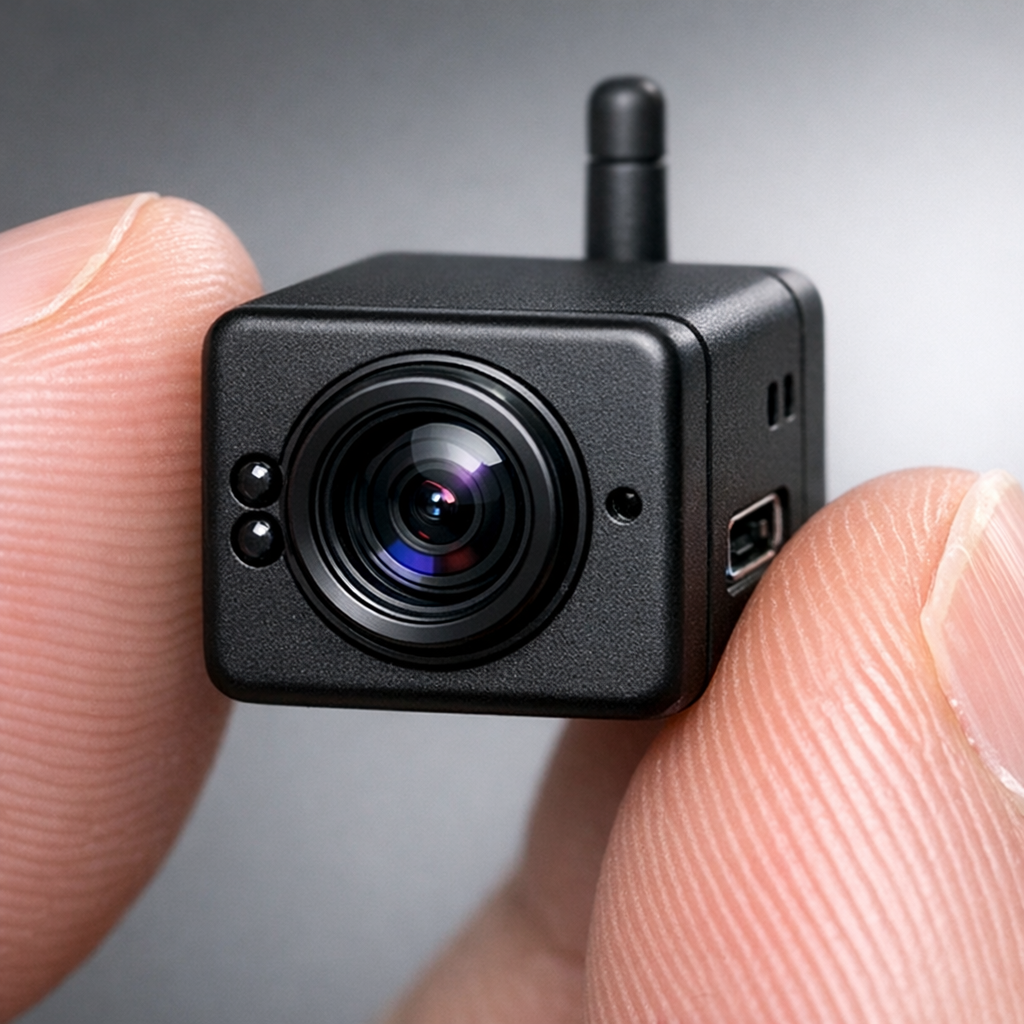
mini cameras and lighting: core image factors
Lighting influences the same technical subsystems in every compact camera: sensor sensitivity, lens aperture, shutter speed, white balance, and image processing. Miniature sensors are physically smaller than those in larger security cameras, which reduces photon capture per pixel and increases noise in low light. Manufacturers use higher ISO processing, noise reduction algorithms, and infrared (IR) illumination to compensate, but each strategy carries trade-offs: increased grain, motion blur, reduced color fidelity, or visible IR glow when LEDs are active. When evaluating footage quality, professionals look at signal-to-noise ratio, dynamic range, and frame-rate consistency rather than resolution alone. For a close comparison of features across product lines, see the product collection notes Browse Mini Cameras
Comparing mini cameras under different lighting conditions
This section compares typical environmental lighting scenarios and explains how mini cameras behave in each, with pros, cons, and practical indicators of acceptable footage.
Bright, even daylight
Pros: Highest color accuracy, sharp detail, and reliable auto-exposure. Mini cameras will generally match or approach their rated resolution and compression efficiency during daylight. Cons: Glare and reflections from glass or polished surfaces can obscure faces or license plates; fast auto-exposure transitions can create brief blackouts when entering shaded areas. Scenario: A storefront window facing a sunny street — place the camera to avoid direct sun and leverage narrow dynamic range settings if available.
Backlight and high dynamic range scenes
Pros: With wide dynamic range (WDR) processing, some mini cameras can recover detail in both bright and dark areas. Cons: Many small cameras have limited WDR; strong backlight will silhouette subjects and suppress facial detail. Use-case decision: If subjects frequently face a bright window, prioritize models with multi-exposure WDR and larger sensor metadata to balance highlights and shadows. For advanced tuning and feature notes, review in-depth comparisons in the technical pillar material Discreet solutions
Low light without IR
Pros: Natural atmosphere preserved; color retained when there is at least modest ambient light. Cons: Mini cameras commonly raise ISO and increase noise, causing pixelation and smeared detail; motion becomes blurred at slower shutter speeds. Business owners monitoring a poorly lit hallway should either improve ambient lighting or select cameras with larger sensors and fast lenses.
Infrared/near-infrared scenarios
Pros: IR illumination enables usable monochrome footage in total darkness. Cons: IR removes color information, can produce reflective hotspots on eyeglasses, and some IR LEDs are visible as faint glows that defeat discretion. For bedroom or private-area monitoring, IR use raises ethical and legal issues discussed below.
Use-case comparisons: which lighting profile suits which mini cameras
Match common deployments to camera types by comparing expected lighting against camera strengths.
- Home entryways (mixed interior and exterior light): Choose mini cameras with WDR and fast auto-exposure to avoid blown highlights and dark faces.
- Unlit storage rooms: Prefer models with effective IR or low-light enhancement and motion-activated illumination to conserve power and limit constant visible LEDs.
- Retail counters (bright interior, reflective surfaces): Use small cameras with anti-glare placement and adjustable exposure compensation to reduce washout.
- Outdoor porches at night: Combine small cameras with controlled outdoor lighting rather than relying solely on IR; this preserves color and aids identification.
Buyer guide: evaluating mini cameras by lighting performance
When selecting a mini camera for environments with specific lighting profiles, prioritize these technical criteria and avoid common selection mistakes.
- Sensor size and pixel pitch: Larger sensors and bigger pixels collect more light and perform better in low light. For discreet indoor monitoring, a larger sensor improves image usability without increasing visible illumination.
- Aperture and lens quality: A faster lens (lower f-number) yields better low-light performance. Beware of fixed plastic optics that introduce chromatic aberration in mixed lighting.
- Dynamic range/WDR: Essential where bright windows or spotlights coexist with shadows. Confirm multi-exposure WDR rather than simple digital contrast tricks.
- Night mode type: Distinguish between IR-based monochrome night modes and low-light color modes that rely on sensor sensitivity; the former is useful in total darkness but removes color cues.
- Codec and bitrate: Compression impacts usable detail in low light; ensure settings allow sufficient bitrate for your scene complexity.
- Firmware exposure controls: Manual shutter and gain settings can dramatically improve results during installation; seek models that offer these controls rather than only auto modes.
A common procurement error is prioritizing physical concealment over optical capability. A tiny camera hidden behind dark glass will underperform unless lighting is adapted to the sensor. Consider modest lighting adjustments to improve image capture rather than forcing a camera into an unsuitable environment.
Practical examples and common mistakes
Example 1 — Small retail shop: An owner installed two identical mini cameras, one above the register facing the window and one facing the aisle. The register camera recorded silhouetted customers because it lacked WDR; relocating it to face slightly downward and adding a diffuse interior light solved the problem. Example 2 — Home nanny monitoring: A parent used an IR-equipped mini camera in a nursery but left a nightlight on; mixed IR reflection caused hot spots on toys and poor identification. Better practice: choose a camera whose night mode matches the intended ambient lighting and test at typical operating hours.
- Common mistake: Relying on advertised resolution alone. Resolution cannot restore detail lost to noise or overexposure.
- Common mistake: Expecting IR to be invisible. Some IR solutions emit near-visible glows and can draw attention.
- Common mistake: Ignoring refresh and frame rate trade-offs. Low frame rates blur motion under low light and reduce evidentiary value.
Legal & ethical considerations
Lighting decisions affect not only technical quality but also legal admissibility and privacy risk. In both the EU and the United States, consent, reasonable expectation of privacy, and purpose limitation are central principles. Recording in private spaces (bathrooms, bedrooms) or capturing audio without proper notice may breach regional statutes and data protection rules; altering lighting to intentionally capture detail in private areas increases legal exposure. Installers should document the legitimate purpose, minimize capture of bystanders, and configure cameras to avoid unnecessary detail — for example, using masking or lower resolution where appropriate. In commercial settings, ensure signage and internal policies reflect surveillance presence and retention schedules. When uncertainty exists about legal boundaries, consult a compliance specialist rather than relying on technical workarounds to extract more detail from low-light footage.
Frequently Asked Questions
Q: Will adding a small LED near a mini camera improve night footage quality? A: Yes, a diffuse LED that increases ambient light typically improves color and reduces noise more effectively than relying solely on IR, but it can be visible and affect discretion.
Q: Can software noise reduction make poor low-light footage usable? A: Software can help, but aggressive denoising often removes fine detail and can create artifacts that compromise identification or evidentiary value.
Q: Do all mini cameras support WDR? A: No; WDR is a specific imaging technique and is more common in higher-tier units. Verify multi-exposure WDR capability in specifications rather than assuming it from marketing terms.
Q: Is IR illumination legally risky? A: IR itself is a technical feature; legal risk depends on where and whom you record. Using IR to surveil private areas without consent increases legal and ethical concerns.
Q: How should I test a mini camera before final installation? A: Test at the actual times and lighting conditions you expect to record, including extremes such as bright backlight and after-dark scenes; review footage for identifiability, motion blur, and false positives.
Educational closing
Lighting is the most decisive variable in the performance of mini cameras. Selecting the right device requires comparing sensor and lens specifications to the expected scene, testing under real conditions, and balancing discretion against the legal and ethical obligations of monitoring. Thoughtful placement, modest lighting adjustments, and an informed procurement checklist will yield footage that is functional, defensible, and respectful of privacy. For technical comparisons and product attributes to match lighting needs, review authoritative resources and the product category notes to align features with your specific environment