GPS Trackers Indoors and Underground: Limits and Use Cases for Homeowners and Small Businesses
When evaluating gps trackers for homes, small businesses, or fleet assets you need a clear view of what the hardware can and cannot do indoors and below grade. Many buyers expect continuous, centimetre-level positioning regardless of environment; in reality satellite signals, building materials, and subterranean structures create practical and legal boundaries that change device selection, installation, and data handling.
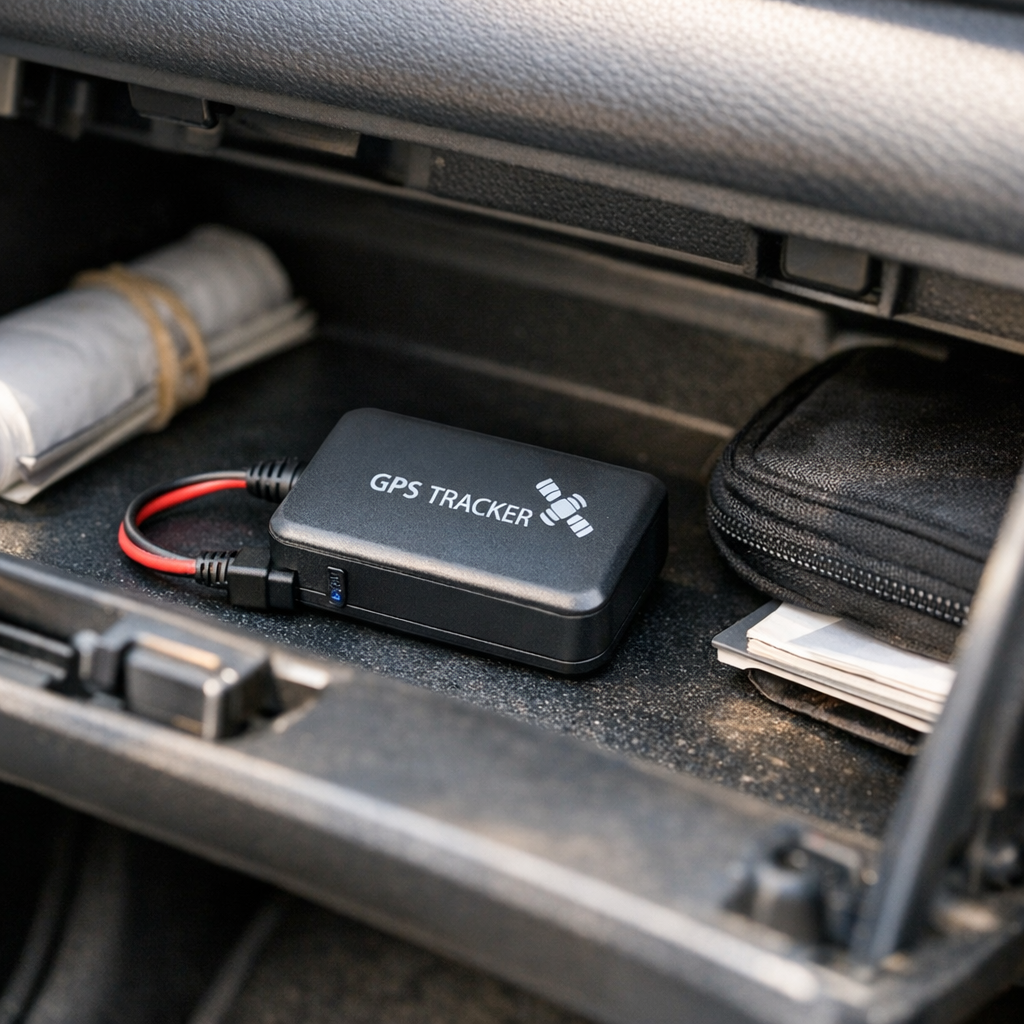
How gps trackers behave indoors and underground
Global Positioning System receivers depend on direct or near‑line-of-sight signals from multiple satellites. Inside a single-family home a roof and walls can attenuate signals; in a concrete-walled basement the GPS signal-to-noise ratio often falls below usable thresholds. Underground environments such as parking garages, tunnels, basements, and mines block or reflect signals, producing no location fix or highly inaccurate positions due to multipath errors. The same limitations affect vehicle gps tracking when vehicles enter underground parking or covered loading docks: a tracker designed for continuous real time gps reporting will often report stale or missing positions until the vehicle returns to open sky.
Key technical causes of failure
- Signal attenuation: reinforced concrete, metal cladding, and dense earth reduce satellite signal strength below the receiver sensitivity.
- Multipath: reflected signals cause the receiver to compute an incorrect time-of-arrival, producing position errors.
- Satellite geometry: poor satellite geometry indoors reduces the effective accuracy even if a fix is obtained.
- Receiver design: low-cost trackers have weaker antennas and inferior GNSS chips that fail sooner or report lower quality fixes.
Comparing gps trackers to alternative indoor tracking technologies
When the objective is reliable indoor or subterranean positioning, buyers must compare gps trackers against Wi‑Fi, Bluetooth Low Energy (BLE), ultra‑wideband (UWB), cellular triangulation, inertial measurement units (IMU), and hybrid solutions. Each approach has distinct trade-offs in accuracy, installation complexity, battery life, and regulatory considerations.
- GPS trackers (GNSS): Strengths—global coverage outdoors, mature ecosystem for vehicle gps tracking and asset tracking. Weaknesses—rarely reliable indoors or underground, variable time-to-first-fix, and dependence on an unobstructed antenna orientation.
- Wi‑Fi/Wi‑Fi RTT: Strengths—useful inside buildings where Wi‑Fi infrastructure exists; no additional tags required for device tracking. Weaknesses—accuracy depends on fingerprinting or RTT support and can be affected by changes in access point placement.
- BLE beacons: Strengths—low cost, good for room-level presence detection, simple battery-powered tags. Weaknesses—requires beacon deployment and periodic maintenance; not ideal for precise real time gps-style tracking.
- UWB: Strengths—centimetre-level accuracy indoors for asset tracking and personnel localization. Weaknesses—requires dense anchor infrastructure and greater upfront cost; limited range compared to Wi‑Fi.
- Cellular / Tower triangulation: Strengths—broad coverage including some subterranean areas near relay equipment; useful as a fallback for vehicle gps tracking. Weaknesses—accuracy is coarse (tens to hundreds of meters) and depends on carrier cooperation and radio environment.
- IMU and dead reckoning: Strengths—can bridge short GNSS outages by using accelerometers and gyros. Weaknesses—drift accumulates quickly without periodic absolute position corrections.
Decisions should weigh use-case priorities: if you need real time gps-style outdoor tracking with occasional indoor gaps, a GPS-centric device with cellular fallback may suffice. If you need guaranteed indoor accuracy (for inventory in a warehouse or room-level presence) consider UWB or BLE systems with a clear maintenance plan. For hybrid designs, a GNSS receiver combined with IMU and local radio positioning can provide the best compromise between continuity and accuracy. For further technical background on real time gps concepts see the core reference material Read the complete GPS Trackers guide .
Use cases and decision logic for indoor and subterranean tracking
Real-world selection begins with precise use cases. Below are common scenarios and the logical steps to determine an appropriate tracking architecture.
Scenario A: Residential asset tracking (basement, garage)
Requirement: occasional position reports for a valuable item (e.g., trailer, power equipment) that may move indoors or outside. Logic: use a gps trackers device with long battery life and motion-triggered reporting. Expect that basement or enclosed garage positions will be unavailable; implement alerting that flags loss of signal and resumes when the asset reaches open sky. Consider a low-power BLE tag paired to a home hub for indoor presence if you need room-level detection.
Scenario B: Small business with indoor inventory (warehouse)
Requirement: continuous location with metre or sub-metre accuracy for forklifts and pallets. Logic: gps trackers are insufficient indoors. Evaluate UWB anchors for pallets and forklifts, or Wi‑Fi RTT with dense access point mapping if budgets constrain. For mobile vehicles that exit to street frequently, a hybrid mount with GNSS + IMU + cellular fallback provides continuity for vehicle gps tracking while UWB manages indoor positioning.
Scenario C: Fleet management with underground parking and tunnels
Requirement: continuous tracking for regulatory or operational compliance, including underground stops. Logic: configure devices to store buffered GNSS points and transmit when network returns; include cellular tower location as fallback for coarse positioning while underground. Implement tamper detection and clear data-retention policies to meet compliance obligations for vehicle gps tracking logs.
Practical examples and common mistakes
Example: a delivery van's gps tracker reports accurate route data on surface roads but shows a long period of no data while parked in the company's underground garage. Common buyer mistakes include assuming the tracker will provide interior route replay and failing to test devices in representative environments before purchase. Another frequent error is trusting battery life claims made under ideal outdoor conditions; heavy use of cellular uplink when signal is intermittent will drain batteries faster than lab figures.
- Test in-situ: Validate device performance in the specific building types and subterranean structures you operate in.
- Design for degraded modes: Ensure the system logs dead-reckoning or tower-based locations when GNSS is unavailable and that operators understand the loss-of-fidelity implications.
- Plan maintenance: Indoor infrastructures like BLE or UWB anchors require QA, recalibration after layout changes, and battery management.
For product selection and category browsing focused on trackers designed for vehicle gps tracking and asset tracking, consult the product collection Browse GPS Trackers to compare hardware classes and specifications.
Legal & ethical considerations in EU and US
Tracking devices raise privacy and compliance questions that differ between jurisdictions. This is a high-level overview and not legal advice.
- United States: Federal law does not categorically ban possession of tracking devices for property owners, but state wiretapping and stalking statutes can criminalize unauthorized surveillance of individuals. Employer monitoring of company vehicles is generally permitted with clear policies and notice, but sensitive contexts (e.g., personal vehicles) require explicit consent and documented justification.
- European Union: The GDPR applies when location data is personal. If a device can identify or be linked to an individual, controllers must establish lawful basis for processing (consent, legitimate interest with balancing tests) and uphold data minimization, access, retention limits, and data subject rights. Employers monitoring staff must consult labor regulations and perform data protection impact assessments for pervasive tracking.
Operational practices that reduce legal risk include limiting resolution where feasible, keeping retention to the minimum necessary, securing data in transit and at rest, documenting lawful bases and consent forms, and providing transparent notices. For mixed-use fleets and contractors consider contractual clauses that define permitted uses and data deletion triggers. For guidance on implementing technical fallbacks like buffered reporting and conditional uploads, review related technical notes and standards Discreet solutions.
Frequently Asked Questions
Q: Can gps trackers work reliably in a concrete basement? A: No — GPS signals are typically too weak in reinforced concrete basements; expect either no fix or large errors.
Q: What is the best fallback when GPS fails underground? A: Cellular tower triangulation or cached location with IMU-assisted dead reckoning are commonly used fallbacks but provide lower accuracy than outdoors GNSS.
Q: Are there legal limits to placing trackers on company vehicles? A: In many jurisdictions employers may track company-owned vehicles but must follow notice, purpose limitation, and data protection rules; consult local guidance for employment law specifics.
Q: Can a hybrid device provide continuous location when entering tunnels? A: Hybrid devices combining GNSS, IMU, and cellular can bridge short outages but will accumulate positional drift without periodic absolute fixes.
Q: When should I choose UWB over GPS trackers for assets? A: Choose UWB when you need consistent, high-accuracy indoor positioning (centimetre to sub-metre) and can invest in anchor infrastructure and maintenance.
Educational closing
Choosing the right approach for indoor and underground tracking requires mapping your operational requirements to what each technology can reliably deliver. gps trackers remain essential for outdoor and vehicle-based tracking but are not a one-size-fits-all solution for indoor accuracy. Consider hybrid architectures, test devices in representative environments, and adopt privacy-aware policies to manage legal risk. Thoughtful selection and deployment yield systems that balance continuity, accuracy, cost, and compliance for homeowners, small businesses, and professional operators.