Contact Listening Devices: Evaluating an Authorised Test
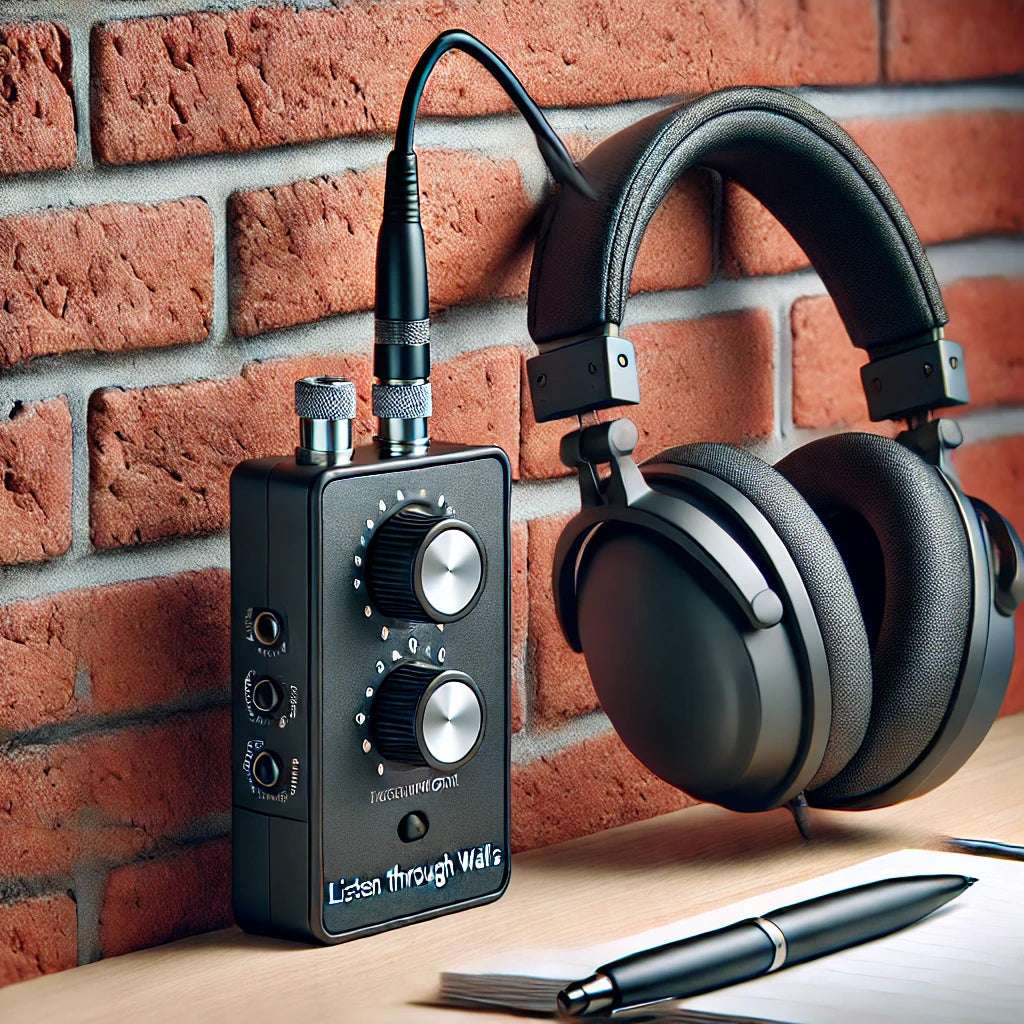
Equipment advertised as a “listen-through-walls” device should be evaluated for a defined, authorised task rather than a promise of hearing any conversation. A contact sensor and an ordinary microphone receive sound differently, and the result depends on the sensor, surface, mounting and surrounding noise.

Start with a legitimate test purpose
Define what you are trying to observe on equipment or structures you are entitled to examine. A vibration check or acoustic demonstration is different from diagnosing a fault, identifying a hidden source or understanding speech. Do not treat a recording as a substitute for a qualified inspection of plumbing, electrical systems or structural problems.
Check what the device actually includes
- The sensor type and supported mounting method.
- Amplifier, input and power compatibility.
- Whether the output is for live listening, recording or both.
- Any required headphones, cables or external recorder.
- Operating and safety limits for the intended environment.
A high gain specification is not a guaranteed range or wall-thickness rating. Verify performance claims against the exact model rather than a generic product category.
Ask for a controlled demonstration
Use an agreed source and a safe test arrangement on your own equipment or with permission. Compare the normal background with the known source operating. Check whether the result is repeatable and whether handling the sensor changes it. Avoid interpreting every amplified sound as the target.
Keep limitations visible
Surface contact, material, other vibration sources and electrical noise can influence a result. Being able to hear something does not establish where it originated or whether words were understood accurately. If a supplier cannot demonstrate the task under relevant conditions, do not substitute an unsupported claim for a test.
Do not turn evaluation into intrusive monitoring
Access to a surface does not establish permission to monitor people beyond it. Keep demonstrations within an authorised scope and avoid collecting private conversations. Stop if the test would involve unsafe access or interference with equipment.
For the underlying distinction between airborne sound and structural vibration, read Contact Sound Technology: Vibration, Noise and Limits.

Written by PRIVATE D.O.O. Pecek