Contact Sound Technology: Vibration, Noise and Limits
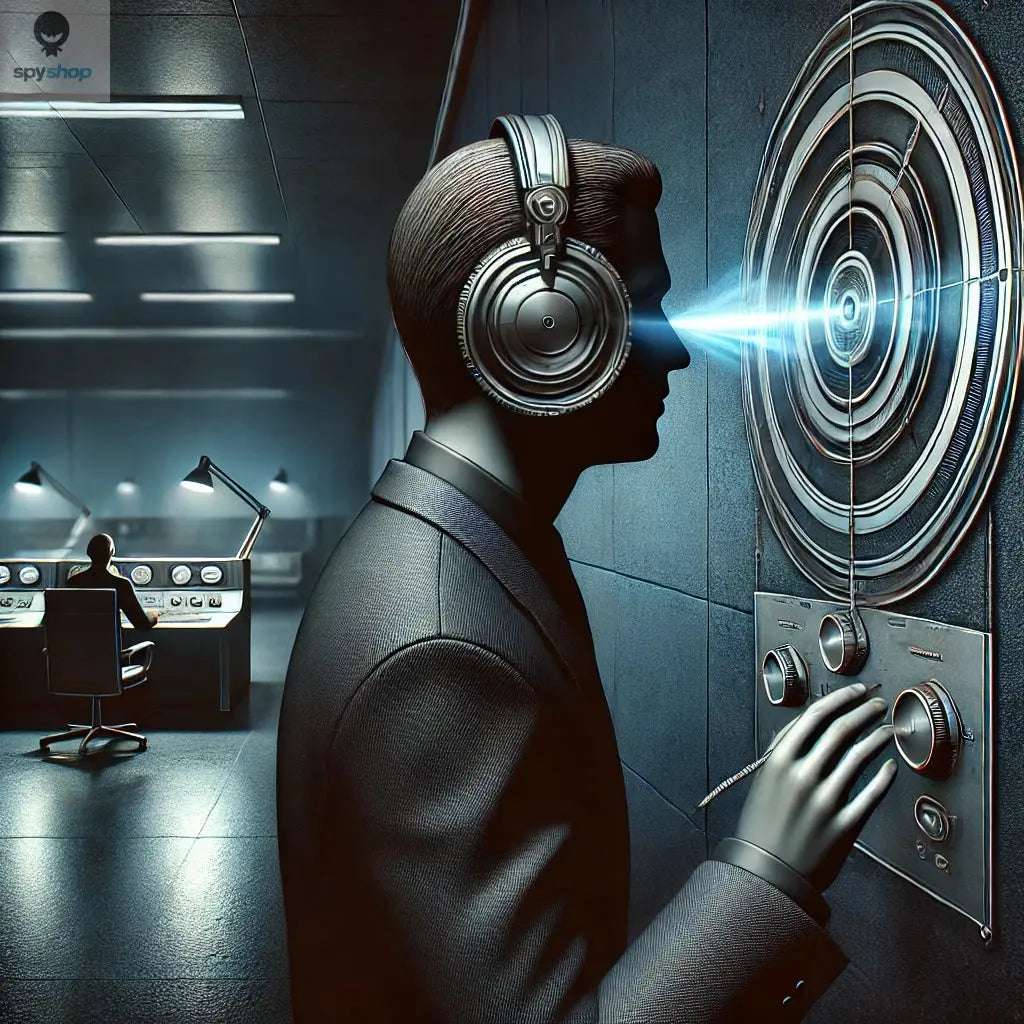
Sound can reach a sensor through air or through vibration in a solid structure. Equipment marketed for contact listening uses a different pickup arrangement from an ordinary air microphone, but it cannot guarantee clear speech through every surface. Understanding the signal path is more useful than a broad “listen through walls” claim.

Airborne sound and structural vibration
An air microphone responds to sound pressure at its position. A contact pickup is mechanically coupled to a surface. Vibrations from several sources can reach that surface, so the strongest signal may not come from the source you expected.
Brüel & Kjær's sound and vibration handbook distinguishes airborne, structure-borne and instrumentation noise. These categories help explain why an amplified signal can contain more than the sound of interest.
Coupling and placement affect the result
A contact sensor needs the mounting arrangement specified for that sensor. Contact quality and position can change what it receives. For an example from a clearly defined application, Schertler's contact microphone manual explains mounting and placement for musical instruments. That application does not establish performance through a building wall.
Amplification is not source identification
Increasing gain raises the signal reaching the amplifier, including unwanted vibration or noise. It does not separate voices automatically, restore information that never reached the sensor or prove which room produced a sound. Processing may change how a recording sounds without establishing its meaning.
Why universal performance claims are unreliable
Structures differ in materials, construction, connections and background vibration. The source and sensor can also differ. A successful demonstration on one surface is not a specification for another building or device.
For a real evaluation, define the authorised task, use a known source and compare repeated tests. Record uncertainty rather than claiming a diagnosis or an understood conversation from an ambiguous sound.
Use the right kind of expertise
Technical demonstrations should stay within safe, permitted conditions. Fault diagnosis may require an acoustic engineer or other qualified specialist. Private speech monitoring raises separate permission and privacy issues that the physics does not resolve.
For supplier questions and a practical evaluation checklist, see Contact Listening Devices: Evaluating an Authorised Test.

Written by PRIVATE D.O.O. Pecek