Mini Cameras for Home and Small Business: Balancing Concealment and Image Quality
Mini cameras are appealing for homeowners and small business operators who need discreet monitoring without sacrificing image quality; this article examines the practical trade-offs between concealment and evidentiary value so you can make informed, compliant choices. The guidance focuses on scenarios where discretion matters—deterrence, remote oversight, and sensitive environments—while weighing sensor size, optics, compression, and legal limits that determine whether footage will be useful as evidence.
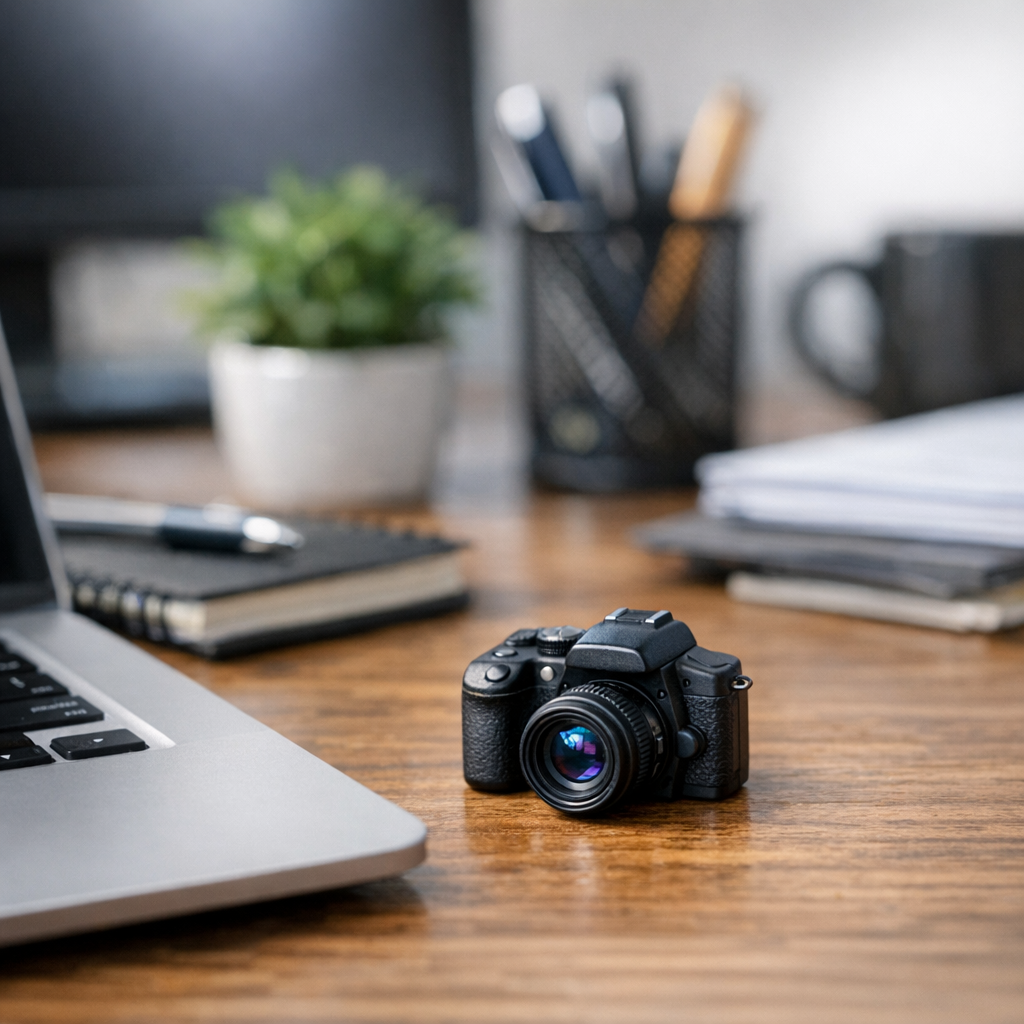
Why mini cameras matter: concealment versus evidence
Small form-factor devices let users position a camera where larger units would be obvious, enabling effective discreet monitoring for theft prevention, caregiver oversight, or site-checks after hours. The primary compromise is between concealment and image quality: smaller lenses and sensors collect less light, and aggressive compression may reduce detail that is crucial for identifying faces or license plates. When planning placement, consider sight lines, illumination levels, and the intended use of footage—routine monitoring, incident documentation, or legal evidence—and choose device specs accordingly. For technical readers wanting deeper trade-off analysis, our pillar article explores sensor sizes, codecs, and legal boundaries in more detail Read the complete Mini Cameras guide .
Technical comparison: mini cameras and image quality trade-offs
Comparing mini cameras requires a structured look at components that drive image quality and concealability. Key variables include sensor type and size, lens aperture and field of view, resolution and frame rate, dynamic range, compression algorithm, and storage method. Smaller sensors (typical in pinhole modules) perform worse in low light and exhibit more noise; larger sensors or back-illuminated CMOS designs improve performance but increase bulk. Resolution alone is not decisive—bitrate, lens clarity, and processing matter for usable detail.
Sensor and lens considerations
- Sensor size: Larger sensors capture more light, improving low-light performance. Miniature sensors can still deliver acceptable results in well-lit interiors.
- Lens aperture and FOV: Wider apertures collect light but narrow the depth of field; field of view affects placement distance for face capture.
Encoding and storage
- Compression: High compression preserves space but destroys fine detail. For evidentiary uses, prioritize higher bitrate or smart variable bitrate modes.
- Storage: Local SD storage reduces network exposure but risks loss if the device is tampered with; encrypted cloud backups enhance chain-of-custody but require secure accounts and bandwidth.
For discreet monitoring, battery size, wireless radios, and mounting concealment also affect runtime and reliability. Decide which compromise is acceptable: absolute concealment with limited quality, or slightly larger, better-performing devices that remain unobtrusive.
Use-case scenarios and decision logic for mini cameras
Different environments change the priority of concealment versus image quality. Below are practical scenarios and a decision logic framework.
Home: nanny monitoring and elder care
When monitoring caregivers or vulnerable adults, prioritize clear facial detail and reliable audio (within legal limits). Choose a camera with good low-light performance if checks will occur in evenings. If you require strict discretion, ensure any audio capture complies with local consent laws and consider visible alternatives that are less intrusive.
Small retail or office: loss prevention
Retailers often need license-plate or face-level clarity to support investigations. Mini cameras can supplement visible units in blind spots—place higher-resolution models with higher bitrates in areas where identification may be necessary, while using smaller units for general activity flow. For product-level monitoring, wide-angle mini cameras can capture aisles but may not render identifiable details at distance. Browse hidden camera categories for models suited to business environments Browse Mini Cameras.
Professional fieldwork and inspections
Service professionals use mini cameras for discreet site inspections or to document work without alerting subjects. For this use-case, prioritize rugged housings, reliable timestamping, and non-volatile backups. If evidence is needed, plan for chain-of-custody practices: secure transfer, hash verification, and retained originals.
Buyer guide: evaluation criteria and common mistakes when choosing mini cameras
A structured buyer checklist cuts through marketing claims. Use the following criteria when evaluating mini cameras for discrete yet useful monitoring:
- Intended outcome: Decide whether footage needs to identify individuals or simply record activity. That determines resolution, bitrate, and lens selection.
- Lighting environment: Match sensor type and aperture to expected lighting; add IR or active lighting if necessary.
- Audio considerations: Audio laws vary; include audio only when legally permissible and when it meaningfully complements video.
- Power and connectivity: Battery-operated units are discreet but require maintenance; wired or PoE devices offer continuous operation and higher throughput.
- Storage and security: Choose encrypted cloud or local storage with tamper-evident logging for evidentiary chain-of-custody.
- Firmware and update policy: Security patches are essential; prioritize vendors with transparent update practices.
Common mistakes include over-prioritizing concealment at the expense of resolution and low-light capability, ignoring legal constraints around audio or private areas, and failing to plan for data retention and backup. A small, poorly positioned mini camera often yields footage that is unusable in investigations. When possible, test candidate units in the actual environment before deployment.
Practical examples and common mistakes
Example 1 — Nanny check: A homeowner chose a pinhole mini camera with low-light noise; recordings were grainy and faces indistinct. The remedy was switching to a slightly larger module with a better sensor and relocating it for frontal face capture while maintaining a discreet installation. Example 2 — Retail shrink prevention: A store placed a tiny camera inside shelving, but compression settings reduced facial detail. Upgrading to a higher-bitrate wired mini camera preserved necessary evidentiary clarity.
Common mistakes observed in field deployments include inadequate attention to compression and bitrates, improper placement that misses the natural angle for identification, and using battery-only devices in high-use areas without monitoring battery health. Also, failing to record reliable timestamps or tamper logs undermines the evidentiary value of footage. For scenario-driven examples and alternative configurations consult our secondary discussion Discreet solutions.
Legal & ethical considerations (EU and US high-level guidance)
Mini cameras raise legal and ethical questions distinct from standard CCTV. Laws differ between jurisdictions and the following is high-level, non-legal advice intended to highlight common rules and risks.
- Expectation of privacy: In both the EU and the US, recording in areas where individuals expect privacy—bathrooms, changing rooms, private bedrooms—is widely unlawful and unethical.
- Audio laws: The US has mixed consent rules: some states require two-party consent for audio recording. The EU has strict data-protection frameworks (such as GDPR) that treat audio-visual data as personal data and require lawful bases for processing.
- Workplace monitoring: Employers should follow local labor laws, provide notice where required, and balance legitimate business needs with privacy expectations. Unionized workplaces often have additional constraints.
- Data protection and retention: Keep only necessary footage, secure storage, and clear retention policies. In the EU, individuals have rights to access or delete personal data that may apply to recordings.
Adopt transparent policies, limited retention, and secure technical measures to reduce legal risk. When in doubt, consult a qualified attorney for jurisdiction-specific advice rather than relying solely on vendor claims.
Frequently Asked Questions
Q: Are mini cameras legal to use at home? A: Generally yes for private property when not recording in spaces with an expectation of privacy; laws vary on audio recording and tenant/visitor notice.
Q: Will a tiny camera capture enough detail for identification? A: It can if you match sensor, lens, bitrate, and placement to the task—small sensors need better lighting and higher bitrate to be useful.
Q: How do I balance battery life and image quality? A: Lower resolutions and frame rates save power; for evidence needs prefer wired or larger batteries and schedule duty cycles carefully.
Q: Can I rely on cloud backups for chain-of-custody? A: Cloud backups improve redundancy but require secure access controls, immutable logs, and reliable timestamps to support evidentiary integrity.
Q: Should I record audio with mini cameras? A: Only if legally permitted and operationally necessary; audio increases privacy risk and legal exposure, so evaluate consent and retention policies first.
Choosing mini cameras requires precise alignment of technical capabilities, legal compliance, and operational needs. Whether for home oversight or small business loss prevention, prioritize clarity where evidence is required and preserve discretion where appropriate, always guided by local regulations.