Video surveillance legal errors that create exposure for homes and small businesses
Video surveillance installations intended to protect property and people can instead create significant legal exposure when systems are misconfigured, records mishandled, or privacy boundaries are ignored. This article analyzes the legal liabilities associated with typical surveillance errors faced by homeowners and small businesses, explains how different choices change risk profiles, and offers practical selection and compliance logic for reducing litigation and regulatory risk. Read the complete Video Surveillance guide
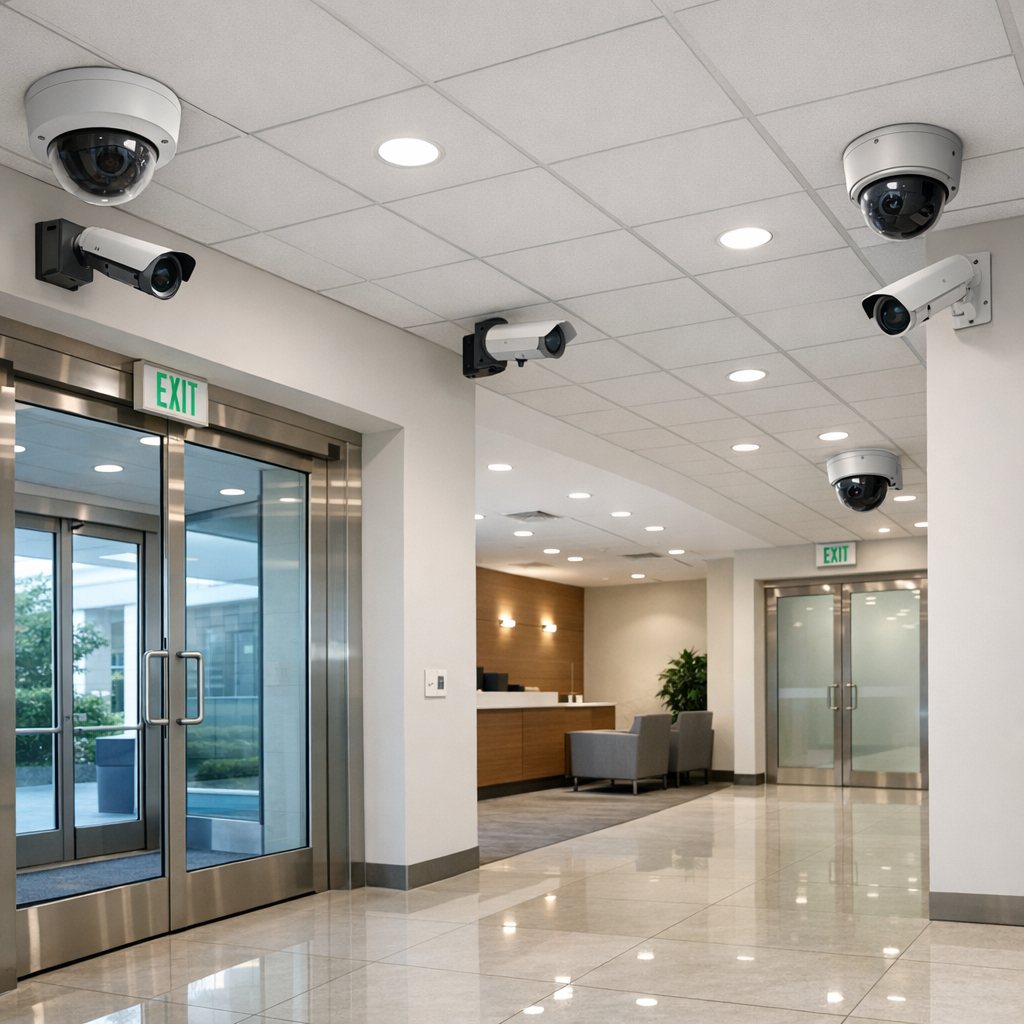
How video surveillance errors create legal exposure
Video surveillance implicates overlapping legal regimes: criminal law (evidence and seizure rules), privacy and tort law (intrusion, nuisance, emotional distress), and data protection statutes where recordings qualify as personal data. Errors that trigger liability include recording where a reasonable expectation of privacy exists, failing to notify recorded parties where notification is required, inadequate data security that leads to data breaches, and improper chain-of-custody when footage is used in disciplinary or criminal processes. The risk profile differs sharply between a private homeowner placing cameras at their entryways and a retail operator using multi-camera cctv systems covering public and semi-private areas.
Comparing video surveillance mistakes: homes vs businesses
Comparative risk assessment helps determine what measures are required and proportionate. For homeowners, the most common legal exposure arises from cameras capturing neighbors' private yards, interiors through windows, or audio in jurisdictions where consent is required for recording. For businesses—especially customer-facing operations—risks include recording customer interactions without clear signage, retaining footage longer than legally allowed, and combining surveillance feeds with payroll or personnel records in ways that create data processing obligations. Small businesses are often held to higher standards when they operate in regulated sectors (healthcare, childcare, financial services) and must integrate surveillance policy with sector-specific compliance.
Key compliance failures that lead to claims and penalties
Regulatory and civil claims commonly flow from a small set of avoidable failures:
- Lack of lawful basis or notice: No posted or published reason for surveillance where required by statute or regulation.
- Over-collection: Cameras positioned to capture areas beyond the legitimate purpose (bedrooms, changing areas, neighboring properties).
- Poor data governance: Undefined retention periods, lack of access logs, and inadequate deletion procedures.
- Insufficient security: Unencrypted storage, default passwords, or cloud configurations that expose footage to unauthorized access.
- Improper use of footage: Sharing with third parties without contractual safeguards or using footage for unrelated business intelligence without consent.
Use cases and decision logic: when surveillance is proportionate
Decision logic requires mapping purpose to design. Start by documenting the specific security objective (deterrence, incident investigation, regulatory oversight) and then choose camera types, fields of view, retention schedules and access controls that are narrowly tailored. For example, a convenience store focusing on till fraud should prioritize high-resolution camera coverage of register areas with short retention and restricted access. A homeowner aiming to monitor entryways can aim cameras downward to avoid neighbor sightlines and disable audio capture.
When evaluating whether to deploy audio recording, consider that audio often carries stricter consent requirements than video. In most US states, one-party consent may permit audio capture in private settings, but in several jurisdictions all-party consent is required. In the EU, audio becomes personal data with higher processing scrutiny under data protection law, and consent or a clear legal basis must be documented.
Buyer guide: evaluating surveillance systems to limit legal exposure
Procurement choices materially affect downstream legal risk. Evaluate vendors and systems against these criteria:
- Field-of-view controls: Cameras that allow precise masking or adjustable lenses to prevent capture of private areas.
- Retention and overwrite policies: Configurable automatic deletion and immutable audit logs showing retention and deletion events.
- Access management: Role-based access, multifactor authentication, and export controls for footage.
- Encryption and storage: End-to-end encryption for cloud storage, on-device encryption for local NVR/DVRs, and clear data residency options.
- Contractual protections: Vendor agreements that allocate breach risk, require breach notification, and limit secondary uses of footage.
When shopping for cameras and services, compare product features against policy needs rather than price alone. Small businesses should ensure procurement includes a documented purpose and a retention schedule that aligns with local laws and insurance requirements. For product selection and wiring best practices, consult the relevant category resources when planning installations Browse Video Surveillance.
Practical examples and common mistakes
Household example: neighbor privacy lawsuit
A homeowner installs an attractive exterior camera with a wide-angle lens. The camera inadvertently records a neighbor's backyard through a gap in the fence and captures a conversation. The neighbor sues for intrusion upon seclusion and obtains temporary injunctive relief and damages. Preventive steps include re-angling the camera, adding physical masking, and documenting the steps taken to minimize third-party capture.
Small business example: data breach and regulatory fines
A boutique hotel uses cloud-based cctv systems and keeps default administrative credentials on the NVR. An attacker access footage that includes guests in corridors and compromised payment area video. The hotel faces claims for negligence, potential regulatory scrutiny for failing to protect guest data, and reputational harm. Implementing vendor-mandated security hardening, periodic audits, and contractual breach-notification clauses mitigates this exposure.
Retail example: evidence chain errors
A retail manager exports footage to a USB stick to support a criminal complaint. The stick goes missing, and law enforcement rejects the footage due to lack of chain-of-custody documentation. Establishing formal evidence-handling procedures—access logs, standardized export formats, and verified hashes—preserves the probative value and reduces civil exposure for spoliation claims.
Legal & ethical considerations
The legal landscape differs between the US and the EU, though core principles converge: necessity, proportionality, transparency, and security. In the United States, expect a patchwork of state laws addressing audio consent and biometric processing; federal law rarely addresses standard video capture absent specific sectoral rules. Public versus private expectations of privacy remain key: recording visible public spaces generally carries lower legal risk, while surveilling private areas invites tort liability.
In the European Union, the General Data Protection Regulation applies when footage qualifies as personal data. Controllers must document lawful bases (legitimate interest is common for security), conduct data protection impact assessments for high-risk processing, and provide data subject rights mechanisms. Technical measures such as masking, access controls and limited retention are not merely best practice but often required. Ethical considerations include minimizing surveillance creep—secondary uses such as staff performance monitoring or marketing analytics can turn a security installation into an intrusive profiler, increasing legal and reputational exposure. Discreet solutions
Risk reduction checklist for installers and operators
- Conduct a documented purpose and proportionality review before installation.
- Place visible notices where recordings occur and maintain a published privacy notice where required.
- Limit retention to the shortest period necessary and automate secure deletion.
- Secure physical and digital access, rotate credentials, and log exports.
- Train staff on evidence handling and designate an accountable person for data requests and breaches.
Frequently Asked Questions
1. Can I record a shared driveway that both my neighbor and I use? Recording a shared driveway can create legal exposure if it captures private activities on neighboring property; re-angle sensors to focus on your property and avoid continuous capture of the neighbor's private use.
2. Are signs enough to satisfy notification requirements? Signs are often required but not always sufficient. Where data protection laws apply, you must also provide accessible privacy information and a lawful basis for processing.
3. How long should I retain surveillance footage? Retention should be the minimum necessary for the purpose—many businesses use 14–30 days for routine footage unless an incident requires preservation; follow sector rules and insurance requirements.
4. Does disabling audio eliminate consent issues? Disabling audio reduces but does not remove all privacy risks. Video can still capture private activities or personally identifying behavior that triggers legal obligations.
5. What do I do if footage is requested by law enforcement? Verify the request's legal basis (warrant, subpoena) and document disclosures. Where possible, coordinate disclosures through legal counsel to preserve privilege and comply with data protection obligations.
Educational closing
Properly implemented video surveillance is a useful security tool, but legal exposure grows quickly when systems outpace policy and technical safeguards. Owners and operators should adopt a compliance-first mindset: define specific purposes, select narrowly tailored equipment, enforce retention and access controls, and document decisions. Regular reviews, staff training, and basic security hygiene prevent most civil claims and regulatory actions. For practical installation and product considerations aligned with lawful practices, consult specialized resources and vendor documentation as part of the procurement and deployment lifecycle.