Video Surveillance: Legal Risks for Homeowners and Small Businesses
Video surveillance is a powerful risk-management tool for homeowners and small businesses, but mistakes in placement, data handling, and disclosure can create substantive legal exposure. This article analyzes the technical errors, policy gaps, and decision points that most frequently trigger liability so property owners and managers can make compliant choices and reduce regulatory, civil, and criminal risk. For a broader technical primer on system types and hardware basics see Read the complete Video Surveillance guide .
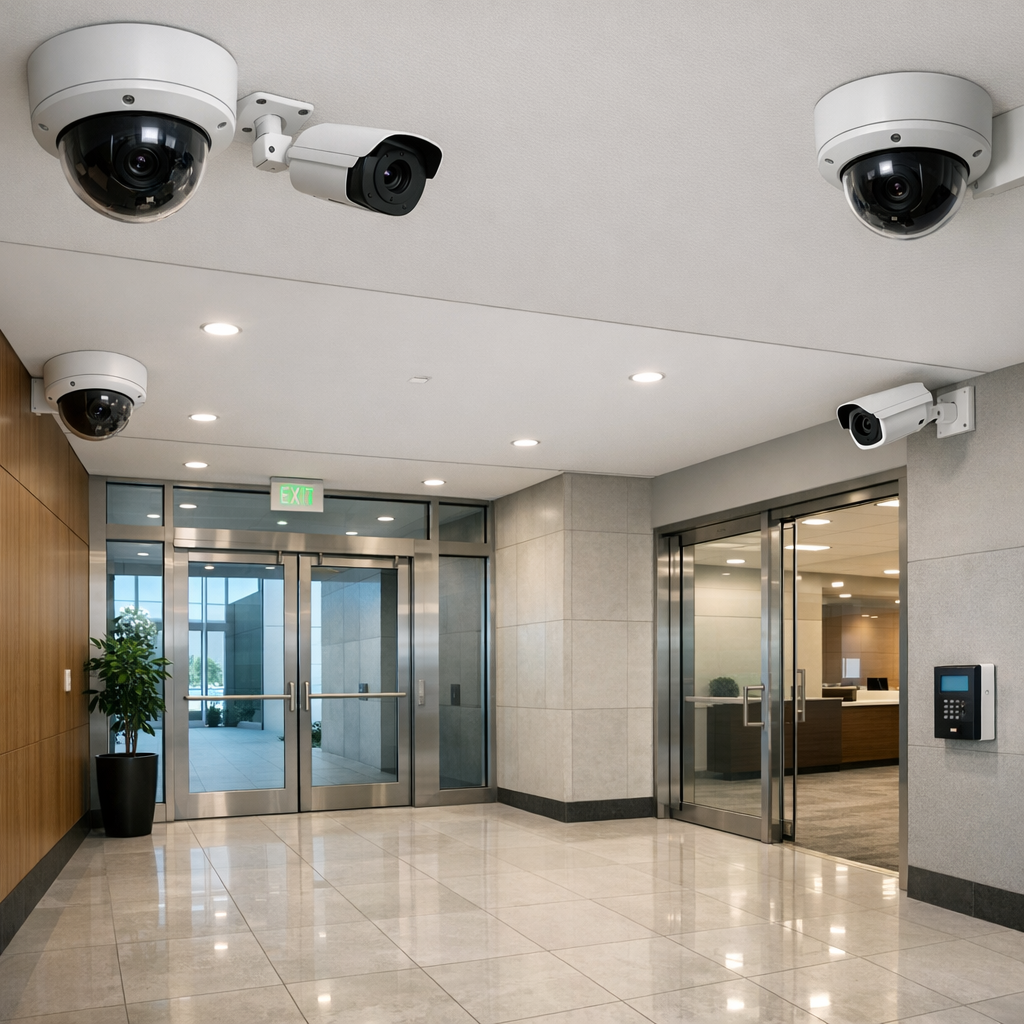
How video surveillance errors create legal exposure
Errors in video surveillance become legal problems when footage captures protected spaces, is retained beyond lawful limits, or is accessible to unauthorized parties. Privacy laws and tort doctrines intersect: unauthorized recording can violate state wiretapping statutes, federal privacy protections, or give rise to invasion of privacy and intentional infliction of emotional distress claims. In regulated sectors, poor system design can also breach sector-specific rules—employment law obligations in workplaces or financial services recordkeeping requirements. Understanding how technical faults and policy failures map to legal outcomes is the first step toward mitigation.
Common technical failures that trigger liability in video surveillance
Camera configuration and system architecture mistakes are frequent sources of exposure. Typical failures include exposed network interfaces, misconfigured cloud storage that leaves footage public, cameras recording audio where prohibited, and optical placement that captures neighbors’ private property or interior spaces like bathrooms. These technical faults are often compounded by weak access controls, lack of multi-factor authentication, and absent encryption for footage at rest and in transit. Each technical lapse corresponds to different legal risks: data breaches invite statutory notification duties, while unauthorized audio recording can violate wiretap laws.
Specific error: recording beyond intended field of view
Improperly angled or overly wide lenses can film areas beyond a property’s lawful observation zone. In many U.S. jurisdictions that can be the difference between a permissible exterior surveillance operation and an actionable intrusion. Homeowners who aim cameras at shared stairwells or businesses that capture neighboring residences can face nuisance or privacy tort claims, especially if the footage is used to profile or publicly identify individuals.
Specific error: enabling audio capture without legal assessment
Audio dramatically increases legal risk. Many states require two-party consent for audio recordings; even in one-party consent jurisdictions, workplace audio recording may run afoul of employment laws. The common mistake is to leave microphones enabled by default on hybrid CCTV systems without a documented legal justification or employee/tenant notice.
Procedural and governance errors: policy gaps that amplify risk
Legal exposure commonly arises from process failures rather than purely technical ones. Absent or poorly drafted policies on retention, access, and disclosure create downstream liability. Failure to maintain chain-of-custody logs can weaken a criminal justice or insurance claim while inappropriate retention schedules increase data subject claims under privacy statutes. Lack of a documented incident response plan for footage breaches or subpoenas can lead to missed preservation obligations and spoliation sanctions.
Retention and deletion policies
Retention should be purpose-limited and defensible. Keeping months or years of continuous footage without business justification raises regulatory concerns and increases discovery cost in civil litigation. Automated deletion aligned to documented retention schedules reduces exposure and demonstrates reasonable data minimization practices in regulatory inquiries.
Comparing liabilities: residential vs business deployments of video surveillance
Use-case and context change the legal calculus. Residential systems are often informal and installed without compliance processes, which can create neighbor disputes and municipal code violations. Business surveillance—especially in workplaces or retail settings—carries higher regulatory scrutiny: employment laws, consumer protection rules, and industry-specific standards apply. Businesses are also more likely to be targets of civil suits and data regulators, so governance and vendor due diligence matter more in commercial deployments.
When evaluating system choices, owners should weigh tradeoffs: cloud-managed systems reduce local IT burden but increase third-party data processing obligations; local NVRs minimize external access but expose equipment to physical theft and complicate remote access security. These tradeoffs should inform vendor contracts and compliance reviews. For practical equipment options in regulated settings, consult product collections focused on compliance-ready models Browse Video Surveillance.
Practical examples and common mistakes
Scenario 1 — Retail store: A shop installs 4K cameras to deter theft but leaves high-resolution units pointed at change rooms’ entrance areas that capture images of customers while undressing. Result: customer lawsuits alleging invasion of privacy and an inspector’s citation for inadequate privacy safeguards. The root causes: poor placement choices and no operational review.
Scenario 2 — Rental property: A landlord mounts cameras on balconies with panoramic lenses that record adjacent unit interiors through sliding glass doors. Result: tenant complaints, municipal code enforcement, and a civil suit. The mistake: failure to assess field-of-view against habitability and landlord-tenant privacy norms.
Scenario 3 — Small office: A business subscribes to a cloud video service but uses weak shared passwords and does not enable multi-factor authentication. Result: breach of stored footage leads to leaked employee conversations and a class action alleging unauthorized surveillance. The failure: inadequate access controls and missing vendor security assessments.
Buyer guide: selection criteria to reduce legal exposure
When selecting cameras and services, prioritize choices that support compliance through configuration and contract features. Evaluate:
- Field-of-view controls: cameras with adjustable focal length and masking to limit recording areas.
- Audio controls: explicit on/off settings and logs showing microphone use.
- Encryption and authentication: end-to-end encryption, TLS for streams, and multi-factor authentication for accounts.
- Retention management: built-in retention policies with automated deletion and export controls.
- Vendor documentation: data processing addendums, breach notification commitments, and audit reports.
Choosing systems that support granular access controls and auditing reduces both the likelihood of incidents and the severity of regulatory outcomes. Compare vendors not only on hardware specs but on contractual commitments and compliance features.
Legal and ethical considerations (EU and US high-level overview)
In the EU, video surveillance that captures identifiable individuals is regulated by data protection law and typically requires a lawful basis, purpose limitation, data minimization, and clear notices. Data subjects have rights to access footage and demand deletion in certain circumstances. In the U.S., regulation is more fragmented: federal law provides limited privacy protections, while state laws vary widely on audio recording and biometric use. Employers must also consider labor and equal employment laws that govern monitoring. Ethical considerations include proportionality—ensuring surveillance is no more intrusive than necessary—and transparency toward affected individuals. Organizations operating cross-border must conduct impact assessments and map retention rules to differing legal regimes.
Operationally, both EU and U.S. operators should document legitimate interests or other legal bases, produce privacy notices where required, and maintain records of processing activities. Implementing privacy-by-design features such as masking and cropping can demonstrate good-faith mitigation efforts to regulators. For model operational guidelines and system documentation, refer to established technical resources in the surveillance category Discreet solutions.
Risk mitigation checklist
Before deploying or upgrading systems, run this compliance checklist: conduct a field-of-view survey, perform a legal review for audio recording, implement retention and access policies, enable strong authentication and encryption, maintain incident response and preservation procedures, and document vendor contractual safeguards. Regular audits—technical and policy—help catch drift from intended practice and reduce exposure to discovery or enforcement actions.
Frequently Asked Questions
Q1: Can I record audio with my home security cameras? A1: Audio recording legalities vary by jurisdiction; many U.S. states require two-party consent, and risks increase where audio captures private conversations. Evaluate local law and disable microphones unless you have a clear legal basis.
Q2: How long can I keep surveillance footage? A2: Retention should match legitimate business purposes. Many organizations adopt short default retention (e.g., 30–90 days) unless footage is preserved for an active investigation or legal hold.
Q3: Do I need to notify employees or tenants about cameras? A3: Yes in most workplace and rental settings. Notice and documented policies reduce claims of covert surveillance and support compliance with labor and privacy obligations.
Q4: What steps reduce liability if footage is subpoenaed? A4: Preserve chain-of-custody, avoid spoliation, consult counsel, and follow internal preservation protocols. Prompt legal review is essential to manage disclosure and privilege issues.
Q5: Are cloud CCTV systems inherently less compliant than local NVRs? A5: Not inherently. Cloud systems can offer better managed security, but they raise third-party processing obligations. Evaluate vendor controls, encryption, and contract terms rather than assuming one architecture is superior.
Educational closing
Video surveillance is valuable but legally nuanced. Technical design choices, clear policies, and vendor oversight together determine whether a system is an asset or a liability. Homeowners and small businesses should adopt a risk-based approach: map surveillance objectives, limit fields of view and retention to those objectives, document lawful bases and notices, and implement basic security controls. Regular audits and clear incident procedures will reduce legal exposure and support defensible decisions if disputes or regulatory questions arise.