Voice Recorders for Meetings vs Surveillance: Practical Differences for Homeowners and Small Businesses
Choosing the right voice recorders requires a clear distinction between devices intended for routine meeting capture and those designed for surveillance. This article explains the technical, legal, and ethical differences so homeowners, small business owners, and professionals can decide when a meeting-focused device is correct and when a surveillance approach raises compliance and risk considerations.
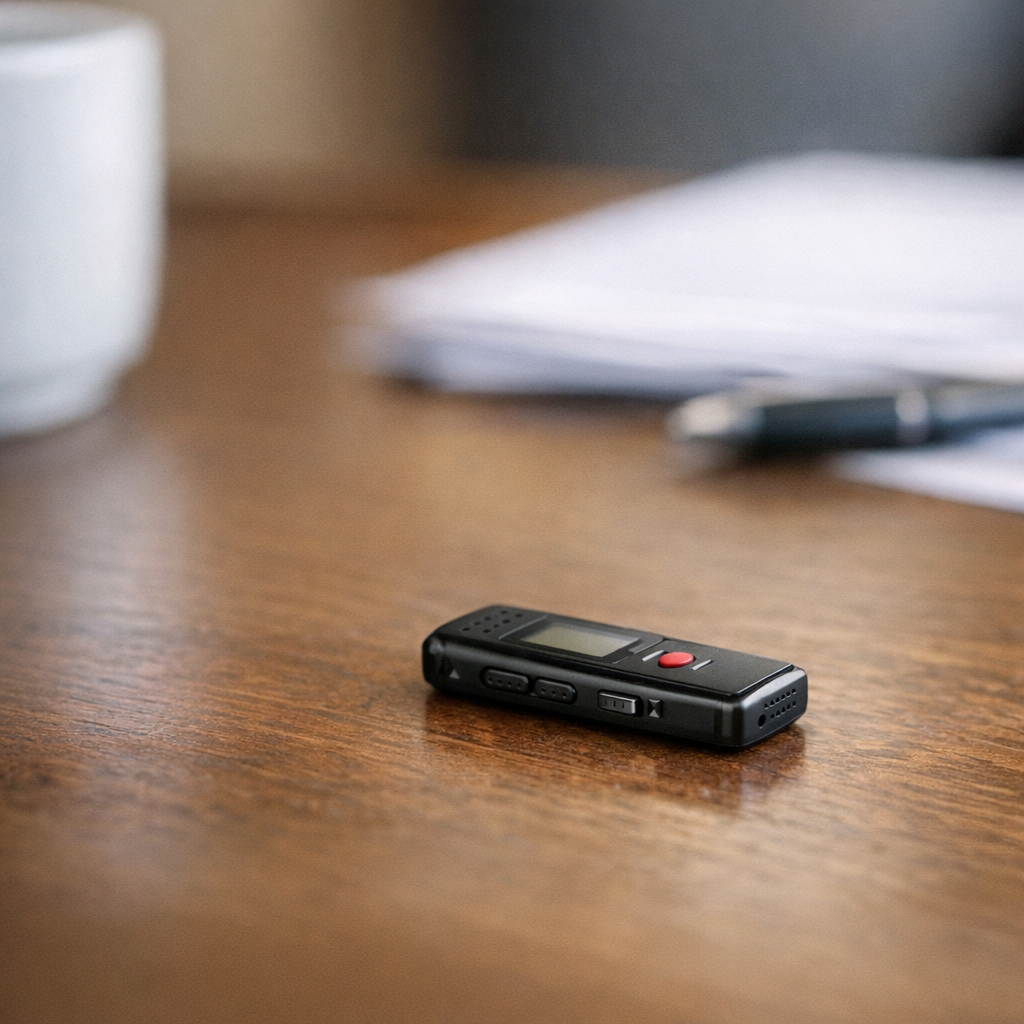
How voice recorders differ for meetings and surveillance
At a high level, meeting-ready voice recorders prioritize clarity, user control, and transparency: easy-to-start recording, visible placement, long battery life for planned sessions, and simple file management. Surveillance-focused recorders emphasize concealment, trigger mechanisms, extended standby, and remote retrieval capabilities. The divergent design priorities produce different trade-offs in microphone choice, noise handling, storage, and user interface.
For those who want a deeper technical reference on features and modes of operation, consult a central guide on device types and professional practice. Read the complete Voice Recorders guide
Technical comparison: microphone, form factor, and activation for voice recorders
Microphone sensitivity and placement determine usable range. Meeting recorders usually use omni-directional mics optimized for mid-range fidelity and intelligibility in a conference room; they assume visible placement on a table near participants. Surveillance recorders rely on directional or high-sensitivity capsules paired with small enclosures to capture speech from a distance or through obstacles.
Form factor and concealment
Meeting devices are typically larger, with clear status indicators and control buttons to support lawful, consensual recording. Surveillance devices are miniaturized for concealment and often omit visible indicators. That physical difference changes battery size and heat dissipation, which affects reliability and continuous recording time.
Activation and triggers
Meeting recorders usually feature manual start/stop and time-stamped files. Voice activated recorder (VAR) modes are common to reduce file size, but they remain user-controlled. Surveillance devices emphasize motion or remote scheduling triggers and can use voice activation calibrated for detecting specific speech patterns, which raises false-trigger and privacy considerations.
Legal boundaries for voice recorders in meetings vs surveillance
Legal compliance is the primary differentiator between legitimate meeting capture and risky surveillance activity. Laws vary by jurisdiction, but the legal questions typically ask: who consents, where the recording occurs, and whether the recorder is concealed. In many US states one-party consent permits recording a conversation if the recorder operator is a participant; other states and most EU jurisdictions require two-party or all-party consent for non-public settings. Recording in public spaces can be lawful, but expectations of privacy still matter.
When implementing recording policies for staff meetings, notify participants, state retention rules, and secure stored files. For covert surveillance scenarios the legal bar is higher: covert audio capture without clear legal basis frequently violates statutory laws and common-law privacy torts. Consult counsel when designing surveillance protocols for loss prevention, litigation preservation, or security monitoring. Discreet solutions
Selecting voice recorders: evaluation criteria and common mistakes
Evaluate devices against use-case criteria: audio fidelity, battery endurance, storage encryption, metadata quality, and evidence chain integrity. Meeting recorders should favor easy export, visible status lights, and clear labeling of recordings. Surveillance recorders require long standby, reliable activation, and data protection features to avoid unauthorized access if recovered by a third party.
Common selection mistakes include assuming one device fits both roles, neglecting legal policy alignment, and underestimating environmental noise. Another frequent error is ignoring metadata integrity: timestamps and logs matter for internal audits and any eventual legal review. For product browsing and category-level comparisons, review focused device lists and specifications. Browse Voice Recorders
Practical use cases and decision logic
Case 1 — Small business meeting minutes: A retail manager needs to record weekly staff meetings for training and scheduling accuracy. The right choice is a visible digital voice recorder with clear consent signage, straightforward file export, and reliable battery life. Prioritize intelligibility and easy compliance documentation.
Case 2 — Employee misconduct investigation: HR must preserve spontaneous statements after an incident. Best practice is to rely on consensual interviews with explicit notice and to use a secure meeting recorder that produces tamper-evident files. Covert capture without counsel approval risks legal exposure and evidence exclusion.
Case 3 — Home security incident: A homeowner wants audio evidence of repeated trespassing near their porch. If recordings are captured in a semi-public area with signage and no expectation of private conversation, the homeowner may lawfully record, but they should avoid continuous covert interior monitoring. Choose devices that balance range and storage with clear retention policies.
Decision flow: start by defining the objective (documentation, deterrence, investigation), map the applicable consent rules for the jurisdiction, select a device aligned to transparency or concealment only if lawful, and document chain of custody for retained files.
Practical examples and common mistakes
Example: A contractor used a small hidden voice activated recorder to document a disputed on-site meeting. The device captured off-the-record remarks that exceeded the contractor’s authority. The contractor faced contract cancellation and a legal counterclaim. The mistake was neglecting participant consent and failing to separate professional authority from personal recording choices.
Example: A cafe owner installed a visible tabletop recorder to log vendor calls and staff briefings. With posted notice and staff consent, the recordings helped resolve supplier disputes. The owner preserved files on an encrypted drive and kept a retention schedule, avoiding privacy complaints.
Common mistakes summarized: using surveillance devices without legal review, misconfiguring voice activated recorder sensitivity leading to missing key audio, and failing to secure stored files. Each error can convert otherwise legitimate evidence into a compliance liability.
Legal & ethical considerations (high-level US and EU overview)
United States: Federal law permits one-party consent to recording, but state laws may impose stricter rules. Private workplaces must consider state wiretapping statutes and employee privacy protections. Surveillance in the workplace sometimes requires notification in employee handbooks or clear policy language; covert audio capture is particularly sensitive and often prohibited except under narrow, documented circumstances.
European Union: The EU emphasizes data protection and the EU General Data Protection Regulation (GDPR) treats recorded personal data as subject to strict lawful basis requirements. Recording employees or visitors typically requires a legitimate purpose, transparency, data minimization, and safeguards. Audio recording intended for security or HR must be proportionate, and organizations should conduct data protection impact assessments in many scenarios.
Ethical considerations across jurisdictions include respecting reasonable expectations of privacy, minimizing continuous monitoring, and using recordings only for their stated purpose. Where legal frameworks allow recording, retain minimal necessary data, apply role-based access controls, and publish retention limits to reduce risk and maintain trust.
Frequently Asked Questions
Q: Are voice recorders legal for meetings in my state or country? A: Legal permissibility depends on jurisdiction and whether one-party or all-party consent rules apply; consult local statutes and apply workplace policies to ensure compliance.
Q: Should I use a voice activated recorder for long meetings? A: VARs can reduce file size and ease review, but they can clip speech and miss context; for formal meetings choose reliable manual or continuous recording with clear timestamps.
Q: Can I conceal a recorder in a business for loss prevention? A: Covert audio capture is legally and ethically risky; many jurisdictions forbid hidden audio monitoring without documented legal authority. Seek legal counsel before using concealed recorders for security.
Q: How should I store and protect recorded files? A: Use encryption at rest, maintain access logs, keep retention schedules, and document chain of custody for recordings that may be used in disputes to preserve evidentiary value.
Q: What features distinguish meeting recorders from surveillance models? A: Meeting recorders emphasize visible controls, clear user interfaces, and exportable, time-stamped files; surveillance models focus on miniaturization, long standby, and discreet activation which increases legal risk if misused.
Educational closing
Differentiating meeting and surveillance recording is critical for lawful, ethical, and effective use of voice recorders. A considered approach balances technical needs with consent obligations, institutional policy, and data protection principles. Start each project by defining the purpose, checking applicable legal requirements, selecting devices that match the intended transparency or concealment only when lawful, and documenting procedures for retention and access. Thoughtful selection and governance reduce liability and ensure recordings serve legitimate business or personal needs rather than create new risks.