Mini cameras: choosing between 720p, 1080p and 4K for home and small business use
When evaluating mini cameras for a home, rental property, or small business, resolution is one of the first specifications people notice. Mini cameras with 720p, 1080p or 4K capture fundamentally different levels of detail, and choosing the right option requires balancing visible image quality, storage, bandwidth, legal boundaries, and the real-world purpose of the device. Read the complete Mini Cameras guide
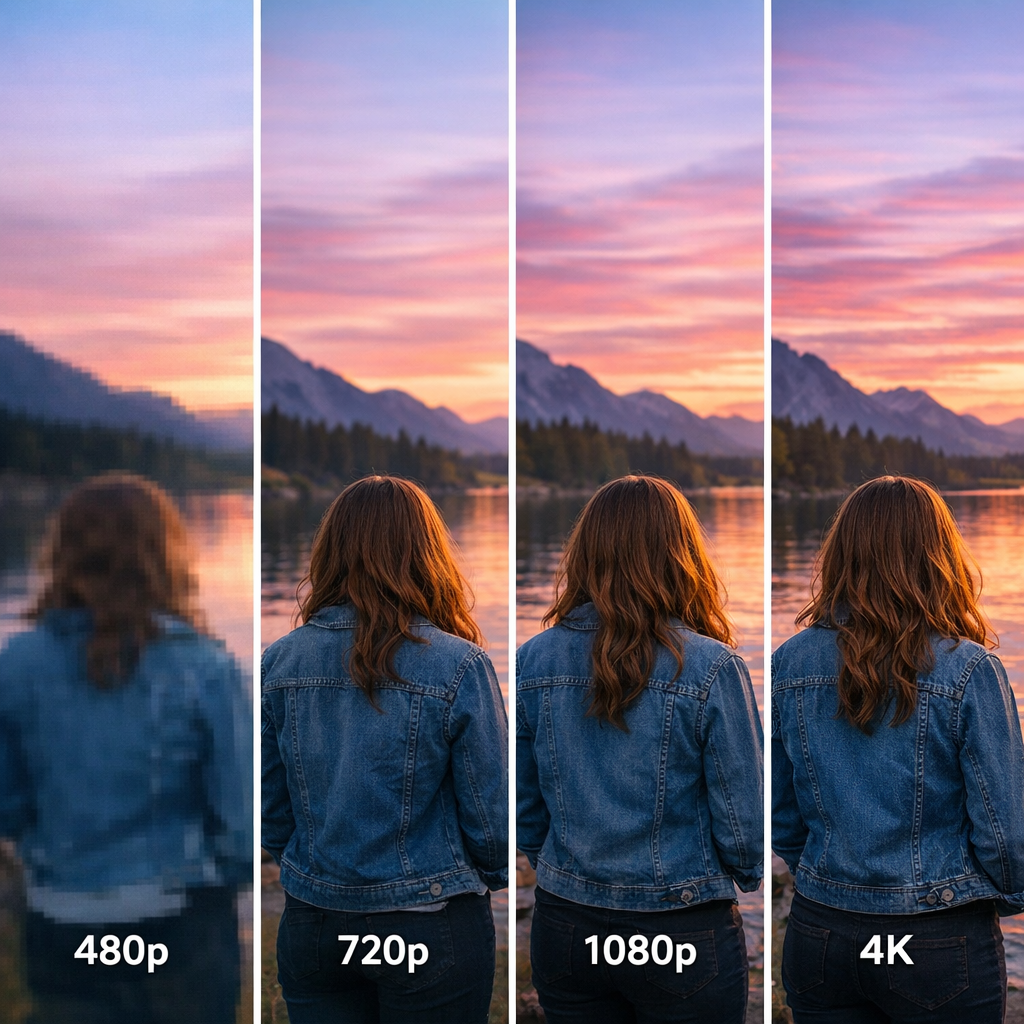
Mini cameras: What 720p, 1080p and 4K mean in practice
Resolution labels (720p, 1080p, 4K) indicate pixel counts and a theoretical ceiling for image clarity, but practical performance for mini cameras depends on sensor size, lens, compression, and lighting. A 720p mini camera records roughly 1280×720 pixels, 1080p is 1920×1080, and 4K typically refers to around 3840×2160 pixels. Those numbers matter for identification tasks and overall image quality, but they do not guarantee clear faces or readable text in low light or at long distances.
Technical comparison: sensors, compression and practical image quality
Pixel count is only one element. On compact devices the sensor area is small, and cramming more pixels into a tiny sensor can reduce per-pixel light gathering, increasing noise and lowering effective hidden camera resolution. Mini cameras often use aggressive H.264/H.265 compression to conserve storage and bandwidth; higher compression reduces file size but can blur fine detail that higher nominal resolution would otherwise reveal.
Sensor size vs pixel count
Two mini cameras labeled 1080p can look different if one has a larger sensor with bigger pixels. In practice, a well-implemented 1080p mini camera with a good sensor and lens will outperform a poorly implemented 4K module in low light. When assessing image quality, reviewers and installers look beyond the label to dynamic range, noise performance, and low-light color preservation.
Compression, frame rate and storage trade-offs
Higher resolution increases file sizes and demands more processing. A 4K mini camera streaming at 30 fps requires substantially more bandwidth and storage than 1080p at the same frame rate. Many mini camera systems reduce bitrate or frame rate when switching to higher resolutions, producing little practical improvement. Consider storage policies and retention needs before prioritizing 4K.
Mini cameras: Practical comparison and buying scenarios
Choosing between 720p, 1080p and 4K should be driven by the use case. Below are common scenarios with recommended resolution choices and the decision logic behind them. Browse Mini Cameras
Scenario: general monitoring in well-lit indoor spaces
Use case: monitoring a small retail counter, office reception, or entryway where subjects are close and lighting is stable. Recommendation: 1080p offers a good balance of identifiable detail and efficient storage. 720p may be sufficient for broad motion detection but can fail to capture readable text or small facial features.
Scenario: identification at a distance or detailed evidence capture
Use case: parking lot entries, street-facing windows, or areas where you need license plate or facial detail at distance. Recommendation: 4K can improve the chance of capturing usable detail, provided the mini camera has a capable sensor and the installation ensures sufficient light and correct focal length.
Scenario: battery-powered or covert long-term placement
Use case: battery-operated hidden devices or tiny form-factor cams where runtime and concealment are priorities. Recommendation: 720p or low-bitrate 1080p is often preferred because lower resolution reduces power draw and storage needs. In these cases, prioritize efficient codecs and motion-triggered capture to extend deployment life.
Evaluation criteria and common selection mistakes
When comparing mini cameras, evaluate the full system rather than relying solely on headline resolution. Use the following criteria in purchase decisions:
- Sensor and lens quality: larger sensors and multi-element lenses improve image quality beyond pixel counts.
- Low-light performance: measured by noise, usable color, and clarity under incandescent or LED lighting.
- Compression settings and bitrate: verify the effective bitrate at the resolution you intend to use.
- Storage and retention: calculate storage needs based on resolution, frame rate, retention period, and motion percentage.
- Field of view and mounting distance: higher resolution doesn’t compensate for poor placement or wrong focal length.
Common mistakes include: assuming 4K always produces better usable footage, neglecting lighting, and not testing image quality on the intended recording settings. Another mistake is selecting a high-resolution mini camera but failing to account for network limitations or motion-triggered recording that changes bitrate. Consider a real-world test with recorded footage before committing to a larger deployment. Discreet solutions
Practical examples: reading license plates, recognizing faces, and documenting small details
Example 1 — license plate capture: A 4K mini camera with a narrow, focused field of view and good shutter speed will outperform 1080p when plates are several metres away. However, the installation angle, lighting, and mounting height are equally critical.
Example 2 — facial recognition in a doorway: For faces captured within three metres and under controlled indoor lighting, a quality 1080p mini camera often provides sufficient image quality and better overall reliability than a marginal 4K module.
Example 3 — documenting small printed details: If the objective is to read product labels or serial numbers, prioritize close-up placement, macro-capable lenses, and consistent illumination; resolution increases help, but lens sharpness and focus are decisive.
Legal and ethical considerations (EU and US high-level overview)
Using mini cameras implicates privacy laws and reasonable expectations of privacy. In the EU, the GDPR can apply when recordings include identifiable individuals; operators must ensure lawful basis, purpose limitation, minimal data retention, and appropriate security. In the US, laws vary by state: audio recording is often subject to stricter consent rules than video, and certain locations (bathrooms, private changing areas) are broadly off-limits. The following principles apply in both jurisdictions:
- Transparency: where required, disclose surveillance to visitors and employees unless a specific lawful exception applies.
- Proportionality: select the lowest effective resolution and retention period to meet legitimate objectives.
- Data security: encrypt recordings in transit and at rest and restrict access to authorized personnel.
Avoid covert recording in spaces where occupants have a reasonable expectation of privacy. Consult a qualified legal advisor for complex deployments or when recordings may be used in disciplinary, evidentiary, or investigatory contexts.
Frequently Asked Questions
Q1: Do higher resolution mini cameras always produce better evidence? A: Not always; sensor quality, lens, lighting and compression determine whether higher pixel counts translate into usable evidence.
Q2: Will a 4K mini camera use significantly more storage than 1080p? A: Yes—unless aggressive compression or reduced frame rates are applied. Plan storage around expected bitrate rather than resolution alone.
Q3: Can I upgrade a 720p system to 4K without changing wiring? A: It depends on the recorder and bandwidth limits. Some recorders and networks support higher resolutions on the same wiring; others require upgrades.
Q4: How does hidden camera resolution affect admissibility in evidence? A: Admissibility is governed by jurisdictional rules on authenticity and chain of custody rather than resolution alone, but poor image quality can limit usefulness.
Q5: Should I prefer 1080p over 720p for covert home monitoring? A: For most indoor, close-range home uses, 1080p is a pragmatic choice, balancing image quality and storage. Choose 720p only when power, cost, or device size strongly constrain options.
Educational closing
Selecting between 720p, 1080p and 4K for mini cameras requires matching the device’s real-world performance to the task: identification distance, lighting, storage and legal constraints. Evaluate sensor and lens quality, confirm effective bitrate under your recording settings, and test installations before scaling. Balance higher nominal hidden camera resolution against power, storage, network capacity, and privacy obligations to reach a defensible, functional decision.