


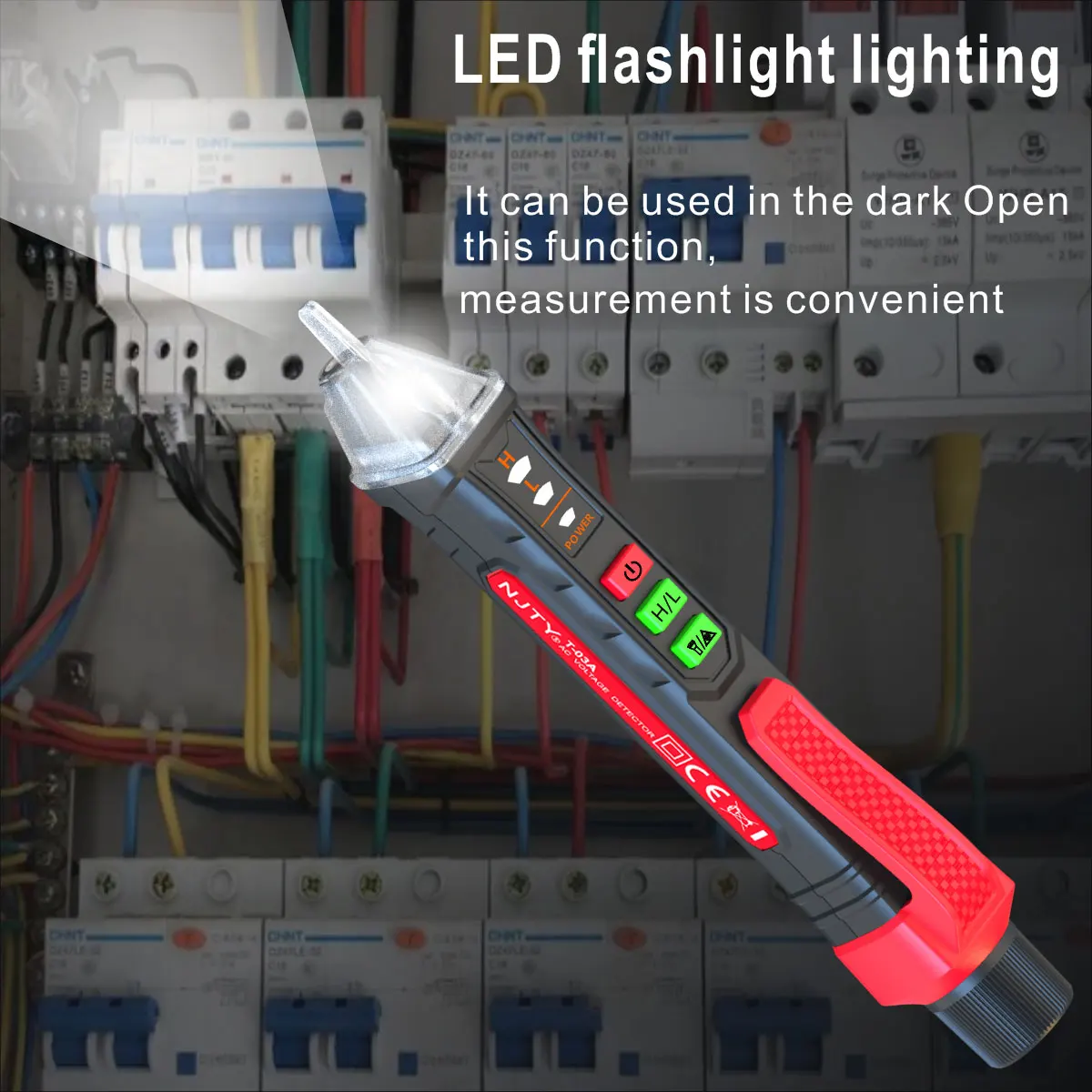
Non-contact Voltage Tester 12-1000V AC Pen Circuit Electric Indicator Wall Tool With Flashlight Buzzer
SPECIFICATIONS
Battery Included: no
Brand Name: NJTY
Certification: CE,FCC
Choice: yes
DIY Supplies: Electrical
Display Type: Analog Only
High-concerned chemical: none
Model Number: T03A
Operating Temperature: 0-40
Origin: Mainland China
Semi-finishedproduct: No
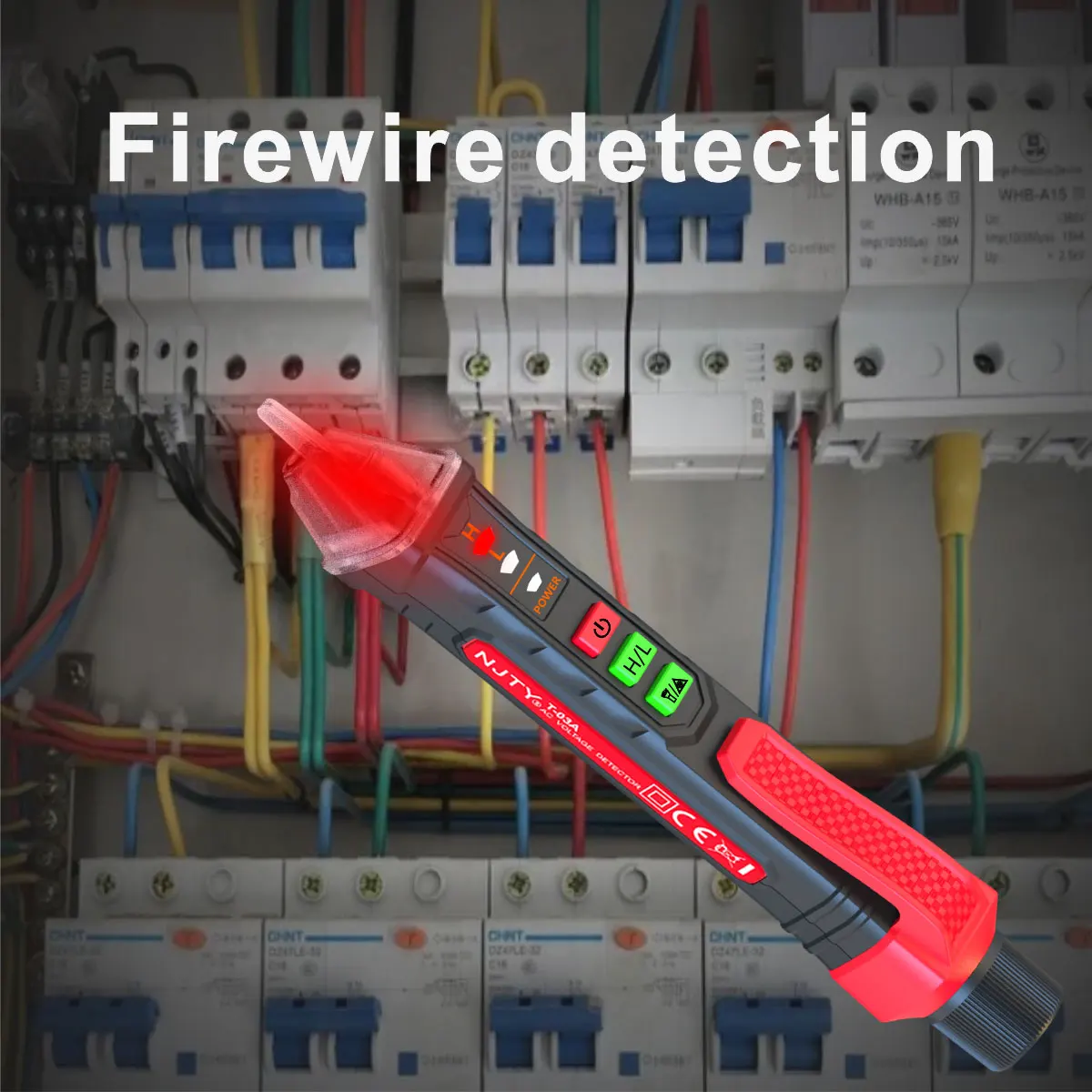
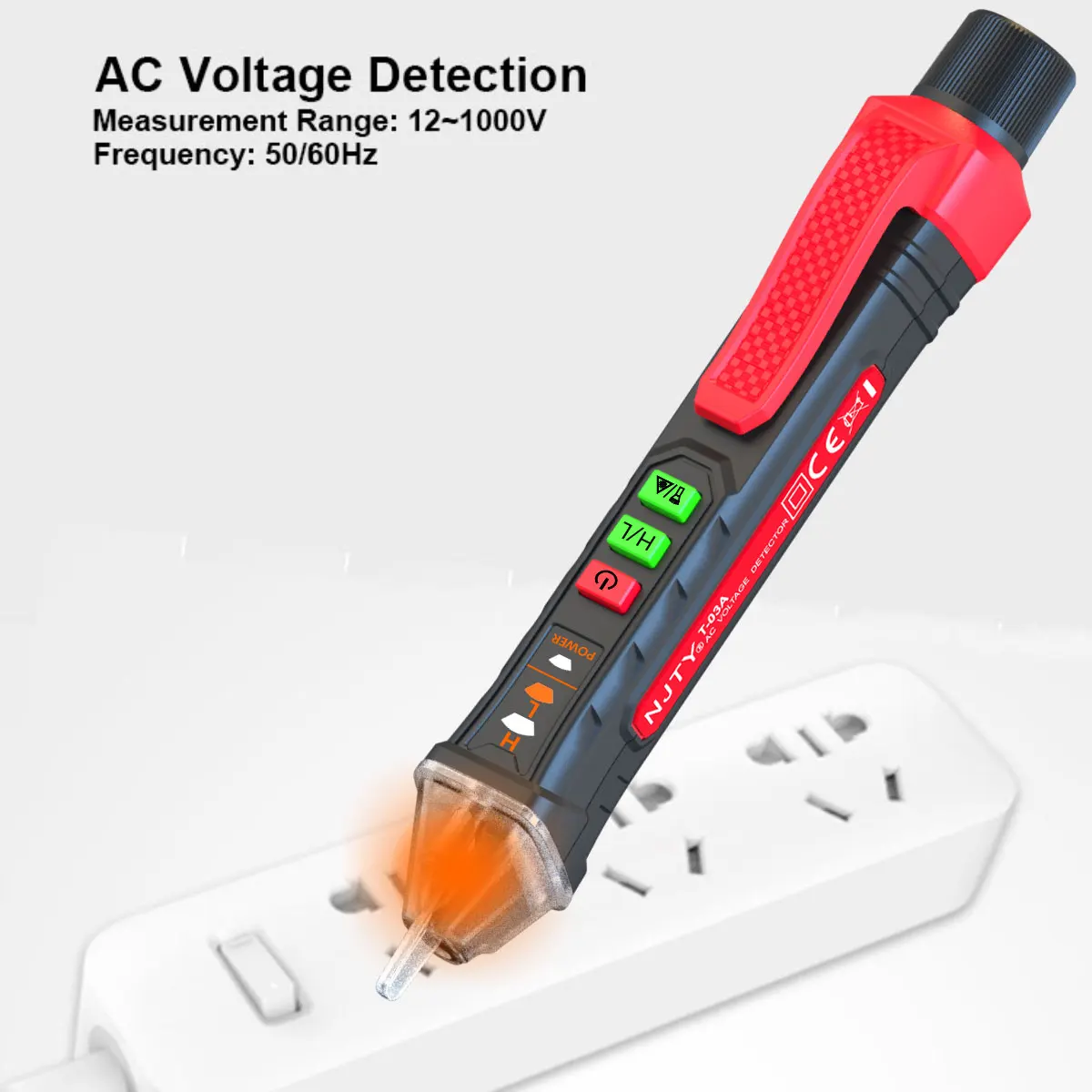
Voltage range: 12/48-1000V AC
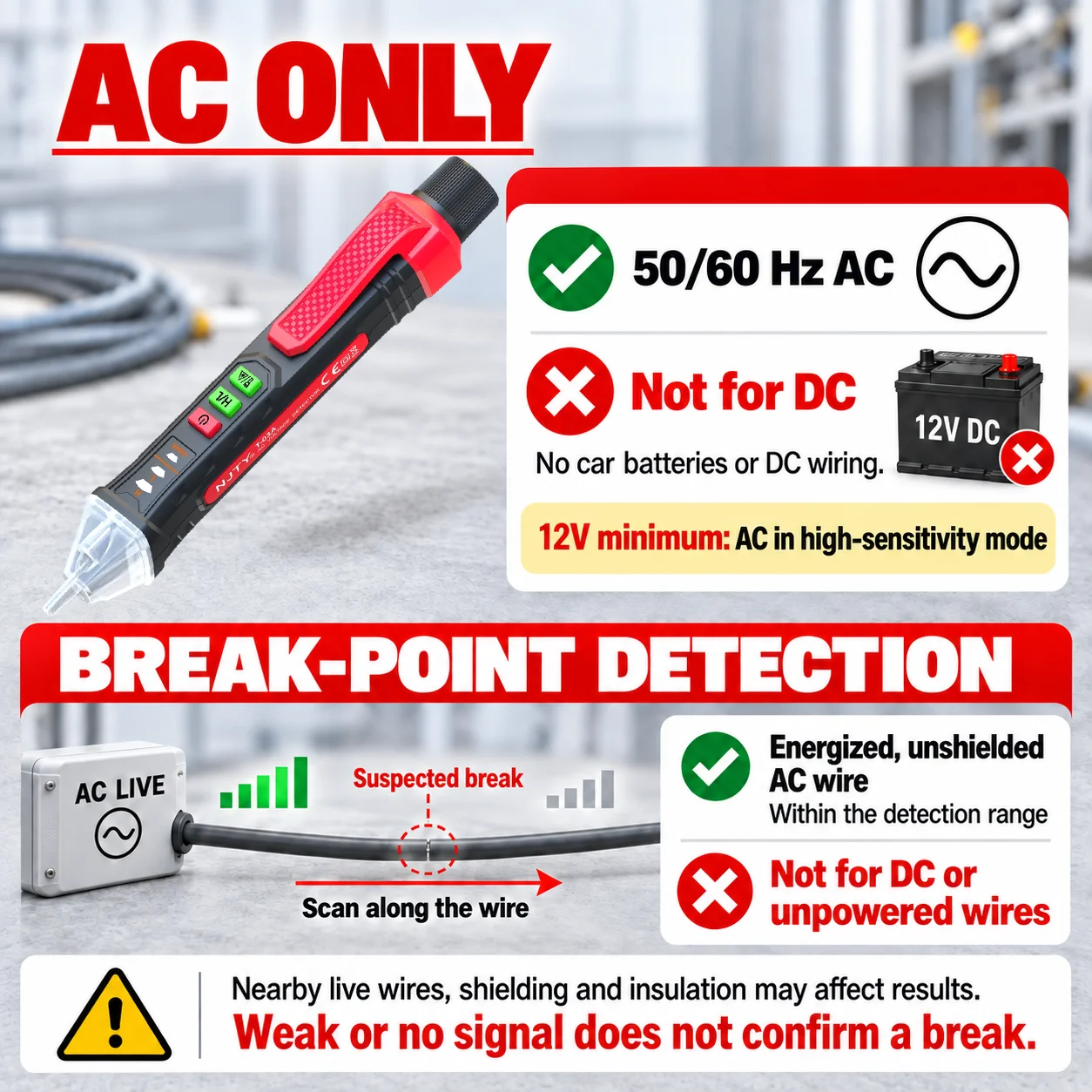
AC Voltage Detection Only — Not for DC
This tester detects AC voltage at 50/60Hz only. It does not detect DC voltage and is not suitable for testing automotive 12V DC circuits, batteries, or DC wiring harnesses. The 12V lower detection limit applies to AC voltage in high-sensitivity mode, not 12V DC.
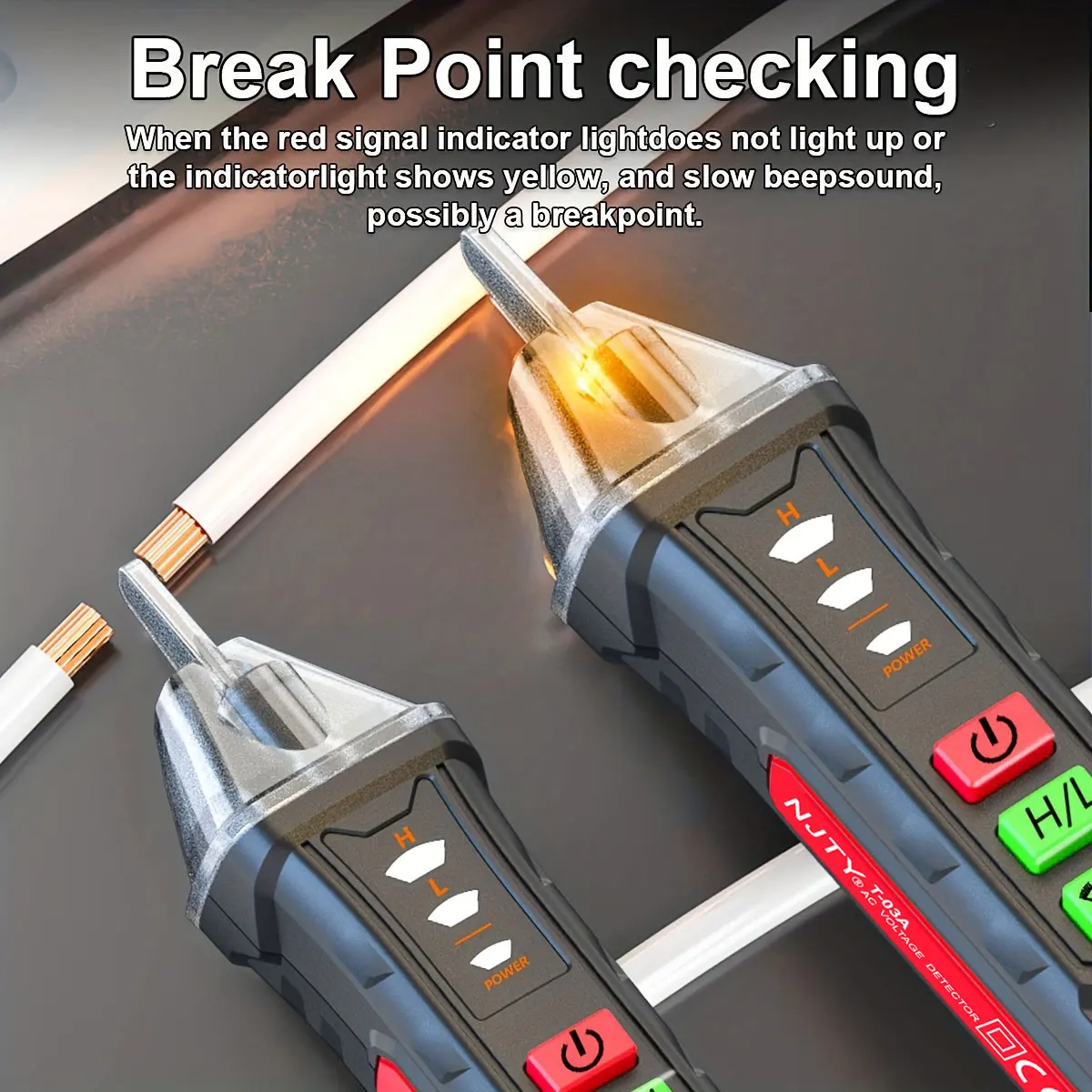
Break-Point Detection — Energized AC Wires Only
The break-point function is intended to help narrow down a suspected break in an accessible, unshielded AC live wire by detecting changes in the AC signal along the wire. The wire must be energized and within the selected detection range.
This function cannot locate breaks in automotive DC wiring or unpowered wires. Nearby live wires, cable shielding, and insulation may affect the result. A weaker or missing signal alone does not confirm a broken wire.
Not a Continuity Tester
This tester cannot replace a multimeter for continuity, resistance, or DC voltage testing. To confirm whether a wire is broken, isolate the circuit from power and use a suitable multimeter in continuity mode.
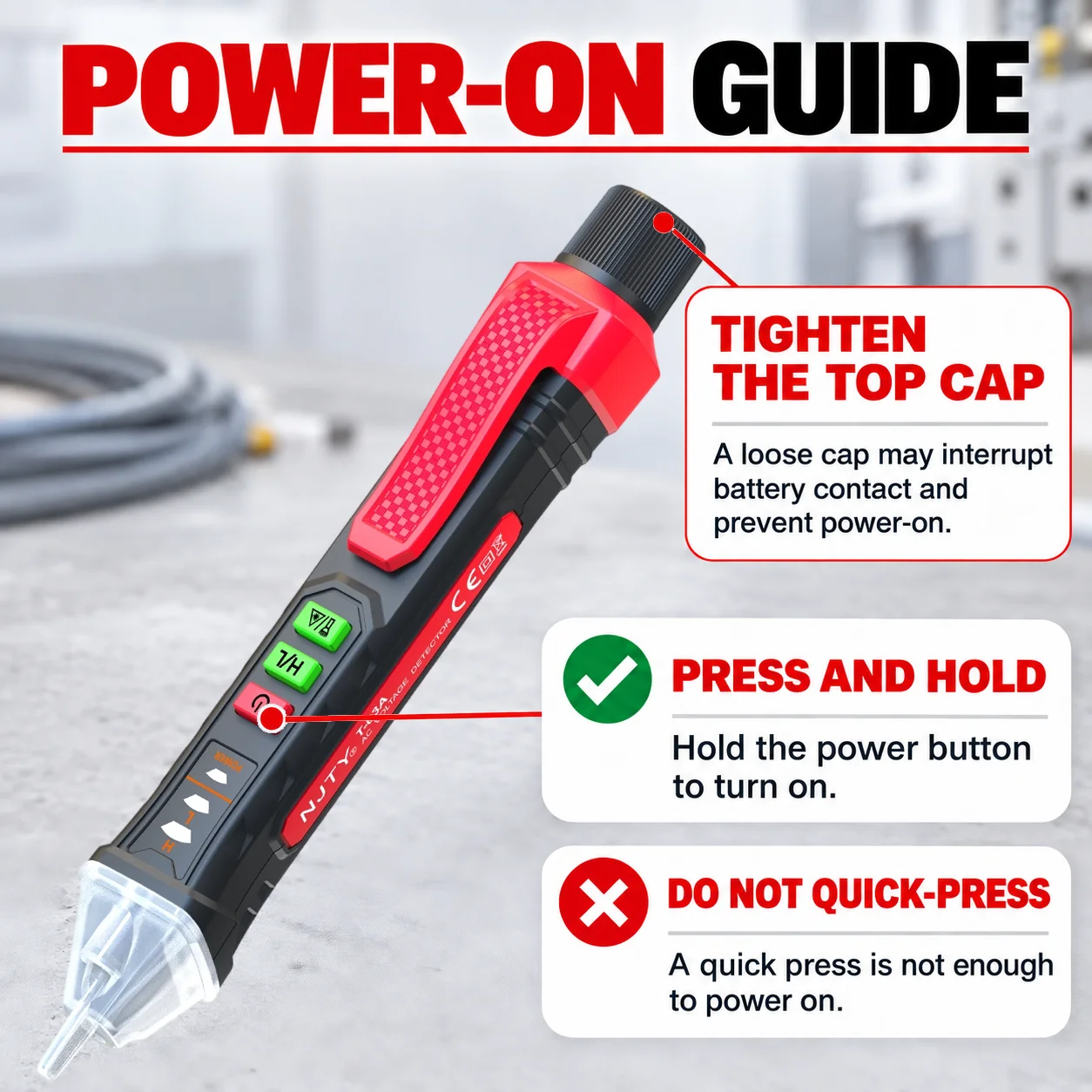
Tighten the Top Battery Cap Before Use
Fully screw on the top battery cap to ensure proper battery contact. A loose cap may prevent the tester from turning on or cause intermittent power.
If the tester does not turn on, check that the cap is securely tightened, the two AAA batteries are installed with the correct polarity, and the batteries have sufficient power. Press and hold the power button for more than 1 second to switch it on.
Choosing the Right Sensitivity
Low sensitivity is the default setting each time the tester is switched on and is suitable for routine AC checks within 48–1000V.
Switch to high sensitivity for lower AC voltages or weaker signals within 12–1000V. The sensitivity indicator lights up when high sensitivity is active. This mode may help detect weaker signals from concealed AC wiring, but detection through walls is not guaranteed and depends on wall material, wire depth, shielding, and signal strength.
If unwanted alarms occur, switch off high sensitivity to return to the default low-sensitivity mode.
Understanding Unexpected Beeps
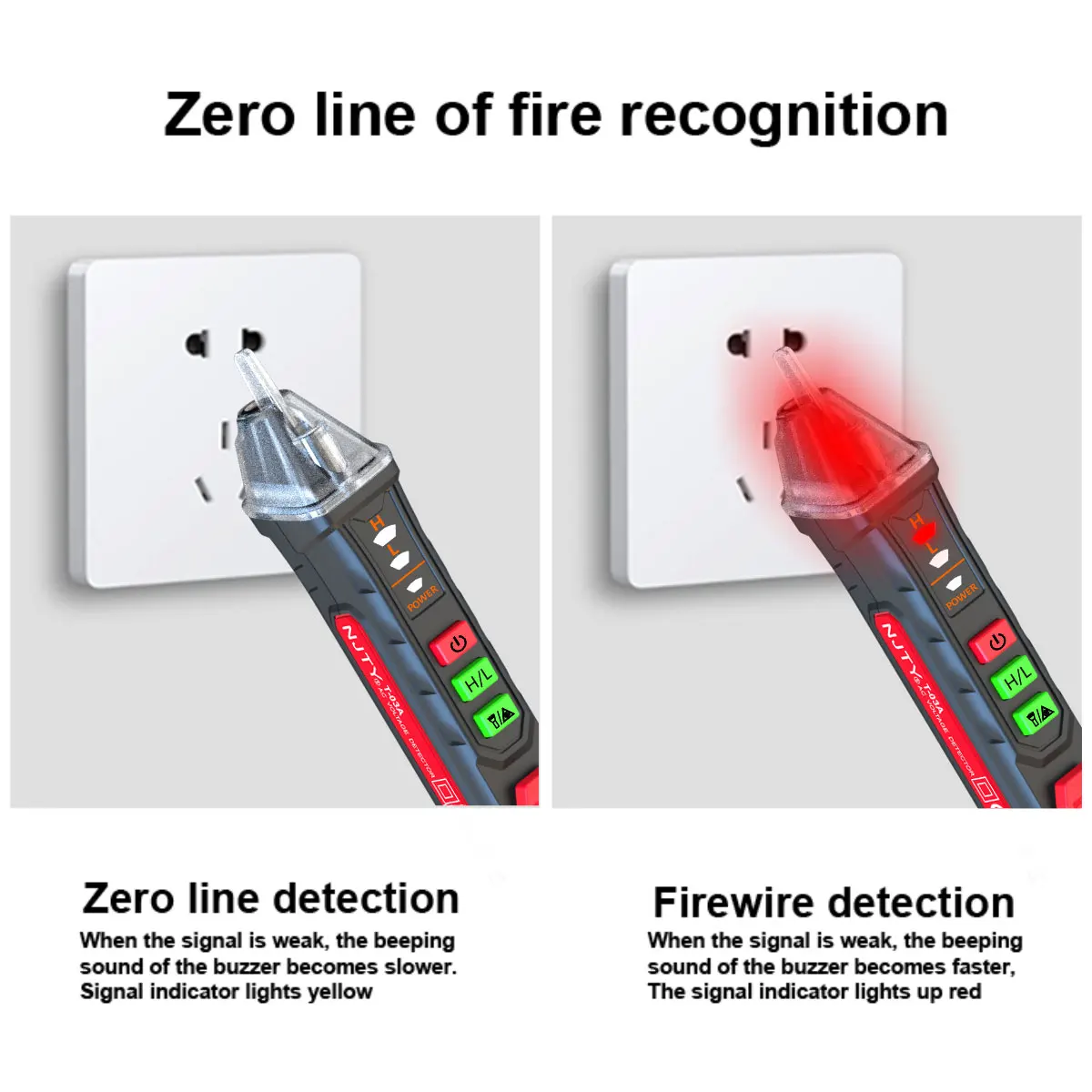
Static electricity in the surrounding environment or on clothing, hair, and nearby objects may cause brief beeps, even in low-sensitivity mode. High sensitivity can make the tester more responsive to weak signals and interference, causing unwanted alarms.
For routine checks, use the default low-sensitivity mode. If unexpected beeps occur, turn off high sensitivity, move the probe slowly, and avoid rubbing it against clothing or other surfaces. An alarm alone does not confirm that the object being checked is electrically live.
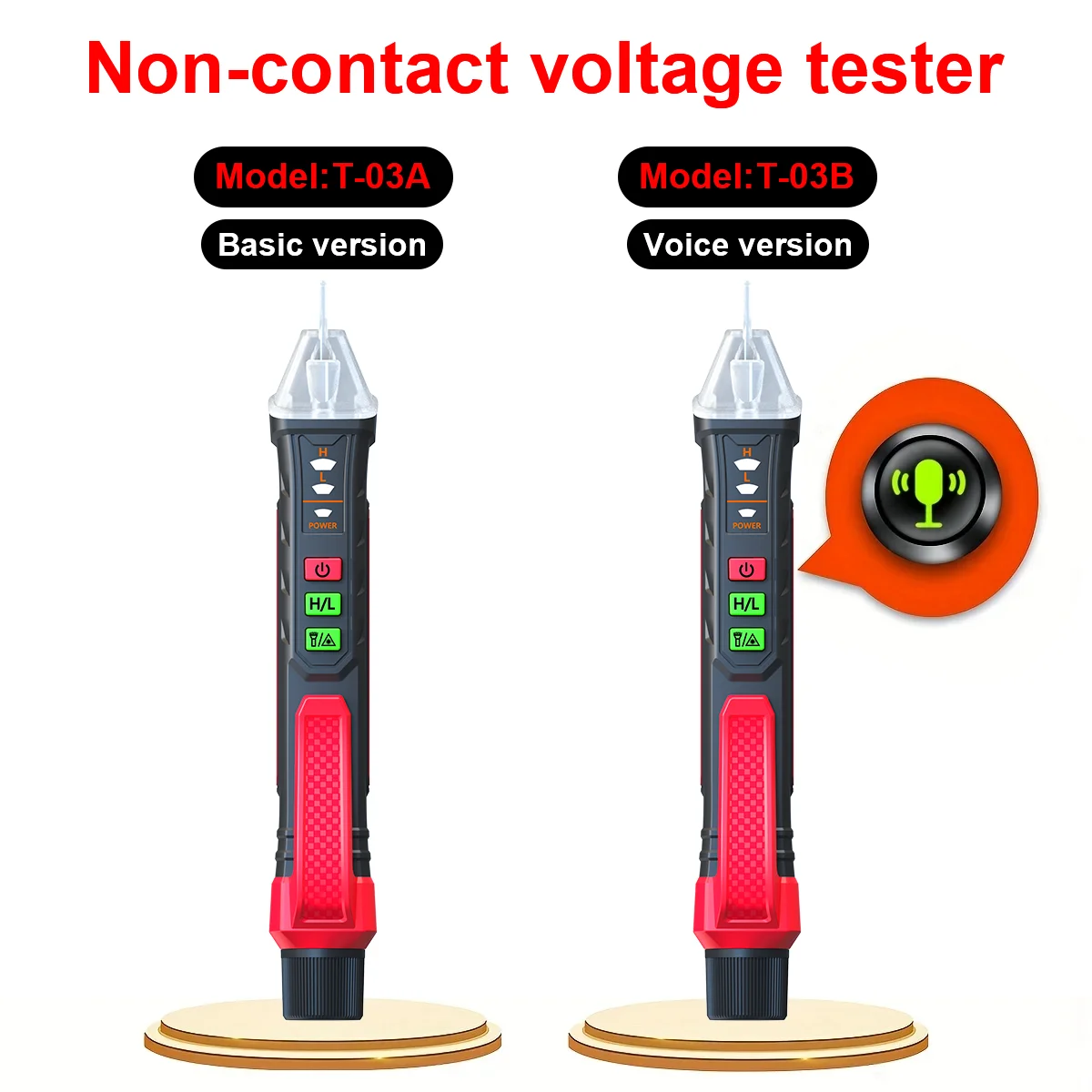
T03A vs T03B — Voice Announcement (English Only)
T03A provides LED indicators and buzzer alerts, but no voice announcements.
T03B provides LED indicators and buzzer alerts, and also adds voice announcements. The voice announcements are available in English only.
Choose T03B if you prefer spoken prompts during use. Note: The voice prompts are English only.
Non-contact Voltage Tester 12-1000V AC Pen Circuit Electric Indicator Wall Tool With Flashlight Buzzer
Akciós ár€22,08
Rendszeres ár€27,53
Válasszon opciókat
Non-contact Voltage Tester 12-1000V AC Pen Circuit Electric Indicator Wall Tool With Flashlight Buzzer
Akciós ár€22,08
Rendszeres ár€27,53