When voice recorders fail: legal risks for homeowners and small businesses
Practical legal guidance for homeowners, managers, and small business owners confronting situations where voice recorders perform poorly or fail unexpectedly. This article focuses on how evidence value, consent obligations, and compliance duties change when voice recorders malfunction, are triggered incorrectly, or produce degraded files within real environments.
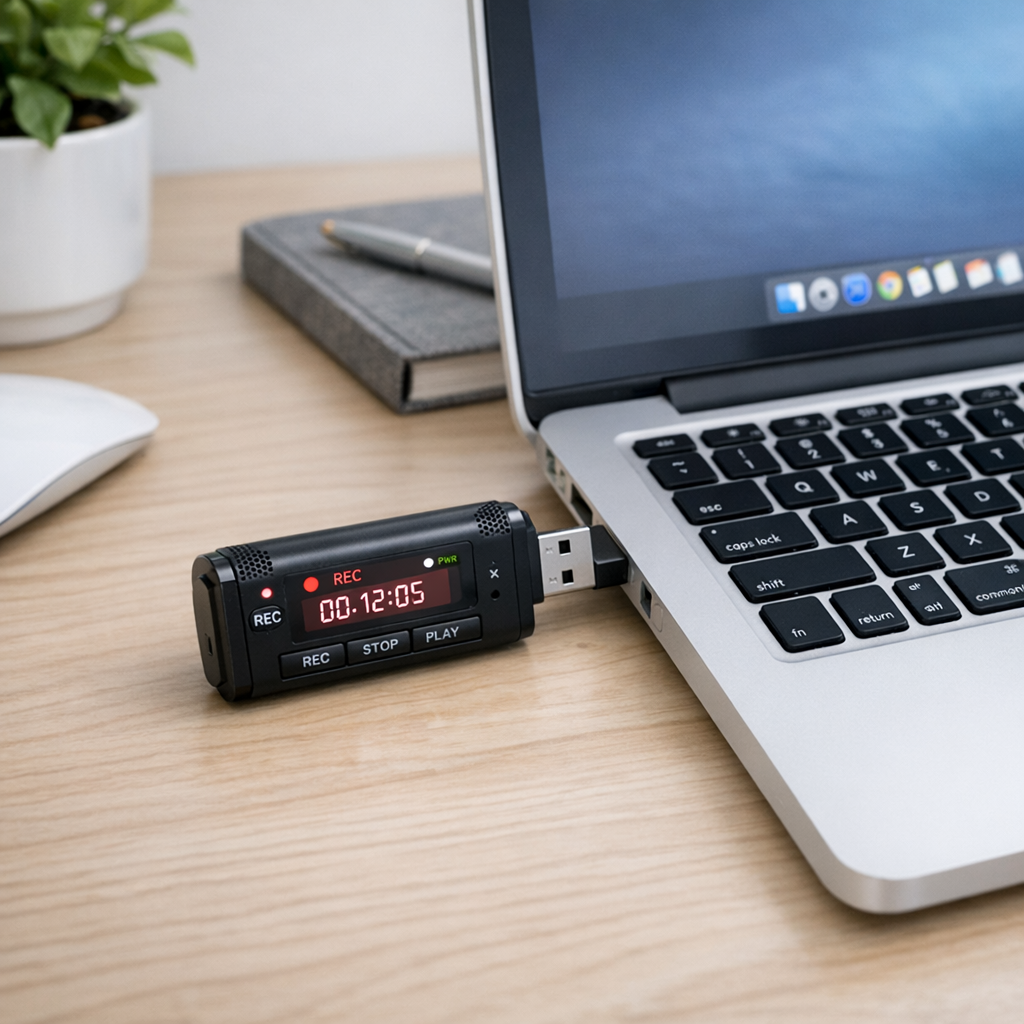
When voice recorders fail: admissibility, consent, and evidence quality
Evidence derived from a failed or damaged device raises immediate questions about admissibility and chain of custody. Courts and regulators evaluate recordings against standards for authenticity, integrity, and lawful collection. Problems such as partial captures, corrupted files, incorrectly configured voice activated recorder settings, or undocumented transfers can render an otherwise relevant recording inadmissible or of limited persuasive value. Review of admissibility typically examines whether the recording accurately reflects what it purports to capture and whether the capture complied with applicable consent or notification laws. For guidance on device settings that affect capture quality, consult the detailed background in our pillar article on discreet and professional recording Discreet solutions.
Operational failure modes and practical scenarios with voice recorders
Failures do not occur in a vacuum. Recognizing common failure modes helps decide whether to rely on a recording as evidence or to treat it as investigatory lead material only. Typical issues include: defective microphones, full storage with automatic overwrite, low-battery cutoff, unoptimized voice activation thresholds that clip speech, timestamp drift, and inappropriate file compression that removes frequency bands needed for speaker identification. Each failure mode creates specific legal implications: overwritten content can foreclose discovery claims, clipped speech increases hearsay risk, and timestamp errors complicate chronology in contractual disputes.
Scenario: homeowner dispute at a shared property
A homeowner installs a digital voice recorder to document repeated noise disturbances. The device is voice-activated, but its threshold is set too high; several critical complaints are not recorded. Later, an incident occurs where only partial statements were captured, and timestamps show a thirty-minute gap. In a civil nuisance claim, the court may exclude the recording as incomplete evidence of the event’s timing, and opposing counsel will challenge whether the capture process was reliable. Best practice in such scenarios is contemporaneous logging of events and backup captures from a second device.
Scenario: small business employee misconduct claim
In a small retail business, a manager uses a handheld voice recorder during an internal investigation. The device runs on low battery and stops midway through an interview. The manager resumes questioning without disclosing the interruption. In litigation, opposing counsel can argue the pause prevented a continuous, accurate recording and question whether the interviewer coached the witness during the outage. Documentation of battery levels, device checks, and a formal interview protocol can mitigate that risk.
Choosing voice recorders for legally defensible capture
Selection of a device should be driven by legal goals as much as audio performance. A voice recorder that performs well in ideal conditions may still be unsuitable where legal defensibility is required. Key evaluation criteria include secure file formats, robust timestamping, tamper-evident features, reliable power and storage capacity, and clear metadata about device settings. Devices that offer audit logs or export signatures make it easier to demonstrate integrity.
When comparing models, weigh the trade-offs: a simple analog recorder may be easy to use but lacks tamper-evident metadata; a digital voice recorder with encryption and SHA-256 hashes enhances integrity but may require stricter chain-of-custody controls to preserve decryptability. Consider whether voice activated recorder features are appropriate: they reduce storage use but increase risk of missing context or producing fragmented files that undermine reliability. For a practical inventory of model classes and their compliance implications, review product categories on our site and confirm compatibility with your evidence-handling policies Read the complete Voice Recorders guide .
Decision logic: when to rely on a recording and when to treat it as corroboration
Decide based on three axes: legality of collection, technical integrity, and evidentiary completeness. If collection likely violated consent or wiretapping laws, the recording may be inadmissible regardless of quality. If collection was lawful but the file is corrupted or truncated, treat the recording as corroborative rather than primary evidence and seek corroboration through witnesses or system logs. If the file is intact and supplemented by metadata and a documented chain of custody, it may serve as primary evidence. Use a checklist approach: confirm lawful basis, verify file integrity, log transfer events, and maintain original media in secure storage.
Practical examples and common mistakes
Below are frequent mistakes observed in real environments and corrective practices:
- Relying on a single device: Single points of failure are common. Use parallel captures or secondary timestamps in business systems to cross-validate.
- Failing to verify voice activation settings: Overly aggressive thresholds cause clipping; overly sensitive settings lead to noisy, low-value captures. Test settings in the environment before relying on recordings for critical incidents.
- Neglecting metadata: Deleting or formatting devices without exporting metadata destroys a key integrity trail; always export original files and metadata immediately after capture.
- Poor chain-of-custody: Informal handling (emailing files without preserving originals) invites challenges; document every transfer and who had access.
- Ignoring consent rules: In mixed-consent jurisdictions, failing to obtain required consent converts potentially admissible recordings into legal liabilities.
Common mistake scenarios include attempting to clean corrupted files with consumer tools that alter timestamps or compress audio, inadvertently undermining authenticity, and relying on voice activated recorder wake-ups without verification logs showing what triggered recordings.
Legal & ethical considerations (EU and US high-level)
Both EU and US frameworks impose constraints but emphasize different priorities. In the EU, the General Data Protection Regulation (GDPR) frames audio capture as personal data processing; lawful bases such as consent, legitimate interests, or contract must be assessed and data minimization applied. Recordings that fail technically still may be subject to access and deletion requests. In contrast, US law varies widely by state: federal law permits one-party consent for recordings of private conversations, but many states require two-party or all-party consent. Even where legal, use of recordings can trigger employment law, privacy torts, or contractual disputes. Where a voice recorder fails and produces incomplete or corrupted data, organizations should be cautious in relying on what remains because corrective actions (attempted restoration, compression, or redaction) can affect both privacy obligations and admissibility.
When handling poorly captured recordings, maintain a preservation-first approach: secure originals, log restoration attempts, and consult counsel before public disclosure. Consider redaction protocols that preserve evidentiary value while limiting unnecessary exposure of third-party data. For product-level options that can support compliance workflows, review our category overview when standardizing devices for a programmatic approach Browse Voice Recorders.
Frequently Asked Questions
Q: Can a partially corrupted recording still be used in court?
A: Possibly; courts weigh relevance and reliability. If key portions are intact and corroborated by other evidence, partial recordings can support a claim, but expect admissibility challenges.
Q: Does using a voice activated recorder affect admissibility?
A: The activation method is a technical factor. Voice activation may produce fragmented files that complicate interpretation; document settings and consider continuous recording where legal to preserve context.
Q: What steps minimize legal risk after a device failure?
A: Preserve original media, document device status and transfer events, avoid altering files, and consult legal counsel before attempting restorations or disclosures.
Q: Are recordings admissible if one party did not consent?
A: That depends on jurisdiction. Some US states require all-party consent, while others allow one-party consent; EU rules focus on data protection principles regardless of criminal admissibility.
Q: How should small businesses choose a recorder to reduce compliance exposure?
A: Prefer devices with secure file formats, reliable timestamps, exportable metadata, and sufficient storage/power to avoid mid-capture failures; pair device selection with clear policies and documentation practices.
Educational closing
Technical failures in recording devices transform straightforward evidentiary questions into complex legal and procedural issues. The right response combines preventive selection of appropriate voice recorders, routine operational checks, and documented handling that preserves integrity even when devices fail. For situations that may enter litigation or regulatory review, prioritize preservation, consult counsel early, and treat failed recordings as leads to be corroborated rather than conclusive proof. An organized policy covering device choice, testing, capture settings, and chain-of-custody reduces risk and clarifies decision logic when real-world failures occur.