
Mini Cameras: Battery Mistakes That Ruin Recordings for Home and Small Business
Mini cameras are a popular choice for homeowners and small businesses that need discreet monitoring, but battery errors are a leading cause of missed evidence and corrupted files. This comparison-style article examines how common battery mistakes disrupt recordings, contrasts battery types and power strategies, and provides decision logic for real-world setups.
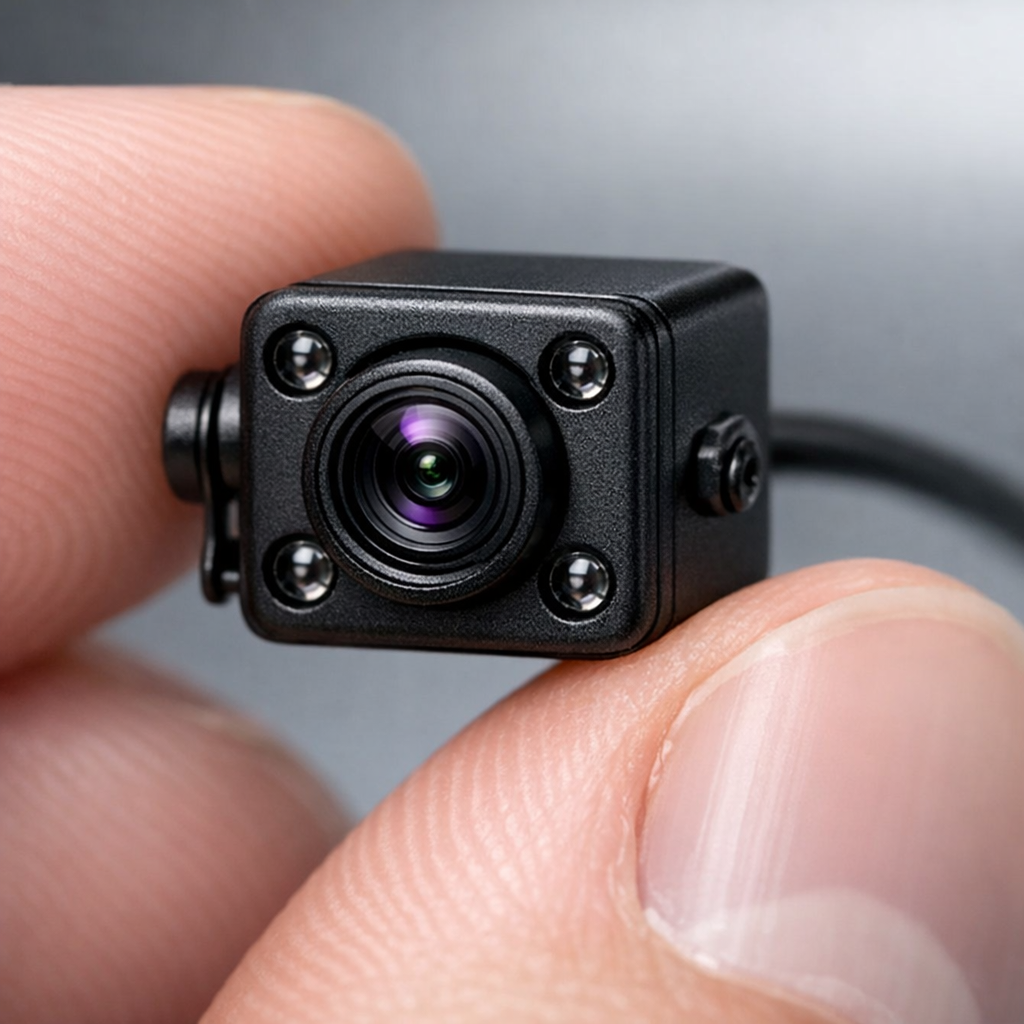
Why battery choice matters for mini cameras
Battery selection affects runtime, peak-current capability, voltage stability and safety. A battery that performs adequately during short tests can still fail under sustained Wi‑Fi streaming, IR illumination at night, or when a camera records long motion events. Understanding those failure modes is the first step to preventing lost footage in homes, shared workspaces and small retail locations. For deeper placement and concealment techniques, review our pillar content on discreet recording Read the complete Mini Cameras guide
Comparing battery types for mini cameras
This section compares common power sources used with mini cameras: single-use alkaline cells, lithium coin cells, rechargeable NiMH AA/AAA, lithium‑ion (Li‑ion) cells, external power banks, and hardwired options. Each option is evaluated by pros, cons, typical runtime, and failure risks.
Alkaline (AA/AAA)
- Pros: Widely available, inexpensive, stable voltage for low-drain standby.
- Cons: Voltage droop under high load (streaming + IR) and poor performance in cold temperatures.
- Failure risk: Cameras that jitter or shut down mid-recording when motion triggers combined features.
NiMH rechargeables
- Pros: Higher sustained current than alkalines, good for repeat use, lower internal resistance.
- Cons: Slightly lower nominal voltage (1.2V per cell vs 1.5V), requiring camera compatibility checks.
- Failure risk: Using NiMH in devices that expect 1.5V can cause false battery-low signals and disable long recordings.
Lithium‑ion (Li‑ion) and Lithium polymer (Li‑Po)
- Pros: High energy density, steady voltage, and high current delivery—ideal for Wi‑Fi streaming mini cameras.
- Cons: Cost, need for correct charging circuitry, and regulatory concerns for transport and disposal.
- Failure risk: Using a non‑compatible or counterfeit cell can lead to heat, cutouts, or sudden voltage collapse during long recordings.
Coin cells and button batteries
- Pros: Good for tiny sensor-only devices with intermittent wake cycles.
- Cons: Extremely limited current; unsuitable for cameras with continuous radio or IR loads.
- Failure risk: Immediate recording failure if the device tries to stream video or power an IR emitter.
Power banks and external USB supplies
- Pros: Long runtimes and stable voltage; many power banks supply sustained current sufficient for streaming.
- Cons: Size and visibility compromise discretion; some power banks have auto-shutoff at low current.
- Failure risk: Power banks designed to save energy may turn off during low-activity periods, terminating recordings until manually restarted.
Common battery mistakes and real-world scenarios
The following comparisons match common scenarios to the mistakes that most often cause recording loss. Each scenario shows the practical consequence of a specific battery error.
Scenario A: Nanny cam in a temperate home
- Mistake: Installing cheap alkaline cells and relying on them for 24/7 motion-plus-streaming. Result: Voltage sag when IR activates at night, producing dropped frames and corrupted clips.
- Better option: Low‑internal‑resistance NiMH or a small Li‑ion pack tested under expected nighttime load.
Scenario B: Retail store loss-prevention mini camera
- Mistake: Using a power bank with an aggressive auto-shutdown to maintain discretion behind fixtures. Result: Overnight auto-off during low foot traffic and missing an incident.
- Better option: Hardwiring where possible or selecting a power bank with low-current recognition disabled and confirmed runtime.
Scenario C: Mobile surveillance for field evidence
- Mistake: Swapping non‑matched Li‑ion cells from different manufacturers into a multi-cell pack. Result: Imbalanced cells cause early cutoff and potential thermal issues.
- Better option: Factory-matched packs with integrated protection and a known discharge curve; carry spares of the exact pack type.
Scenario D: Discreet cameras in cold environments
- Mistake: Leaving coin or alkaline batteries in the camera during winter. Result: Rapid capacity loss and intermittent recordings.
- Better option: Use lithium-based chemistries proven for low temperatures and enclosures with insulation or local heat sources if legal.
For product choices that balance discretion and runtime, consult our hidden cameras collection for typical device power requirements Browse Mini Cameras
Buyer guide: how to choose power for hidden and discreet cameras
Selecting the right battery is a decision based on four practical criteria: expected duty cycle, peak current, environmental conditions, and concealment constraints. Compare these factors side by side before purchase.
- Duty cycle: Continuous streaming needs high-capacity Li‑ion; intermittent motion detection favors smaller cells or coin batteries if the camera has low power draw in standby.
- Peak current: Cameras with Wi‑Fi and IR can draw several times their idle current when transmitting. Choose cells and holders rated for those peaks.
- Environment: Cold, heat and humidity change battery behavior. Lithium chemistries handle cold better than alkalines.
- Concealment: Slim form factors may force smaller cells; plan placement to allow larger external packs when long runtime is necessary.
Avoid these selection and operational mistakes: mixing old and new cells, ignoring manufacturer low-voltage cutoffs, using non-certified chargers, and failing to load-test batteries before deployment.
If you want an advanced discussion of battery care and long-term maintenance for covert installations, see our extended pillar resource on discreet recording practices Discreet solutions
Legal and ethical considerations in the EU and US
When assessing battery strategies for hidden cameras, include legal and compliance constraints in your decision. Laws vary across jurisdictions and affect where and how discreet cameras may be powered and used.
United States (high-level)
Federal and state laws differ on expectation of privacy and recording consent. Audio recording is often more restricted than video. A battery failure that truncates footage can complicate evidentiary chains; preserve metadata and timestamps where possible. Non-legal advice: confirm local consent rules before installing any camera in a space where people have a reasonable expectation of privacy.
European Union (high-level)
Data protection laws such as the GDPR require lawful grounds for recording and secure handling of recorded personal data. Battery choice affects continuity of recording and data retention policies; interruptions can create gaps that affect compliance. Ensure your device and power plan support encrypted storage and reliable uptime aligned with stated privacy notices.
Safety and transport law also applies to lithium batteries: shipping and storing large Li‑ion packs carry additional regulatory requirements—factor this into professional equipment procurement.
Frequently Asked Questions
How long will a typical mini camera run on a single battery?
Runtime depends on battery chemistry, capacity, and camera load; continuous streaming on a small Li‑ion cell may last 4–12 hours, while motion-only recording on coin batteries might run days. Always test under real-use conditions.
Can I mix rechargeable and alkaline batteries in the same device?
No. Mixing chemistries creates uneven discharge and can trigger shutdowns or damage. Use recommended, matched cells only.
Why does my camera die faster at night?
Night modes typically enable IR illumination and often increase processing and radio use, causing higher peak currents and faster battery depletion.
Are power banks reliable for discreet cameras in stores?
Power banks can be reliable if they do not auto-shutoff at low current and have sufficient capacity. Choose models with continuous output specifications to avoid unintended power loss.
Does battery failure affect the legal admissibility of footage?
Interrupted or corrupted footage can complicate chain-of-custody and authenticity questions; consistent power and documented testing reduce disputes over admissibility. Consult a legal professional for case-specific guidance.
Educational closing: making reliable recordings more likely
Battery mistakes are rarely about a single bad cell; they emerge from a mismatch between device demands, environmental stressors, and user assumptions. A comparison-driven approach—matching chemistry and capacity to duty cycle, testing under expected peak loads, and accounting for legal and safety limits—reduces the risk of ruined mini camera recordings. Use the evaluation criteria above when planning deployments for homes, small businesses or professional monitoring, and maintain a documented power-testing routine to protect footage integrity.