Video Surveillance Strategies to Prevent Internal Theft in Offices
Video surveillance is a practical tool for deterring and documenting internal theft in office environments when deployed with clear policies and legal compliance. This article explains how to design, compare, and operate an office-focused system that balances loss prevention, employee privacy, and evidentiary value for investigations. It covers typical use cases, selection criteria, and the common mistakes that increase liability rather than reduce risk. Read the complete Video Surveillance guide
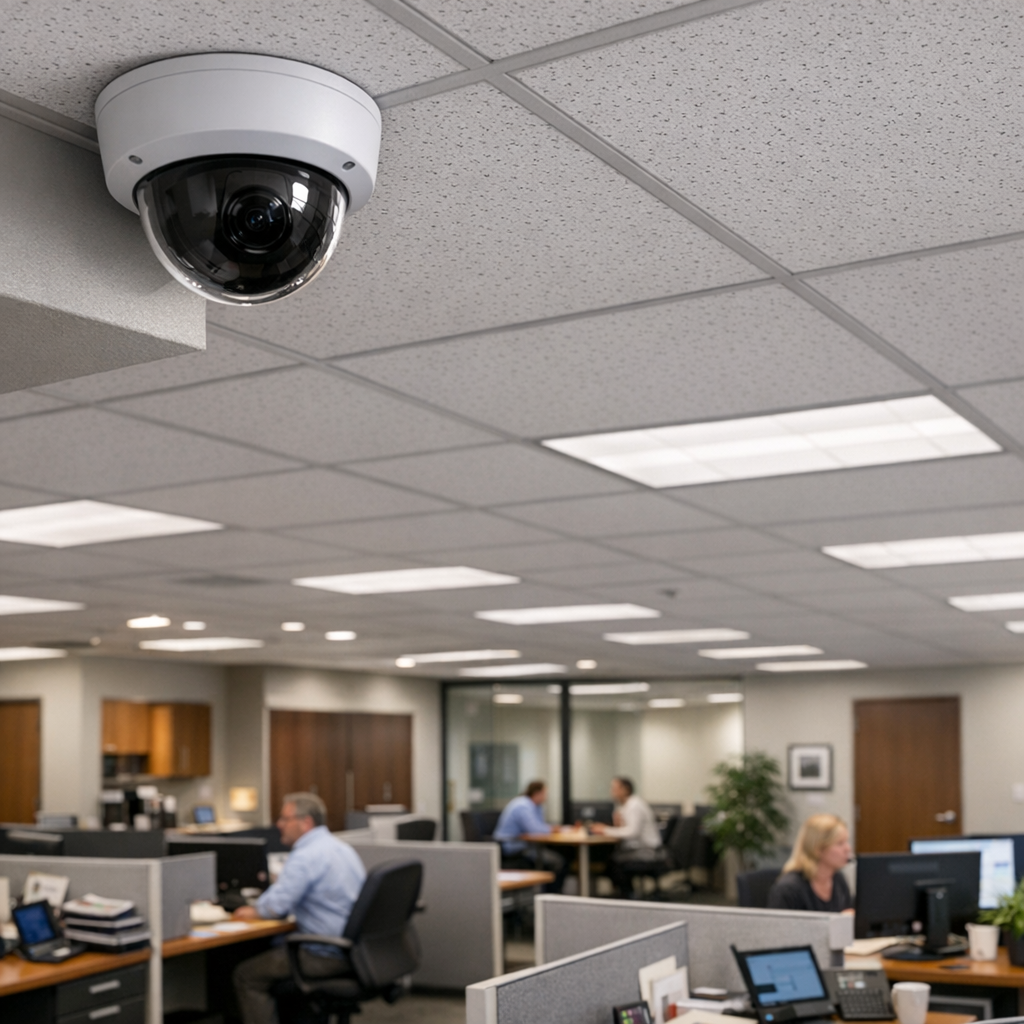
How video surveillance reduces internal theft in offices
Video surveillance reduces opportunities for internal theft by increasing perceived and actual risk of detection, creating a verifiable record of transactions and movements, and enabling targeted investigations. Cameras placed at entrances, cash handling points, supply rooms, and high-value equipment areas create overlapping coverage that makes opportunistic theft harder. Combined with access logs and inventory controls, footage can corroborate timelines and identify responsible parties in ways that written reports alone cannot.
Comparing video surveillance approaches for office loss prevention
Not all systems are equally suited to preventing internal theft. Choose by matching capabilities to threat scenarios and operational limits. Below is a structured comparison of common approaches.
1) Fixed network cameras
- Pros: Continuous coverage, high resolution for evidence, easy integration with video analytics.
- Cons: Higher up-front cost and privacy considerations if installed in sensitive areas.
2) Pan-tilt-zoom (PTZ) cameras
- Pros: Flexible coverage, ability to track movement across zones, reduces number of cameras needed.
- Cons: Require active monitoring or intelligent triggers; less effective as passive deterrent if operators are unavailable.
3) Hybrid cloud/local DVR/NVR systems
- Pros: Local recording ensures evidence retention; cloud options support remote review and off-site backup.
- Cons: Cloud subscriptions increase operational cost; bandwidth constraints may limit continuous uploads.
4) Analytics-equipped systems
- Pros: Motion detection, object removal alerts, and loitering detection can reduce false alarms and speed investigations.
- Cons: Analytics are only as good as configuration — poorly tuned rules create alert fatigue and missed events.
Use cases and decision logic for office surveillance
Design choices depend on the office type, staffing model, and the kinds of assets that require protection. For a small professional office with limited public access, a few well-placed fixed cameras and secure local recording often suffice. For facilities with on-site cash transactions, equipment checkout, or shared storage rooms, overlap and analytics are more important.
Decision logic checklist:
- Identify assets and theft vectors: petty theft, inventory shrinkage, data theft, equipment removal.
- Map sightlines: place cameras to avoid blind spots near exits, storage, and cash-handling zones.
- Choose recording retention: evidence requirements typically dictate 30–90 days depending on risk and regulations.
- Decide monitoring level: live monitoring, scheduled review, or event-triggered alerts.
Practical examples and common mistakes
Example 1 — Shared equipment theft: A design firm experienced repeated laptop disappearances. The solution combined a camera covering the equipment storage area, badge access logs, and a mandatory checkout procedure. Footage plus log correlation reduced incidents and identified a pattern pointing to a single shift.
Example 2 — Front-desk cash handling: A small clinic had discrepancies in petty cash. Installing a discreet fixed camera focused on the cash drawer and integrating time-stamped transaction records resolved disputes quickly and discouraged opportunistic behavior.
Common mistakes:
- Installing cameras in places that create privacy violations (restrooms, private offices) which increases legal risk.
- Relying solely on high camera count without addressing procedural vulnerabilities such as lax inventory controls.
- Failing to secure recorded footage, making it accessible to unauthorized staff and creating data breach risk.
- Not documenting a retention and access policy, which undermines admissibility of footage in HR or legal actions.
Buyer guide: evaluation criteria for office video surveillance
When evaluating systems, prioritize features that align with internal theft prevention and compliance goals. Consider the following criteria:
- Image quality: 1080p or higher for evidence; low-light or IR capability for dim storage areas.
- Recording and retention: Local NVR/DVR with tamper-resistant storage or encrypted cloud retention that meets your retention plan.
- Authentication and audit logs: Who accessed footage and when must be traceable for investigations.
- Analytics: Video motion detection, line-crossing, and object removal are useful for internal theft detection; evaluate false positive rates.
- Privacy controls: Masking or scheduled disabling in sensitive zones, and clear signage and policy to inform staff.
- Integration: Ability to correlate with badge access, POS systems, or inventory databases improves investigative speed; consider systems that support standard protocols.
For buyers who also secure small properties, consider how office camera choices compare to home equipment: many home security cameras are optimized for remote monitoring and cloud alerts but may lack enterprise-grade audit trails and tamper resistance required for business surveillance. If you expect to scale, select systems designed for multi-camera management rather than consumer-only home security cameras.
Legal and ethical considerations for video surveillance in offices
Surveillance brings legal obligations and ethical boundaries. Laws differ between the United States and the European Union, but both emphasize proportionality, notice, and secure handling of recorded data. In the EU, the General Data Protection Regulation (GDPR) requires a lawful basis for processing personal data, a data protection impact assessment for intrusive monitoring, and clear retention limits. In the US, state laws vary: some require consent for audio recording or prohibit cameras in areas where a reasonable expectation of privacy exists.
Operational best practices to reduce legal risk:
- Post clear signage where cameras operate and include surveillance notice in employee handbooks.
- Limit camera placement to public and work-related areas; avoid restrooms and locker rooms.
- Define retention and access policies and enforce role-based access to footage with audit trails.
- Conduct a proportionality assessment: ensure monitoring is necessary, and consider less intrusive measures when possible.
Frequently Asked Questions
Q1: Can I install video surveillance in all office areas? A: No. Avoid recording in spaces with strong privacy expectations such as restrooms or changing rooms; consult local law for specific prohibitions.
Q2: How long should I keep surveillance footage for internal theft cases? A: Retention depends on risk and legal requirements; commonly 30–90 days, longer where incidents or investigations justify extended retention.
Q3: Are audio recordings allowed with cameras? A: Audio laws vary; many jurisdictions require consent for audio capture. Treat audio as higher-risk data and consult legal guidance before enabling it.
Q4: Will cameras alone stop internal theft? A: Cameras are a deterrent and evidentiary tool but are most effective combined with policies, access controls, inventory procedures, and staff training.
Q5: How do I ensure footage is admissible for HR or legal actions? A: Maintain chain-of-custody, limit access, use tamper-evident storage, and document policies that explain how footage is captured, stored, and reviewed.
Educational closing
Implementing video surveillance to prevent internal theft requires technical choices matched to organizational risk, plus policies that address legal and ethical concerns. Effective systems combine well-placed cameras, reliable recording and retention, analytics tuned to reduce false positives, and documented procedures for access and incident response. Thoughtful deployment minimizes liability while improving the ability to detect, investigate, and deter theft. Regular reviews of system performance and compliance posture help ensure the solution continues to meet evolving operational and regulatory expectations.