Audio Surveillance Equipment: Recording Options
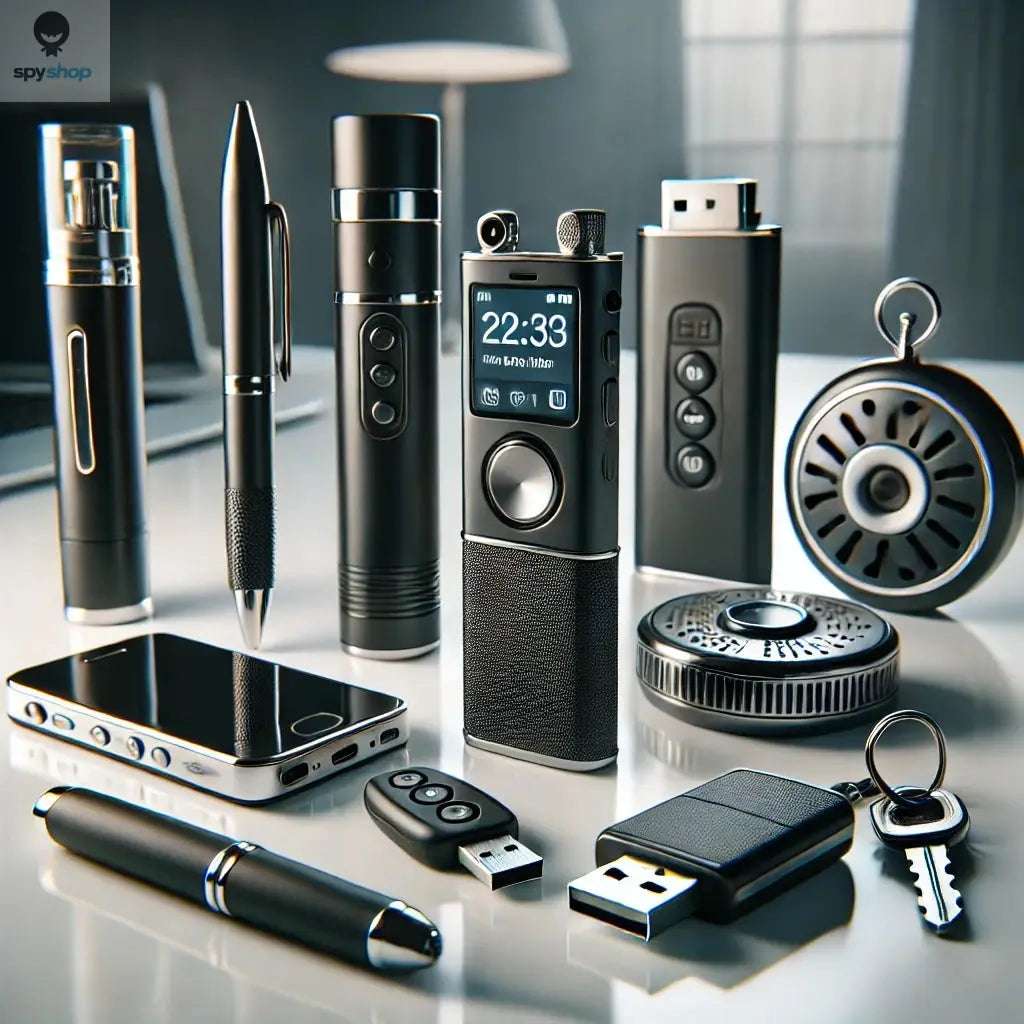
Audio equipment should be chosen for a permitted recording workflow. A portable recorder, room recorder and call-recording interface have different compatibility and placement requirements. None guarantees useful evidence or a particular outcome in a dispute.

Compare the recording task
For a meeting, test speech at the intended microphone position. For a body-worn recorder, check handling and clothing noise. For a call, verify the exact phone, connection and system support. A generic plug-in description does not establish compatibility with every mobile or landline.
Check features individually
- Supported recording mode and activation behaviour.
- Continuous runtime at the selected settings.
- Storage, full-memory behaviour and file retrieval.
- Remote access, account and network requirements where offered.
- Saved-file intelligibility in the actual environment.
Do not equate size with quality
A dedicated recorder does not automatically outperform a smartphone. Compare actual microphone capture and workflow. A concealed or everyday-looking housing can introduce obstruction, handling or safety issues, and should not be treated as suitable for every situation.
Resolve privacy and permission before use
Define the purpose and people affected and check applicable recording, workplace and data-protection requirements. Do not modify a functioning smoke alarm or other safety equipment to conceal a recorder.
For preparation, use the permissions and purpose checklist; for clarity tests, use the microphone and placement guide.

Written by PRIVATE D.O.O. Pecek