GPS trackers: legal pitfalls for homeowners and small businesses
Many property owners and small companies install gps trackers to protect vehicles and equipment, but they often misinterpret the data those devices publish. Early misunderstanding of location logs, timestamps, and signal confidence can create legal exposure, incorrect disciplinary actions, and flawed evidence in disputes. This article examines how gps trackers data is commonly misread, what legal rules and compliance boundaries apply in the US and EU, and practical decision logic for owners and managers who rely on location technology. Read the complete GPS Trackers guide
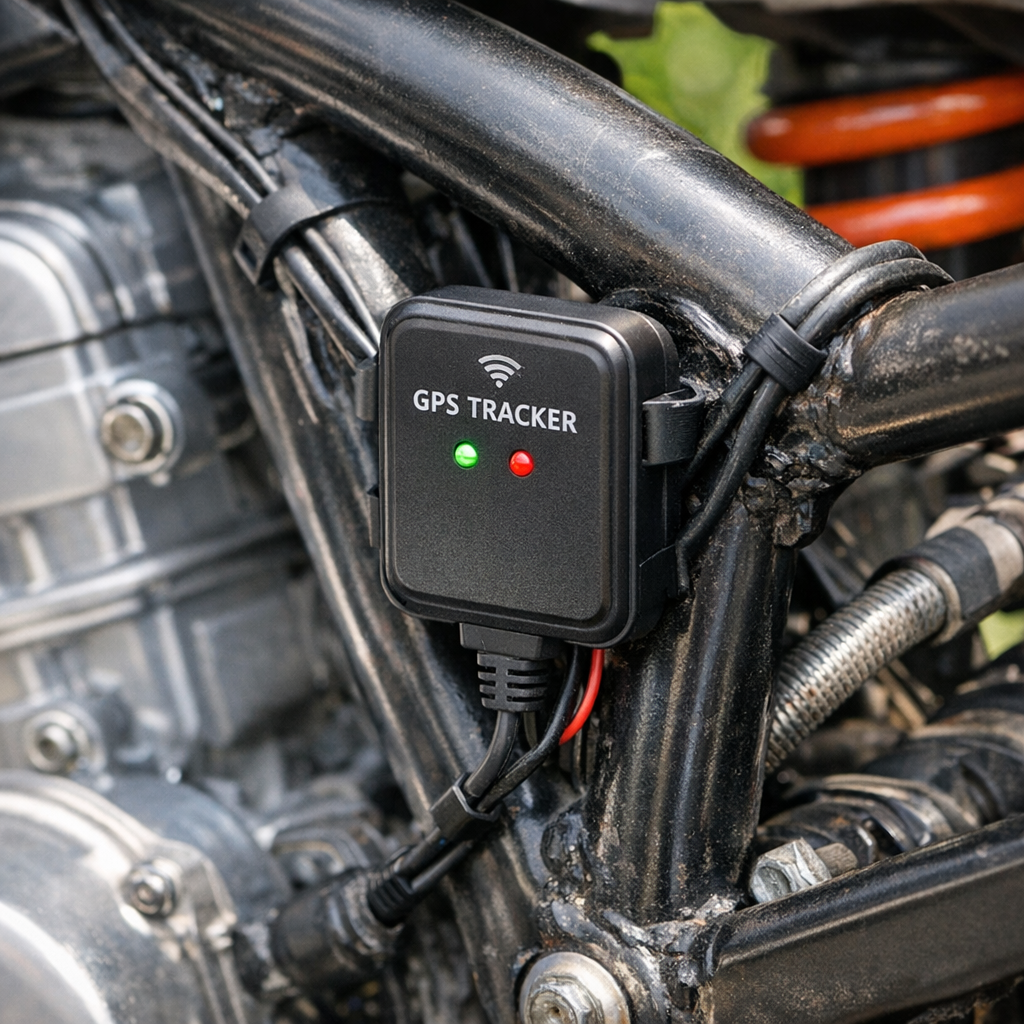
How gps trackers data is commonly misread
Users assume location readings are absolute truth: a single coordinate equals presence, a single timestamp proves contemporaneous conduct, or a trailing breadcrumb proves route intent. In reality, raw GPS readings are estimates derived from satellite fixes, assisted data, and the device’s firmware. Multipath reflections, urban canyon effects, poor antenna placement, coarse sampling intervals, and intermittent network handoffs cause positional error and temporal jitter. For example, a parked truck logged inside a neighbor’s driveway may reflect antenna orientation or a cellular tower triangulation rather than physical crossing of a property line. Misreading these artifacts as decisive proof is a common error that drives avoidable legal conflict.
Legal risks when gps trackers data is misinterpreted
Relying on flawed interpretation of gps trackers exposes owners and managers to multiple legal risks: false accusations that lead to defamation or employment claims, privacy violations for improper surveillance, and evidentiary challenges when data is presented in court. In workplace contexts, employers may inadvertently breach wiretapping statutes or labor laws by monitoring employee movements without appropriate notice. In criminal or insurance disputes, courts scrutinize the chain of custody and the methodology used to collect and process location data; unvalidated or unaudited tracker logs are vulnerable to exclusion or weight reduction. This creates liability both for relying parties and for those who install devices without considering consent and notice requirements.
Comparison: common data sources and their legal weight
Not all location evidence is equal. A structured comparison clarifies decision logic when evaluating gps trackers output for legal or compliance use.
- On-device GPS logs: Records generated by the tracker with device-generated timestamps. Pros: direct source, granular sample rates. Cons: firmware tampering risk, metadata inconsistency, and local clock drift.
- Server-side aggregated tracks: Provider-side event sequences that may be normalized or interpolated. Pros: audit trails, centralized retention. Cons: modifications during processing, redaction policies, and reliance on provider honesty.
- Telematics/vehicle CAN bus integration: Correlates location with vehicle state. Pros: richer context (speed, ignition). Cons: requires configuration and may implicate stronger privacy rules in employment.
- Third-party corroboration (CCTV, toll logs): External evidence that can validate or contradict tracker data. Pros: strengthens evidentiary value. Cons: additional cost and data-sharing hurdles.
Choosing which evidence to trust requires assessing provenance, retention, and how the data was processed. Organizations should document validation steps, maintain immutable logs when possible, and avoid legal reliance on single data points.
Use cases and decision logic for homeowners and small businesses
Different use cases call for different legal precautions and technical configurations. For vehicle security, misinterpretation risk centers on location accuracy and response protocols. For asset tracking, chain-of-custody and tamper-evidence matter. For employee monitoring, consent and purpose limitation dominate.
Case: homeowner discovering unauthorized vehicle movement
A homeowner sees an alert indicating their car left the driveway at 3:12 a.m. Immediate assumptions—an intruder took the car—can prompt dangerous confrontations. Decision logic should be: verify additional data (ignition state, recent geofence history), consult camera footage, and only notify law enforcement if corroborating indicators exist. Preserving original device logs and noting any manual interactions with the tracker prevents later disputes.
Case: small fleet manager takes disciplinary action
A fleet manager uses vehicle gps tracking to enforce after-hours use policies. Before disciplining, the manager should examine sample intervals (was the last fix several minutes old?), check for geofence false positives, and confirm the chain of custody for the data. If the tracker’s policy or employee contract lacks clear notice, disciplinary action can trigger wrongful termination or privacy claims. Maintain written policies and explicit employee acknowledgments to reduce risk.
Buyer guide: selecting gps trackers with legal defensibility in mind
When evaluating devices for compliance-sensitive contexts, buyers should prioritize features that strengthen legal defensibility rather than marketing metrics. Consider these evaluation criteria:
- Immutable logging and exportable raw data: Devices that support tamper-evident logs or cryptographic hashes for each upload make it harder for defense counsel to argue data integrity issues.
- Retention configuration and audit trails: Ability to set retention windows and access logs for administrators helps satisfy data minimization and audit demands under privacy regimes.
- Time synchronization: Support for NTP or GPS time ensures timestamps are consistent across evidence sources.
- Configurable sampling and event triggers: Adjustable intervals allow owners to balance battery life and evidentiary granularity; event-based logging (motion start/stop) produces fewer ambiguous points than sparse sampling.
- Data export and chain-of-custody features: Standardized export formats (CSV with hash, JSON with signatures) and documented export processes support admissibility.
- Privacy controls and consent management: Features that facilitate employee notice, consent capture, and role-based access reduce regulatory exposure.
Buyers should test devices in the operational environment and document observed error margins. For vehicle gps tracking or asset tracking use, proof of testing under real-world conditions (urban, rural, indoor) should be retained alongside procurement records. Browse GPS Trackers
Practical examples and common mistakes
Concrete examples expose recurring mistakes that create legal trouble.
- Mistake: treating a single coordinate as proof of presence. Example: an owner sues a neighbor for trespass based on one GPS point. Courts expect corroboration; single points are weak evidence.
- Mistake: ignoring system time drift. Example: a device with incorrect local time generates logs that appear to contradict witness statements; without verification of clock synchronization, the data is unreliable.
- Mistake: not preserving raw logs. Example: the provider overwrites original logs per retention policy and only retains processed tracks; later, defense produces alternate reconstructions with no way to reconcile them.
- Mistake: incomplete disclosure to employees. Example: an employer installs trackers without updating handbooks or obtaining acknowledgments, exposing the company to labor and privacy claims.
These mistakes are preventable through policies, technical selection, and routine validation. Maintain exportable raw logs, timestamp audits, and clear privacy notices as standard practice.
Legal & ethical considerations (US and EU high-level)
US: Federal and state laws create a patchwork. Location data can implicate electronic communications statutes, state privacy torts, and employment regulations. Some states require consent for continuous location monitoring; others treat equipment on employer property differently. Courts increasingly demand rigorous chain-of-custody and validation for digital evidence. Law enforcement requests for privately held tracker data can raise additional disclosure obligations.
EU: The General Data Protection Regulation (GDPR) governs personal data, and location data is expressly sensitive when it can identify an individual. Data minimization, lawful basis for processing (consent or legitimate interest), purpose limitation, and rights to access and erasure must be considered. Employers must conduct data protection impact assessments for systematic location monitoring, and cross-border transfers may complicate storage with cloud providers.
Ethical considerations overlap legal ones: excessive surveillance harms trust and can create workplace morale and retention issues. Use purpose-limited deployments, document lawful bases, and perform periodic privacy impact assessments. Discreet solutions
Frequently Asked Questions
Q: Can gps trackers data be used as definitive evidence in court?
A: Not by itself. Courts treat tracker logs as one piece of evidence; admissibility and weight depend on provenance, chain of custody, corroboration, and whether the device’s limitations were disclosed.
Q: Do I need consent to install trackers on company vehicles?
A: In many jurisdictions, notice and a lawful basis are required. Even when vehicles are company-owned, transparent policies and employee acknowledgments reduce legal risk.
Q: How accurate are consumer gps trackers for property boundaries?
A: Consumer devices can have errors of several meters to tens of meters in challenging environments; they are not substitutes for legal surveys when precise boundary determination is required.
Q: What retention period is legally safe for tracker data?
A: There is no one-size-fits-all period. Retention should align with purpose, regulatory requirements, and litigation risk; document the rationale and allow access controls and deletion processes.
Q: How should I preserve tracker data if I anticipate litigation?
A: Export raw logs promptly, record the device state and configuration, secure cryptographic hashes when available, and document who had access. Avoid routine deletions until legal counsel advises.
Educational closing
Gps trackers are powerful tools for security and operations, but misuse of their outputs can produce legal exposures that outweigh the benefits. Treat location data as probabilistic evidence: validate, document, and corroborate. Adopt procurement practices that favor defensible logging, craft clear policies that satisfy notice and consent obligations, and integrate external corroboration when decisive legal stakes exist. Thoughtful technical configuration and transparent governance turn gps trackers from a liability into a reliable component of risk management.