Mini Cameras Battery Life Myths for Homeowners and Small Businesses
Mini cameras are commonly marketed with bold battery claims, but homeowners, small business owners, and professionals often discover that advertised runtimes do not match day-to-day use. This article examines why those discrepancies occur, how to evaluate battery performance, and what compliance and operational trade-offs to expect when choosing a compact recorder for a specific environment.
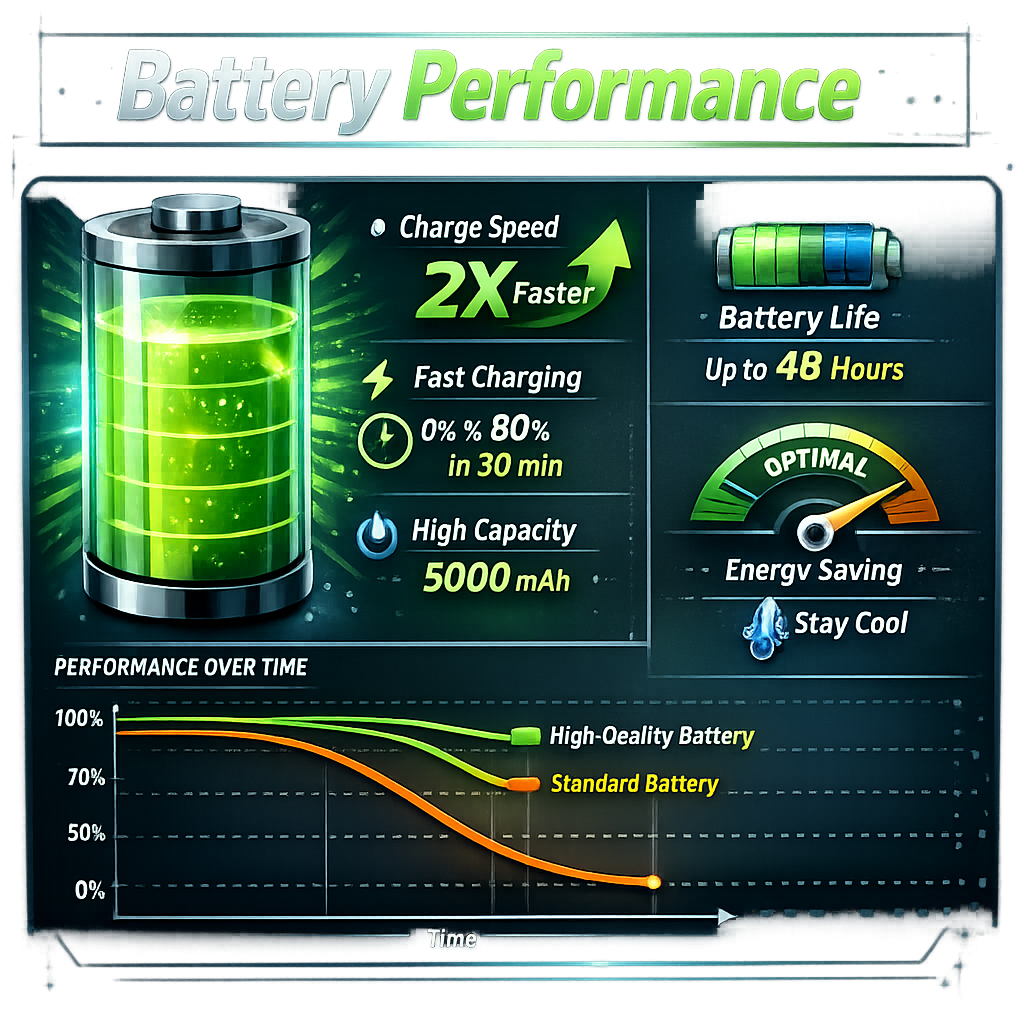
mini cameras: advertised battery ratings vs real-world endurance
Manufacturers typically quote a single maximum runtime—often in a controlled mode such as continuous recording at low resolution or standby motion-activated mode. Those figures are useful as a baseline but rarely reflect mixed-use patterns: high-resolution recording, frequent motion triggers, Wi‑Fi streaming, infrared illumination, and temperature extremes all shorten practical battery life. When comparing models, focus on the conditions used to produce the advertised runtime and map those to your intended use.
For a deeper technical background on typical device classes and discreet recording scenarios, consult the primary technical overview you use when planning deployment Read the complete Mini Cameras guide
How mini cameras battery life is tested and reported
Testing approaches vary. Controlled lab tests usually run the device at a single resolution and record until shutdown in a stable 20–25°C environment with no network interference. Field tests are more realistic but inconsistent: different motion profiles, lighting conditions, and transmission interruptions change draw. Some vendors report only the best-case figure or provide separate numbers for standby and active modes—read the fine print and ask for the test protocol when possible.
Key factors that affect measured runtime
- Recording resolution and frame rate: Higher resolution and higher fps increase processing and write cycles, consuming more power.
- Wireless activity: Continuous Wi‑Fi or Bluetooth streaming adds significant drain compared with local-only recording.
- IR illumination: Night recording with active IR LED arrays drastically reduces endurance.
- Temperature: Batteries deliver less capacity at low (and very high) temperatures; expect substantial drops below 0°C.
- Duty cycle and motion frequency: An always-on sensor differs from motion-triggered events; short, frequent activations can be less efficient than scheduled recording.
Comparison: advertised claims versus measured performance
Use a structured comparison matrix when evaluating models. Create columns for advertised runtime, test conditions (resolution, network use, IR), battery capacity (mAh), and observed runtime under two or three realistic scenarios (e.g., daytime-only security, overnight monitoring with IR, and frequent short activations). This method exposes where marketing numbers diverge from operational needs and guides battery or accessory choices such as external power packs.
Common pros and cons emerge across device classes: small form-factor models are discreet and easier to place, but they trade off battery capacity and thermal dissipation. Larger hidden cameras or disguised units may carry bigger cells but are less flexible in mounting. Understand these trade-offs before prioritizing stealth over uptime.
Buyer guide: evaluating mini cameras for your use case
Start with use-case profiling: identify the monitoring objective, expected motion levels, required image quality, night recording needs, and acceptable maintenance intervals.
- Homeowners (entry and exit points): Battery-powered mini cameras can be set to motion-only with mid resolution to maximize battery life; plan for regular charging cycles or choose models with quick-swap batteries.
- Small retail or offices: Consider a model that supports both local storage and periodic Wi‑Fi sync; schedule uploads during low-traffic hours to reduce continuous streaming drain.
- Professionals (short-term evidence capture): High-fidelity recording may be paramount; accept shorter runtime or use external battery packs designed for extended continuous recording.
Selection checklist
- Verify real-world runtime under your intended resolution and motion profile.
- Choose devices with replaceable batteries or supported external power solutions.
- Confirm IR power draw or select low-light sensors that reduce reliance on active illumination.
- Ask for firmware options that reduce background network chatter or allow scheduled uploads.
- Budget for maintenance: charging, battery replacements, and firmware updates affect long-term reliability.
Practical examples and common mistakes
Example 1 — A homeowner buys a tiny Wi‑Fi mini camera with a quoted 8-hour runtime. In practice it runs 3–4 hours because the camera streams live to an app and records in 1080p with IR active overnight. The mistake: assuming advertised runtime applies with Wi‑Fi streaming and night vision enabled.
Example 2 — A small boutique uses a motion-triggered mini camera with advertised 24-hour standby. High pedestrian traffic leads to almost continuous activation and depletes the battery within a workday. The mistake: failing to model motion frequency and misunderstanding standby versus active draw.
Example 3 — A contractor deploys a compact recorder in a cold storage room expecting a week of operation. Batteries underdeliver because capacity drops sharply below 5°C. The mistake: ignoring temperature effects on battery chemistry and not specifying rated operating temperatures when purchasing.
Common mistakes to avoid include treating manufacturer runtimes as guarantees rather than best-case examples, overlooking network-related energy use, and failing to plan for firmware behavior that wakes radios frequently for updates or push notifications.
For examples of product classes and discreet placement tips relevant to professional use, consult the broader reference material that outlines discreet recording scenarios Discreet solutions
Legal & ethical considerations (EU/US high-level, non-legal advice)
Using mini cameras carries privacy and legal responsibilities. In the United States, state laws and federal statutes govern consent, recording audio, and areas with a reasonable expectation of privacy. In the European Union, the GDPR and member-state rules add data protection obligations: you may need to document legitimate interest, minimize data collection, and ensure secure storage. Always evaluate whether a surveillance objective is proportionate and necessary, provide notice where required, and avoid recording in private areas such as bathrooms or changing rooms.
Operational risks include unauthorized access to recorded footage if devices are left on default credentials or if data is transmitted without encryption. Mitigation steps: change default passwords, apply firmware updates, segment monitoring networks from general Wi‑Fi, and minimize data retention periods to only what you need for the stated purpose.
For a list of available discreet camera types in retail collections that align with specific deployment constraints, see the category overview used by purchasers Browse Mini Cameras
Frequently Asked Questions
Q1: How much does Wi‑Fi streaming reduce mini cameras battery life? A: Continuous Wi‑Fi streaming can cut battery life by 30–70% depending on chipset efficiency and signal strength, compared with local-only recording at the same resolution.
Q2: Can firmware updates improve battery life? A: Yes; updates can optimize radio behavior and processing efficiency, but updates can also temporarily increase consumption during the download and installation process.
Q3: Is it better to choose a higher-capacity internal battery or an external power pack? A: External packs provide predictable extended runtime and are often easier to swap in the field; internal higher-capacity batteries keep form factor tight but may mean longer downtime for charging.
Q4: How does resolution choice affect storage and battery trade-offs? A: Higher resolution increases file sizes and write cycles, which both consume more power and require larger storage; consider event-triggered high-resolution bursts and lower constant resolution to balance needs.
Q5: Are rechargeable lithium-ion and lithium-polymer batteries different in field performance? A: Both offer high energy density; lithium-polymer allows for flexible form factors but can be more sensitive to charging regimens. Follow manufacturer charging recommendations and avoid deep discharge cycles to preserve capacity.
Educational closing
Assessing mini cameras requires matching advertised battery numbers to concrete operational scenarios. By documenting intended duty cycles, environmental constraints, and network behavior, you can translate manufacturer runtimes into reliable expectations. Prioritize devices with transparent testing protocols, replaceable power options, and security-conscious firmware to reduce surprises. Proper planning—combined with periodic verification of field runtime—keeps monitoring systems effective while respecting legal and ethical boundaries.