Video Surveillance and Employee Behavior: A Buyer’s Guide for Small Businesses
Video surveillance influences how employees act, communicate and comply with policy from day one through long-term cultural change; understanding that arc is essential when choosing systems for a small business or managed property. Early reactions to cameras differ from the steady-state adjustments that set in after weeks or months, and those phases interact with legal constraints and system design decisions. For practical background and deeper context on deploying workplace cameras, consult the detailed workplace primer Read the complete Video Surveillance guide
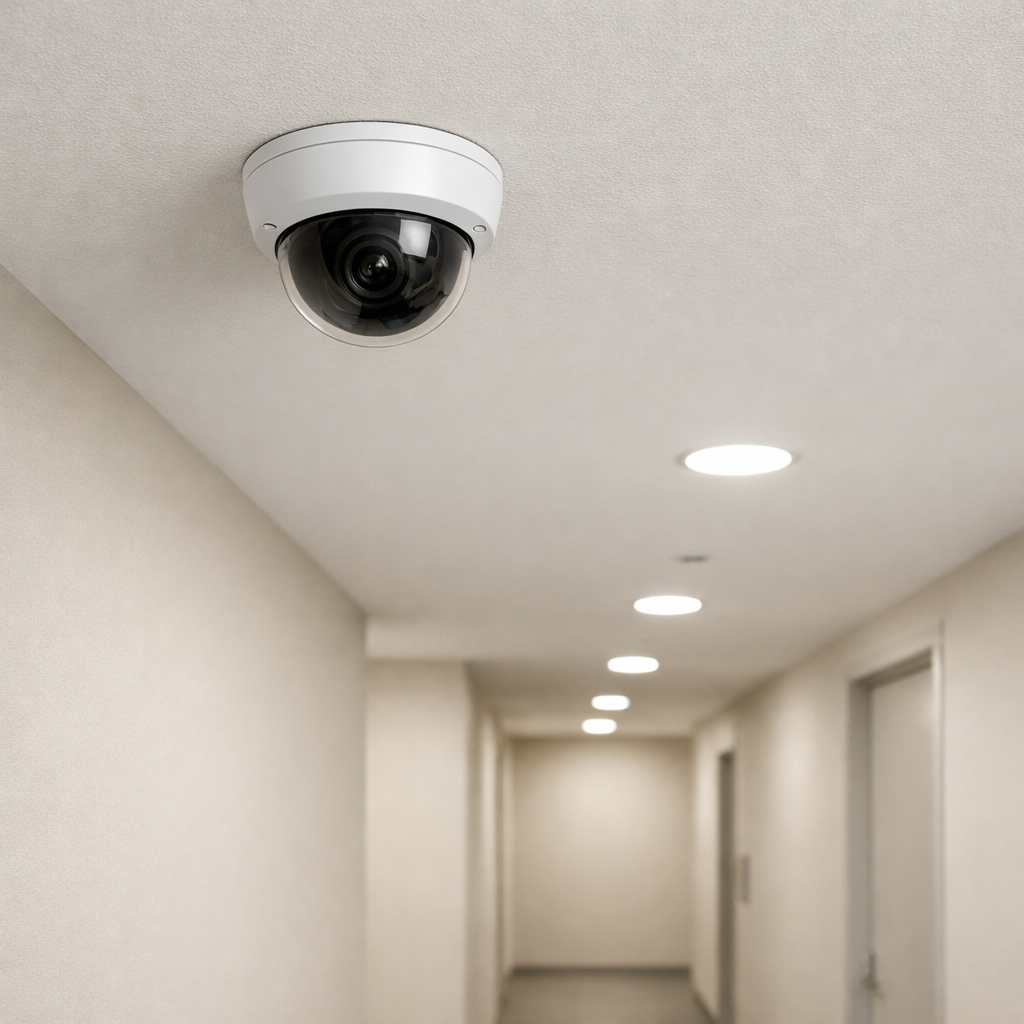
How video surveillance shapes employee behavior over time
Behavioral response to cameras typically follows three stages: an initial awareness phase, an adaptation phase, and a normalization phase. In the awareness phase staff notice cameras and change conspicuous behaviors—arriving on time, avoiding overt policy breaches, or speaking more cautiously. During adaptation, employees learn what is actually recorded, reviewed, and enforced; they test boundaries and respond to feedback or disciplinary action. In normalization, cameras become part of the workplace environment and shape subtle long-term effects on teamwork, privacy expectations, and risk-taking.
Video surveillance: buyer evaluation criteria for workplace use
Buying decisions should be driven by how technology will change behavior over both weeks and years, not only by headline features. Evaluate systems against four practical criteria: visibility and deterrence, auditability and retention, review workflows, and privacy controls. Visibility affects short-term deterrence; visible dome or bullet cameras reduce opportunistic theft but may also create a persistent feeling of being watched that alters spontaneous collaboration. Auditability—file integrity, tamper alerts and secure retention—determines whether recorded behavior can support investigations months later. Consider your staffing for review workflows: does HR or operations review footage? Poorly planned review creates delays that undermine the behavioral logic of surveillance.
Technical specifics matter: resolution sufficient for identification, frame rates for motion analysis, secure on-premises or encrypted cloud storage, and interoperable APIs for access control or POS integration. When comparing brands and cctv systems, assess real-world throughput and false-positive rates for motion analytics because heavy false alarms change staff trust in monitoring tools and increase operational friction.
Comparison: passive monitoring versus active oversight
Two main surveillance philosophies change behavior in different ways. Passive monitoring relies on archival footage for incident review; it produces a latent deterrent effect but limited immediate behavior correction. Active oversight combines live monitoring, alerts and manager intervention; it accelerates corrective feedback and can produce faster compliance improvements but carries higher legal and ethical risk if used without clear rules.
- Passive monitoring: lower operational cost, higher data-retention burden, delayed behavioral correction.
- Active oversight: faster behavior modification, greater staffing overhead, greater privacy scrutiny.
Choose passive approaches when evidence collection is the primary goal and active oversight where real-time safety or service quality drives outcomes, such as in high-risk retail locations or industrial warehouses. For mixed environments, scalable hybrid designs that escalate from passive to active on verified triggers balance effectiveness and intrusion.
Use cases and decision logic for small businesses and property managers
Retail point-of-sale and loss prevention
In retail, visible cameras reduce opportunistic theft immediately, while analytics that tie video to transactions enable targeted interventions. Long-term, staff learn that exceptions are investigated and adjust behavior, often reducing shrink. Implement clear escalation rules so employees know what actions prompt review and discipline.
Offices and employee conduct
In office settings, cameras in common areas can deter misconduct but also influence collaboration and informal interaction. Place cameras to monitor safety-critical areas—entrances, server rooms, loading docks—rather than conversations or individual workstations. Over time, visible cameras may chill spontaneous interaction if policies are unclear.
Remote sites and contractors
For construction sites or temporary locations, temporary cctv systems provide immediate oversight and reduce fraud later by creating an evidentiary record. Contractors adapt quickly to cameras; consistent visible placement combined with timely incident follow-up produces sustained compliance.
Practical examples and common mistakes
Example: A small café installed a high-resolution dome facing the counter to prevent cash shrinkage. Initially theft incidents fell, but employees reported feeling surveilled during private breaks. The owner revised camera angles and tightened access to footage, which maintained deterrence without undermining morale.
Common mistakes to avoid:
- Over-monitoring sensitive zones (restrooms, private offices). Cameras change behavior but cannot lawfully replace clear policies or consent.
- Choosing analytics without validation. Motion and people counting tools with high false positives frustrate staff and lead to ignored alerts.
- Poor retention policies. Holding footage longer than necessary increases privacy risk and regulatory exposure; retention should match investigative needs and legal minimums.
- Unclear review processes. If employees don’t know who can view footage and under what circumstances, cameras become a source of distrust.
For equipment selection that aligns with behavioral goals, compare models on durability, image quality at operational distances, and administrative controls. If you want to assess products, see a curated selection of surveillance cameras for workplace deployment Browse Video Surveillance
Legal & ethical considerations (EU and US high-level)
Both EU and US frameworks require balancing legitimate business interests with employee privacy. In the EU, GDPR emphasizes data minimization, lawful basis, and employee rights to access and erasure; employers must document processing purposes and perform data protection impact assessments when monitoring is systematic and intrusive. In the US, rules vary by state; federal law does not uniformly prohibit employee monitoring, but audio recording is restricted in many jurisdictions and sector-specific rules (healthcare, finance) add obligations. Always publish a clear monitoring policy, explain retention limits and access controls, and avoid undisclosed audio capture.
Ethical best practices: prioritize least-intrusive placement, anonymize where possible for long-term analytics, and limit reviewer roles. Maintain audit logs of who accessed footage and why—those administrative controls change employee expectations and the behavioral impact of surveillance.
For technical and procedural design examples that can inform lawful deployments, review independent design recommendations and operational checklists Discreet solutions
Frequently Asked Questions
Q: Will installing cameras immediately change employee behavior?
A: Yes—cameras produce immediate deterrence for overt rule-breaking, but deeper cultural shifts require consistent enforcement and clear communication over weeks to months.
Q: How should retention periods be set?
A: Set retention to the minimum necessary for investigation and business continuity. Longer retention must be justified and documented; shorter retention reduces privacy risk.
Q: Can I monitor sound as well as video?
A: Audio laws vary. In many US states and under EU rules, audio recording is more legally sensitive than video; obtain legal advice and explicit consent where required.
Q: Do analytics reduce the need for manual review?
A: Analytics can reduce workload but are not infallible. Use them to prioritize reviews and validate alerts with human oversight to avoid false-actions that erode trust.
Q: How can surveillance impact employee morale long-term?
A: If implemented transparently with clear limits and meaningful feedback, cameras can improve safety without major morale loss. Hidden or overly broad monitoring tends to reduce trust and increase turnover over time.
Closing: Choosing and deploying video surveillance for a workplace is not purely a hardware decision; it is a governance design that shapes employee behavior across phases from immediate deterrence to long-term cultural norms. Buyers should evaluate systems for their behavioral effects, compliance posture, and operational fit, then pilot deployments with transparent policies and measurable review processes. That approach balances safety, legal risk and workplace trust without relying on surveillance as a substitute for clear management and training.