
Where GPS Trackers Lose Accuracy in Daily Use: Vehicle and Asset Scenarios for Homeowners & Small Businesses
Gps trackers are a core tool for homeowners and small businesses that need to monitor vehicles, equipment, or high-value assets, but real-world accuracy varies dramatically depending on environment, device type, and configuration. This article explains where gps trackers lose accuracy in daily use and provides practical decision logic for selecting and deploying devices to match use cases such as vehicle gps tracking, asset tracking, and real time gps monitoring.
How gps trackers work and common technical error sources
Understanding the fundamentals helps diagnose accuracy problems. Most GPS-enabled trackers compute position by receiving signals from multiple satellites and applying trilateration. Errors arise when satellite visibility, signal timing, or receiver processing are compromised. Key contributors include satellite geometry (dilution of precision), ionospheric and tropospheric delays, clock and ephemeris errors, multipath (reflections), antenna quality and orientation, and receiver firmware or chipset limitations. Real time gps performance also depends on update rate, cellular or satellite uplink latency, and whether the device uses assisted GPS or multi-constellation reception (GLONASS, Galileo, BeiDou).
Common scenarios where gps trackers lose accuracy
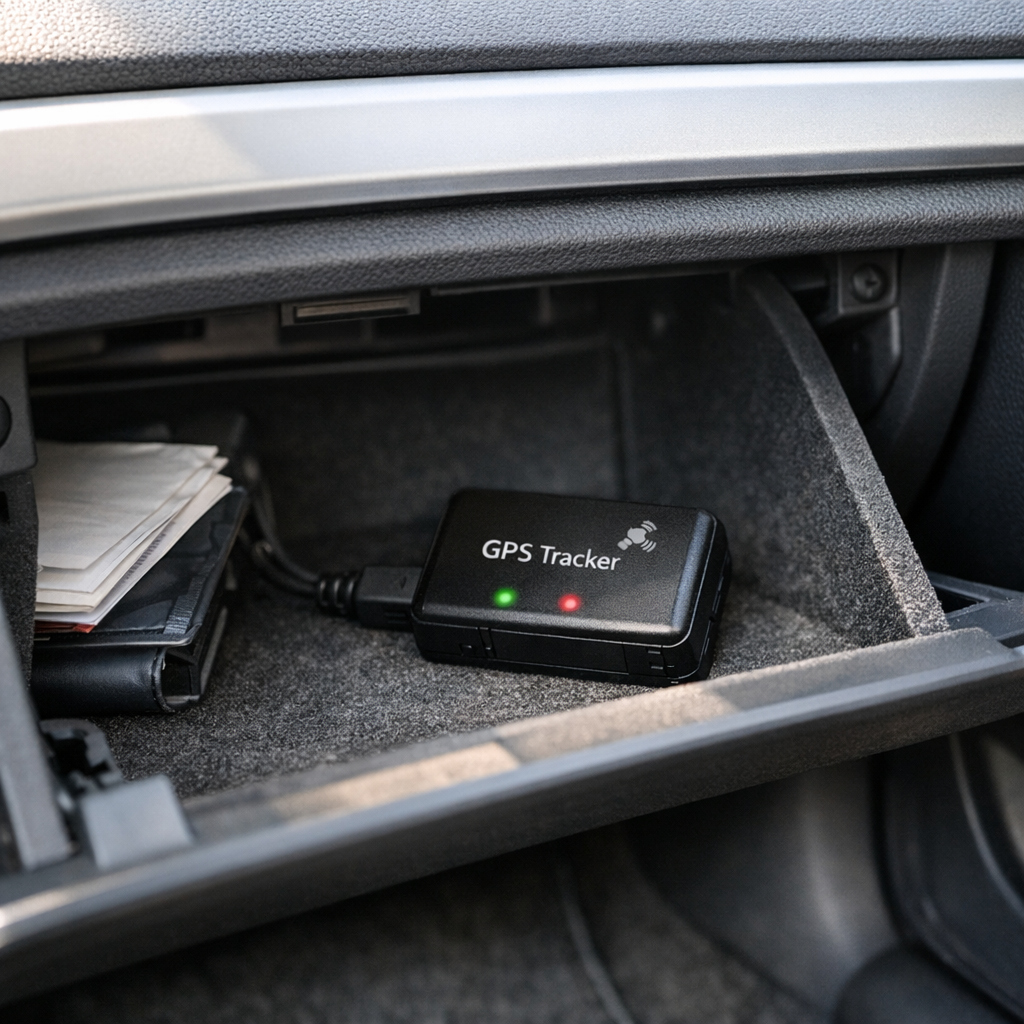
Many everyday settings create predictable accuracy degradation. Urban canyons—streets lined by tall buildings—cause multipath and blocked sky view, leading to position jumps of tens of meters. Indoors, a tracker without an external antenna may show no fix or sporadic, wildly inaccurate locations. Metal enclosures such as trunks, glove compartments, equipment housings, or shipping containers severely attenuate signals. Dense foliage or forest canopy produces intermittent reception and slow convergence to a reliable fix. Low battery or power-saving modes reduce GPS sampling frequency, which is common in asset tracking and long-life battery trackers, increasing apparent inaccuracy for fast-moving targets. Underpasses, tunnels, covered parking, ferries, and areas with heavy RF interference can also create gaps or false positions.
Vehicle-specific contexts
For vehicle gps tracking, placement matters: an antenna hidden behind the dashboard or inside a metal dash panel will report unreliable positions. OBD-II dongles often have poorer antennas and are placed lower in the cabin where signal paths are obstructed, so they can show greater scatter than hardwired, roof-mounted solutions. Rapid starts and stops expose shortcomings in low-frequency reporting devices; a tracker that reports location every five minutes will miss short trips and produce misleading traces for geofencing.
Asset tracking contexts
Asset tracking devices designed for tools, trailers, or palletized goods prioritize battery life over continuous tracking. They typically transmit location infrequently and use coarse power-saving fixes. That design reduces reported accuracy for applications that expect near real time gps updates or meter-level precision. For small, concealed assets, orientation and enclosure materials frequently cause complete loss of GPS fixes until the asset is exposed to clear sky.
Practical examples and common mistakes
Real-world examples make decision logic clearer. A homeowner who places a tracker in a glove compartment to monitor a teenage driver may see hours of silence while the car is parked in a garage, followed by sporadic position jumps—this is a mounting and placement issue, not a broken device. A landscaping company that uses battery-powered asset trackers for trailers may miss theft events because trackers are configured to report every 12 hours to conserve battery; the intended use case requires more frequent updates during working hours. A small delivery business using inexpensive OBD dongles for fleet telematics may get reliable engine data but scattered location points in dense downtown routes due to poor antenna placement.
Common mistakes include expecting sub-meter accuracy from consumer-grade devices, confusing reporting interval with positioning resolution, and assuming every tracker supports multi-constellation reception. Another frequent error is relying solely on GPS fixes for geofence enforcement without accounting for latency or deliberate smoothing algorithms in vendor platforms.
Comparing device choices: how selection affects accuracy
Your selection should start from the required outcome: real time gps updates for active vehicle dispatching, or periodic asset tracking for inventory checks. Vehicle gps tracking devices that are hardwired and fitted with an external antenna regularly outperform OBD and battery-operated units in accuracy and continuity because they can be roof-mounted or routed to a window line-of-sight. Asset tracking devices sacrifice continuous accuracy for battery life; look for models that support configurable reporting windows and motion-triggered wakeups if you need higher accuracy during transit.
Pros and cons by device class
- Hardwired vehicle units: Pros — reliable antenna placement, continuous power, higher reporting rates. Cons — installation cost and potential vehicle wiring modification.
- OBD-II dongles: Pros — plug-and-play installation, vehicle diagnostic data. Cons — poorer antenna position, variable accuracy in urban settings.
- Battery asset trackers: Pros — flexibility, long-term covert placement. Cons — infrequent updates, orientation and enclosure sensitivity.
- Satellite-assisted devices: Pros — coverage where cellular fails, useful for remote assets. Cons — higher cost, larger form factor, variable latency for two-way control.
Evaluation criteria should include update interval, antenna type, multi-constellation GNSS support, A-GPS capability, device sensitivity, firmware for multipath mitigation, cellular and fallback connectivity, ingress protection rating (IP), and tamper detection. Avoid choosing a tracker solely on battery life without reviewing the reporting profile needed for your use case.
Buying guidance and evaluation checklist
When choosing a tracker, run a short field test that mirrors operational conditions: mount the device where you plan to install it, exercise the route or environment, and observe fix quality over several days. Check for jitter, cold-start times, time-to-first-fix after prolonged power-off, and how the vendor smooths reported tracks. For vehicle gps tracking where live dispatch matters, require hardwired options with external antenna support and sub-10 second reporting ability. For asset tracking, specify motion-triggered higher-rate reporting during transit and sleep intervals during storage.
Also validate the vendor’s firmware update policy and whether they support adding GNSS constellations via updates. A device that can be upgraded to use Galileo or BeiDou in addition to GPS and GLONASS is more future-proof for accuracy in congested sky environments. Browse GPS Trackers
Legal & ethical considerations
Tracking practices must balance safety and operational needs with privacy and compliance obligations. In the EU, location data is personal data under GDPR when it can identify an individual; that requires lawful basis, transparency, data minimization, and secure retention. Employers should rely on documented legitimate interests or consent where appropriate and keep policy notices that explain purpose, retention, and access controls. In the US, federal law is supplemented by state laws and employment regulations: some states require notice before monitoring employees, and there are specific protections for certain vehicle use contexts. Inform drivers or asset custodians about monitoring policies, limit retention to what is necessary for the business purpose, and implement access controls and audit logs. These are high-level considerations and do not replace legal counsel. Discreet solutions
Frequently Asked Questions
Q: Why does my tracker jump tens of meters in the city?
A: Urban canyons cause multipath and blocked sky view; use a unit with multi-constellation GNSS, better antenna placement, or roof-mounted installation.
Q: Can I get reliable indoor tracking?
A: Standard GPS struggles indoors; consider Bluetooth beacons, Wi-Fi positioning, or trackers with external antennas routed near windows.
Q: How do I improve real time gps accuracy for deliveries?
A: Increase the device reporting rate during active shifts, choose hardwired or externally-antenna-equipped units, and validate real-world performance on representative routes.
Q: Are there legal limits to tracking employees’ vehicles?
A: Yes—privacy laws vary by jurisdiction; provide clear policies, limit data collection to business needs, and document lawful basis for tracking.
Q: Should I choose OBD or hardwired for small business fleet tracking?
A: For everyday location accuracy and reliability choose hardwired with an external antenna; OBD offers easy installation but often at reduced positional consistency.
Educational closing: practical next steps
Accuracy problems trace back to environment, hardware limitations, and configuration choices. For any intended use—whether vehicle gps tracking for dispatch, asset tracking to deter theft, or real time gps monitoring for safety—start by defining required spatial precision, reporting intervals, and acceptable latency. Run field tests in the conditions where devices will operate, prioritize antenna placement and multi-constellation receivers, and document privacy and retention practices. Finally, treat firmware and configuration as part of the procurement: the best tracker in specifications can underperform without proper installation, reporting profiles, and policy controls. Read the complete GPS Trackers guide